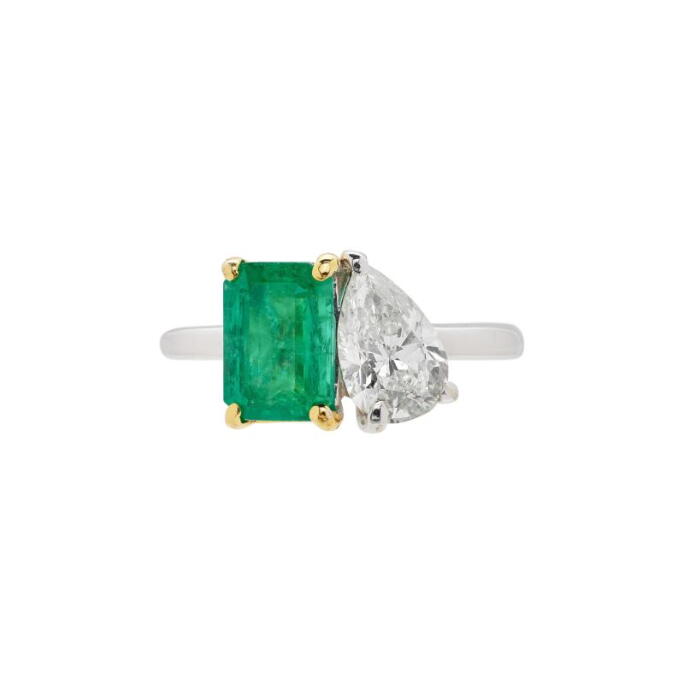
What to Consider When Upgrading a Diamond Ring
Explore what to consider when upgrading a diamond ring, from carat weight, cut and shape to fancy colored diamonds, new settings and signed designs.

Upgrading a diamond ring does not necessarily mean choosing the largest diamond possible. For some collectors, the priority is greater carat weight; for others, it may be an exceptional cut, higher color or clarity, a different diamond shape or the rarity of a natural fancy colored diamond. An upgrade can also involve rethinking the jewel itself, whether resetting the original stone, introducing a new center diamond or moving into a signed design by an important jewelry house. Whatever the approach, the most successful diamond ring upgrades balance measurable quality with rarity, personal style and how the finished jewel looks on the hand.
| Consideration | What to Know |
|---|---|
| Reason to Upgrade | An upgrade can mark a milestone, reflect changing taste or introduce a more exceptional diamond or design. |
| Diamond Size | Moving to a larger center stone can create a dramatic change, but carat weight should be balanced with cut, color and clarity. |
| Diamond Quality | As size increases, color, inclusions and proportions can become more noticeable, making the overall quality of the stone especially important. |
| Diamond Shape | Emerald, oval, cushion and pear cuts can offer greater visual presence and a distinctly different look from the original ring. |
| Fancy Color | Natural yellow, pink, blue and other fancy colored diamonds offer an alternative for collectors prioritizing rarity over size alone. |
| New Setting | Three-stone and Toi et Moi designs can incorporate the original diamond while introducing a new center stone or complementary diamond. |
| Original Diamond | The existing stone can be reset into the upgraded ring, transformed into another jewel, retained in its original setting or sold. |
| Collector Perspective | The strongest upgrades improve the overall quality, rarity or significance of the jewel rather than simply increasing carat weight. |
A diamond ring upgrade can mark an anniversary, personal milestone or change in taste, but for collectors it can also be an opportunity to move into a more exceptional category of jewelry. That might mean increasing carat weight, choosing a finer cut, improving color or clarity, or replacing a conventional white diamond with a rare fancy colored stone.
An upgrade can also reflect a shift in how the ring itself is worn and appreciated. Some collectors choose a more distinctive shape, reset the original diamond into a new design or move toward a signed jewel by an important house. In each case, the goal is less about replacing the original ring and more about evolving it into something that better reflects the wearer’s current priorities and collecting style.
For many collectors, increasing the center stone is the most immediate way to transform a diamond ring. There is no universal carat increase that defines a meaningful upgrade, however. Shape and proportions can have as much influence on visual presence as weight, meaning an elongated oval, emerald or pear-shaped diamond may provide substantially different finger coverage than another diamond of comparable carat weight.
As size increases, quality becomes particularly important. Color and inclusions may become easier to see, while a poorly proportioned diamond can carry significant weight without creating equivalent face-up presence. A current example is a Harry Winston Platinum, 7.05-Carat Pear Shape Diamond and Diamond Engagement Ring offered through Sotheby’s Buy Now marketplace. The center diamond is graded E color and VVS1 clarity, with two additional pear-shaped diamonds totaling approximately 0.90 carat. The ring illustrates how an upgrade can combine greater scale with exceptional color, clarity and a signed setting rather than prioritizing carat weight alone.
A larger diamond does not automatically make for a better upgrade. Increasing carat weight while sacrificing too much in cut, color or clarity can result in a stone that is more substantial but less visually impressive. The right balance depends partly on shape: brilliant cuts can disguise certain inclusions and body color more effectively, while the broad, open facets of emerald and Asscher cuts tend to make both more apparent.
Collectors also do not necessarily need to pursue the highest grade in every category. An eye-clean VS diamond, for example, may offer exceptional visual quality without the premium associated with an Internally Flawless stone. Cut and proportions deserve particular attention, since they influence brilliance, symmetry and how effectively the diamond carries its weight. The strongest upgrade is therefore often the diamond with the best overall combination of size and quality rather than simply the highest carat weight or grading specifications.
Upgrading a ring is also an opportunity to reconsider diamond shape, particularly when moving to a larger center stone. Changing from a round brilliant to an emerald, oval, cushion or pear-shaped diamond can dramatically alter the character of the ring without relying on carat weight alone. Elongated shapes can provide greater finger coverage, while step cuts offer a more architectural look and cushions introduce softer proportions. Each cut also handles light, color and inclusions differently, making the quality and proportions of the individual stone particularly important at larger sizes.
Emerald cuts can be particularly striking at larger carat weights, where their elongated proportions and broad step facets create substantial presence without the concentrated sparkle of a brilliant cut. Those open facets also reveal the diamond more clearly, making transparency and clarity especially important. A Graff Platinum, 8.50-Carat Emerald Cut Diamond and Diamond Engagement Ring, currently offered on Sotheby’s Buy Now marketplace, illustrates the effect. Its 8.50-carat center diamond is graded I color and VVS2 clarity and is flanked by tapered baguette diamonds totaling approximately 0.55 carat. Asscher cuts offer a related aesthetic in a squarer, more geometric form, making either shape a significant stylistic departure for someone upgrading from a traditional round brilliant.
Cushion cuts offer a softer alternative to the clean geometry of emerald and Asscher diamonds, with rounded corners and proportions that range from square to distinctly elongated. At larger carat weights, the choice of facet pattern becomes especially important: antique-inspired cushions can display broader flashes of light, while modern brilliant variations often produce a livelier sparkle. Collectors should also compare face-up dimensions carefully, as some cushions carry more of their weight below the surface than others. For an upgrade, an elongated cushion can be particularly effective when the goal is greater finger coverage while retaining the cut’s characteristic softness.
Oval diamonds are a natural choice for an upgrade when the goal is to combine the brilliance of a round diamond with greater visual spread. Their elongated silhouette can make a larger stone appear particularly substantial on the hand, although length-to-width ratio and symmetry can significantly affect the overall look. Collectors should also assess the bow tie effect, the darker area that can appear across the center of an oval; some degree is common, but a pronounced bow tie can interrupt otherwise even brilliance. At larger carat weights, visual inspection becomes especially important when comparing the balance, brightness and proportions of individual stones.
Pear-shaped diamonds offer an elongated option for collectors seeking a noticeable change in both scale and silhouette. At larger carat weights, symmetry becomes particularly important: the point should align cleanly with the center of the rounded end, while the curves should appear balanced on either side. Pear cuts can also exhibit a bow tie effect, making brilliance and light distribution important to assess visually. A Tiffany & Co. Platinum, 4.02-Carat Pear Shape Diamond and Diamond Engagement Ring, currently offered on Sotheby’s Buy Now marketplace, pairs an I color, VS1 clarity center diamond with approximately 0.32 carat of round brilliant diamonds. The signed setting also illustrates how an upgrade can introduce the additional collector interest of an important jewelry house rather than focusing on carat weight alone.
For collectors seeking rarity rather than simply greater size, a natural fancy colored diamond can represent a more distinctive upgrade than moving to a larger white diamond. Yellow diamonds offer considerable variety in size and intensity, while natural pink and blue diamonds are significantly rarer and can command exceptional prices. Unlike white diamonds, where the absence of color is generally prized, fancy colored diamonds are evaluated largely by the strength, distribution and character of their color, with designations ranging from Fancy Light to Fancy Intense and Fancy Vivid.
A White Gold, 8.04-Carat Cushion Cut Fancy Light Yellow Diamond and Diamond Engagement Ring, currently offered on Sotheby’s Buy Now marketplace, illustrates how color and scale can come together in an upgrade. The 8.04-carat natural Fancy Light Yellow center diamond is VVS2 clarity and is flanked by two pear-shaped colorless diamonds totaling 1.00 carat. When considering a colored diamond, collectors should look beyond carat weight to the precise hue, tone and saturation of the stone, as diamonds with similar color grades can still present quite differently to the eye.
An upgrade does not always require replacing the original diamond. Resetting it can preserve the significance of the first ring while creating a jewel that feels entirely different. A three-stone setting is particularly well suited to this approach: the original diamond can become a side stone alongside a new center diamond, provided the stones are sufficiently compatible in color, proportions and overall appearance. Alternatively, changing from a solitaire to a more elaborate setting can transform the ring without changing the center stone at all.
A Toi et Moi ring offers another possibility, pairing the original diamond with a newly acquired stone rather than relegating it to a supporting role. The two stones can differ in shape, size or even color, allowing the original diamond to remain visually prominent while introducing something new. For collectors, thoughtful redesign can therefore be as meaningful an upgrade as greater carat weight, particularly when the original stone carries personal significance.
When upgrading, the original diamond does not necessarily need to remain part of the engagement ring. Some collectors choose to reset the stone into a pendant, earrings or another ring, preserving its sentimental significance while allowing the upgraded diamond to take center stage. Others retain the original ring intact, particularly when the setting itself has personal, period or maker significance.
Selling or consigning the original ring can also help fund the next purchase, particularly when the diamond or finished jewel has meaningful secondary-market value. Before altering an important signed or vintage ring, however, collectors should consider whether resetting the stone could diminish the significance or desirability of the original jewel. In some cases, preserving an exceptional Cartier, Tiffany & Co., Harry Winston or other signed setting intact may be preferable to treating the diamond separately.
The secondary market can broaden the possibilities when upgrading, providing access to larger diamonds, unusual cuts, natural fancy colored stones and signed rings by important jewelry houses. It can also allow collectors to consider qualities beyond conventional engagement-ring specifications, whether that means an exceptional vintage setting, a rare diamond or a jewel whose maker and design contribute to its significance.
Ultimately, the strongest upgrade is not necessarily the largest or highest-graded diamond. It is the ring that represents a meaningful improvement in the qualities that matter most to the collector, whether size, rarity, cut, color, design or maker. Comparing stones carefully, understanding what distinguishes one diamond from another and considering the finished jewel as a whole can turn an upgrade into a more considered addition to a jewelry collection.
No. An upgrade can mean better cut, color or clarity, a rarer fancy colored diamond, a more important signed setting or a diamond whose proportions and visual character are superior to the original stone.
Neither should be considered in isolation. A larger diamond with compromised proportions, noticeable inclusions or undesirable color may be less compelling than a slightly smaller stone with exceptional overall quality.
For collectors, it can be. Rings by houses such as Cartier, Tiffany & Co., Harry Winston and Graff may carry additional interest when the diamond is paired with an important or recognizable design.
Yes. The original diamond can be incorporated into a three-stone or Toi et Moi design, reset into another piece of jewelry or retained in its original setting, depending on its significance and the design of the new ring.
Not automatically. Altering an important signed or period setting can affect the integrity and collector interest of the original jewel. It is worth assessing the ring as a complete piece before removing or resetting its diamond.
Whether you're a seasoned collector or new to fine jewelry, Sotheby’s offers a trusted, seamless way to buy and sell diamond jewelry on the secondary market.
Trust our worldwide network of leading jewelry specialists from a globally renowned auction house established in 1744.