The A-Z of Jewelry: D is for... Diadem
Continuing Sotheby's series exploring the history of jewelry trends, Sarah Jordan explains the differences between diadems, crowns and tiaras.

A lthough occasions to wear diamond-encrusted diadems are almost exclusively reserved for royalty, this hasn’t dampened the long-running debate on what makes a diadem unique from a crown or a tiara. An answer is surprisingly difficult to find, and many words are used interchangeably – often depending on the provenance of a piece.
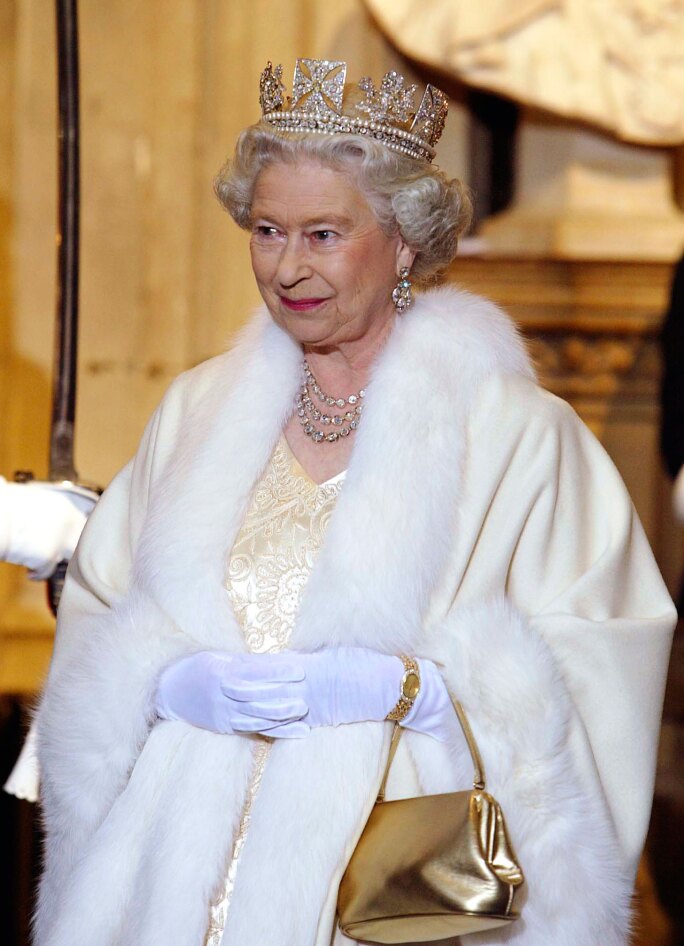
A crown is typically referred to in a ceremonial context, like the Imperial State Crown that forms the centrepiece of the Crown Jewels of the United Kingdom. A tiara, in contrast, could be considered a feminine ornament, designed in a highly-decorative style with more delicate proportions. Some suggest that it is the high centre-point and tapered sides of a tiara that separate it from the shapely uniformity of a diadem; others argue that a diadem is simply a tiara that has been owned or worn by royalty.
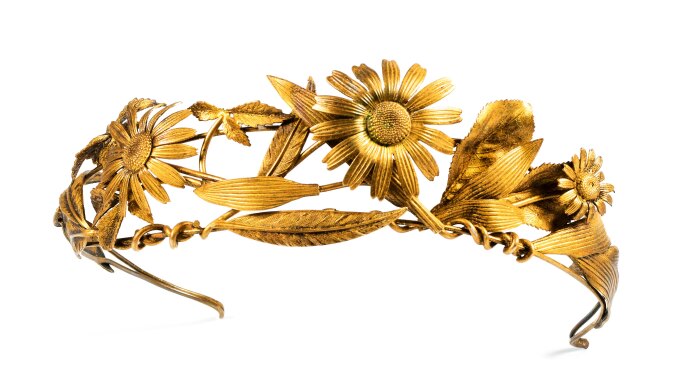
Whatever the case may be, it is the regal elegance of diadems and their associations with grand balls of a bygone era that make them especially coveted by collectors. The word originates from the Greek ‘diadein’, meaning ‘to bind around’, and implies an adornment that encircles the entire head. Throughout history diadems have been worn across the forehead or perched on the hairline, often sparkling in diamonds. They typically reflect the broader style of the time in which they were made, such as the Art Nouveau movement of the Edwardian era.
An exceptional example from 1805 demonstrates the renewed fascination with Classical antiquity that shaped jewelry at the beginning of the 19th century. A diadem by French jeweler Jacques-Ambroise Oliveras, adorned with three oval hardstone cameos depicting symbols of beauty and harmony within black enamel borders, sold for €25,400 in October 2023. Created at a time when archaeological discoveries at Pompeii and Herculaneum were fueling enthusiasm for ancient Greek and Roman art, the jewel reflects the Neoclassical tastes associated with the Napoleonic era, when figures including Empress Joséphine and Caroline Bonaparte used Classical imagery in dress and jewelry to evoke the prestige of antiquity.
By the early 20th century, diadem design had shifted toward the light, intricate compositions fashionable during the Belle Époque. A diamond diadem from a princely family, dating to 1910, sold for €60,480 in October 2020. Designed in the garland style, the jewel was millegrain-set with circular, single and old mine-cut diamonds and finished with a powder-pink velvet ribbon. Its delicate diamond setting and naturalistic garland-inspired design exemplify the refined aesthetic that characterized fashionable jewelry of the period.
Perhaps the most famous example is the George IV State Diadem, also known as the Diamond Diadem, which was created to be worn over a velvet hat by King George IV during his coronation in 1821. Its openwork silver frame is lined with gold and set with 1,333 white diamonds, a four-carat pale-yellow brilliant-cut diamond and two rows of pearls. Although made for the King, the Diamond Diadem has since only been worn by female royalty, including Queen Adelaide (1830-1837), Queen Alexandra (1901-1910) and now Queen Elizabeth II (1926-2022), who famously wore it in portraits featured on British postage stamps.
Whether you're a seasoned collector or new to the world of luxury jewelry, Sotheby’s offers a trusted, seamless way to buy and sell fine jewelry on the secondary market.
Trust our worldwide network of leading jewelry specialists from a globally renowned auction house established in 1744.