
A Luxury Buyer's Guide to Marquise Diamonds
Discover what defines an exceptional marquise diamond, including ideal proportions, symmetry, bow tie, visual size and the qualities collectors value most.
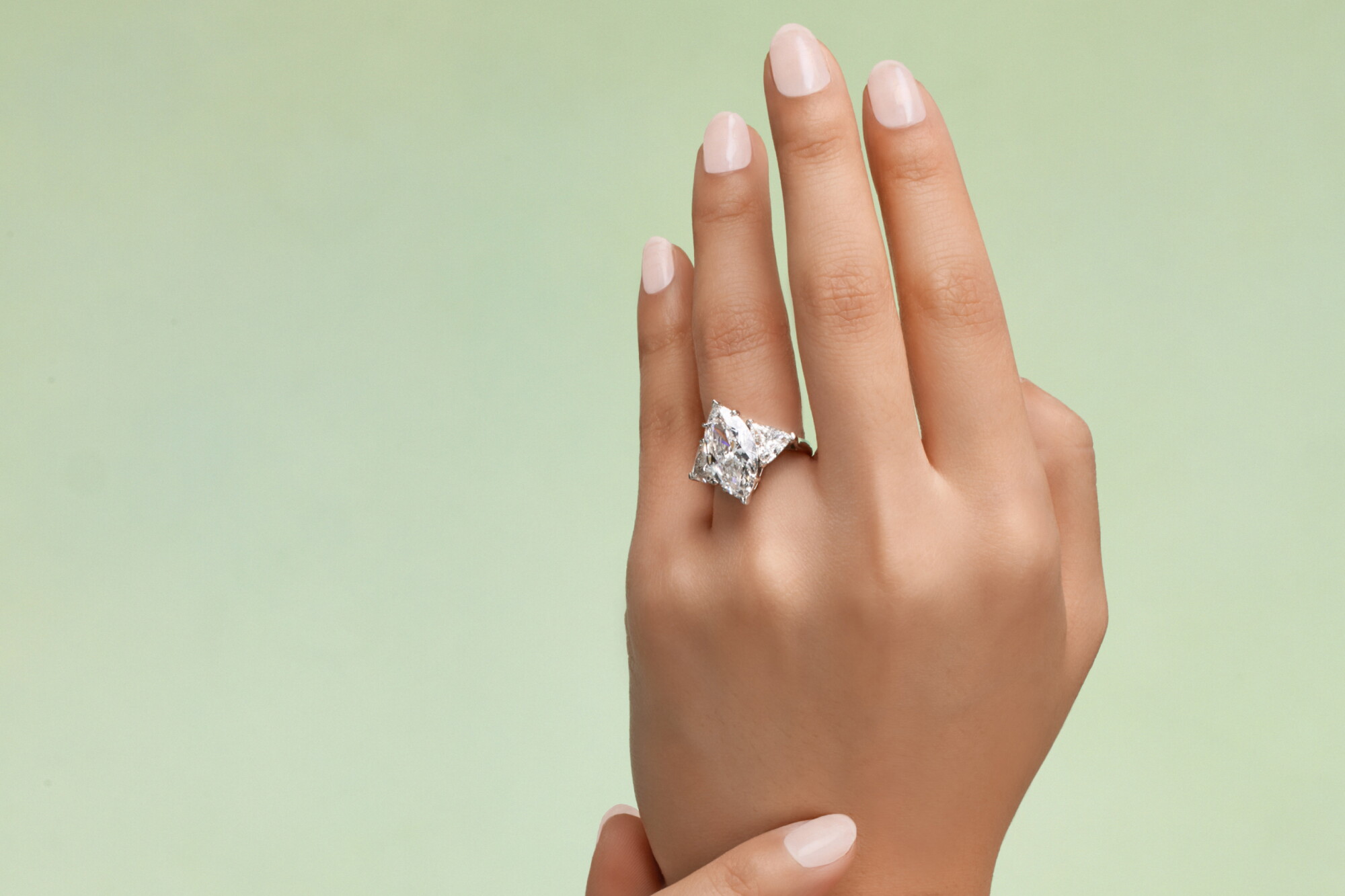
Among fancy-shaped diamonds, the marquise is particularly distinctive for the amount of visual presence it can create from its carat weight. Its elongated silhouette, curved sides and pointed ends can make the diamond appear substantial across the finger, while its brilliant-style faceting produces considerably more sparkle than a step cut. Those same characteristics make precision especially important: symmetry, length-to-width ratio, bow tie, facet pattern and the alignment of the two points can dramatically affect the appearance of an individual stone. For collectors considering an exceptional marquise diamond ring, understanding these qualities alongside carat weight, color and clarity is essential to distinguishing a well-graded diamond from a truly impressive one.
| Factor | What to Know |
|---|---|
| Shape | Marquise diamonds combine an elongated silhouette with brilliant-style faceting and two distinctive pointed ends. |
| Symmetry | The two points should align and the curved sides should appear balanced; asymmetry can be particularly noticeable in this shape. |
| Bow Tie | Some bow-tie effect is common. The key is whether it becomes dark or distracting enough to interrupt the diamond’s brilliance. |
| Length-to-Width Ratio | Ratio determines whether a marquise appears wider or more elongated and should be treated as a preference rather than a fixed quality standard. |
| Carat Weight | Marquise diamonds can offer significant face-up spread, often creating greater visual presence than more compact shapes of similar weight. |
| Color & Clarity | Grades matter, but inclusion placement, visible body color and the diamond’s overall appearance should be assessed individually. |
| Setting | The pointed ends require protection, making secure prongs or other protective setting elements particularly important. |
| Collector Appeal | Exceptional examples combine strong symmetry, balanced proportions, lively brilliance and an attractive overall silhouette. |
The marquise cut is traditionally associated with King Louis XV of France, who is said to have commissioned a diamond shape inspired by the lips of his mistress, Madame de Pompadour. Whether entirely factual or embellished over time, the story helped connect the elongated cut with 18th-century French court style. The shape is also known as the navette, French for “little boat,” a reference to its curved sides and pointed ends.
The marquise later appeared prominently in 20th-century jewelry, from geometric Art Deco designs to the larger, more dramatic diamond rings favored in the 1970s and 1980s. Today, its combination of brilliant-style faceting and an elongated silhouette gives the cut a character distinct from both traditional round diamonds and other fancy shapes.
A marquise diamond combines brilliant-style faceting with an elongated outline, giving it both strong sparkle and considerable face-up presence. Its narrow profile and pointed ends distribute the diamond’s weight across a greater length, which can make a marquise appear larger than more compact shapes of comparable carat weight. The silhouette can range from relatively broad to exceptionally slender depending on its proportions.
That distinctive outline also makes precision particularly important. The two points should align with one another, the curved sides should appear balanced and the facet pattern should distribute light evenly across the stone. Marquise diamonds can also display a bow tie through the center, but its presence alone is not necessarily a flaw. The strength of the bow tie and whether it interrupts the diamond’s brilliance are more important than eliminating it entirely.
The 4Cs remain fundamental when evaluating a marquise diamond, but the shape introduces considerations that grading specifications alone cannot capture. Symmetry, proportions and bow tie can significantly influence how the diamond looks, making visual assessment especially important when comparing stones with otherwise similar grades.
Symmetry is particularly important in a marquise diamond because even small imbalances can be noticeable across its elongated outline. The two points should align along the same axis, while the curved sides should mirror one another without appearing uneven or distorted. Buyers should also look at the overall facet pattern and how consistently the diamond returns light from one end to the other.
Length-to-width ratio determines whether a marquise appears broader or more slender. Ratios around 1.75 to 2.15 are commonly encountered, but there is no single ideal proportion: a lower ratio produces a fuller silhouette, while a higher ratio creates a longer, narrower appearance. Rather than treating ratio as a measure of quality, collectors should use it to identify their preferred shape and then evaluate symmetry, brilliance and overall balance within that silhouette. A Platinum, 5.65-Carat Marquise Cut Diamond and Diamond Engagement Ring, currently offered on Sotheby’s Buy Now marketplace, centers an E color, VS2 clarity marquise accented by 3.60 carats of half-moon diamonds. At this scale, the distinctive outline of the marquise becomes particularly prominent, reinforcing the importance of evaluating the balance and overall appearance of the individual stone.
Most marquise diamonds display some degree of bow tie, a darker area running across the center of the stone that results from the way light travels through its elongated facets. A subtle bow tie can contribute contrast and dimension, so its presence should not automatically be considered a flaw. The concern is severity: if the center appears persistently dark or the bow tie dominates the diamond face-up, it can interrupt otherwise lively brilliance. Because grading reports do not quantify bow-tie strength, collectors should evaluate the diamond visually and compare stones under different lighting conditions whenever possible.
Marquise diamonds can appear particularly substantial for their carat weight because their elongated shape distributes visual presence across a greater surface area than many more compact cuts. Actual dimensions still matter, however, as two marquise diamonds of equal weight can differ considerably in length, width and depth. At exceptional sizes, the effect can be dramatic. The Lesotho III, a 40.42-carat marquise diamond purchased by Aristotle Onassis for Jacqueline Kennedy Onassis, was cut from the celebrated 601-carat Lesotho rough acquired by Harry Winston. Sotheby’s sold the ring for $2.59 million in 1996 as part of the auction of Jacqueline Kennedy Onassis’s estate, making it one of the most historically significant marquise diamond rings to appear at auction.
Type IIa diamonds contain no measurable nitrogen or boron impurities and represent a very small proportion of natural diamonds. The classification can add another dimension of rarity to an exceptional marquise, particularly when combined with significant size, high color and clarity, although Type IIa status alone does not determine a diamond’s quality or value.
In 2023, Sotheby’s sold a Van Cleef & Arpels ring set with a 21.03-carat Type IIa marquise diamond for just over $2 million. The diamond’s substantial size and rare type demonstrate the qualities that can distinguish an important marquise at the highest end of the collector market.
The setting of a marquise diamond should complement its elongated silhouette while protecting its two pointed ends, which are more vulnerable to chipping than the rounded edges of many other diamond shapes. V-shaped or secure prongs positioned over the tips can provide additional protection, while solitaire settings emphasize the diamond’s length and symmetry. Side stones can create a more substantial composition, as seen in three-stone designs with half-moon, pear or tapered baguette diamonds, while pavé settings introduce additional brilliance without changing the distinctive outline of the center stone. For an important marquise, security and proportion should ultimately be considered alongside the aesthetics of the finished ring.
Natural fancy colored diamonds offer another dimension of rarity in the marquise shape. Yellow diamonds are more commonly encountered, while natural pink, blue and green diamonds are considerably rarer. As with other fancy colored diamonds, hue, tone, saturation and color distribution are central to their evaluation, alongside carat weight and clarity.
The marquise is less commonly associated with important colored diamonds than shapes such as the cushion or radiant, making exceptional examples particularly distinctive. In November 2022, Sotheby’s sold a 2.75-carat marquise-shaped Fancy Blue diamond ring for 2.3M CHF. The natural-color diamond was graded VS1 clarity, with its accompanying report noting that it might be Internally Flawless after minor repolishing. Measuring 14.82 by 7.05 millimeters face-up, the stone also demonstrates how the elongated marquise silhouette can create considerable visual presence even at a comparatively modest carat weight.
An exceptional marquise diamond should be evaluated as much for its visual balance as for its grading specifications. Look for strong symmetry, evenly aligned points and an attractive length-to-width ratio, then assess how consistently the stone returns light across its elongated shape. A subtle bow tie is not necessarily a concern, but pronounced darkness through the center can detract from an otherwise lively diamond. Carat weight should also be considered alongside actual dimensions, particularly because marquise diamonds can offer considerable face-up presence for their weight.
For important stones, color and clarity remain significant, but neither should be viewed in isolation. The placement of inclusions, distribution of color, quality of the cut and security of the setting can all influence the finished ring. Signed examples by important jewelry houses, rare Type IIa diamonds and exceptional natural fancy colored stones may introduce additional collector interest, but the strongest marquise diamonds ultimately combine rarity with balanced proportions and a compelling appearance to the eye.
There is no single ideal ratio. Approximately 1.75 to 2.15 is commonly encountered, with lower ratios producing a fuller shape and higher ratios creating a more elongated silhouette. Symmetry and overall visual balance matter more than achieving a specific number.
Not necessarily. Some bow tie is common in elongated brilliant cuts and can contribute contrast. It becomes a concern when the center appears persistently dark or the bow tie noticeably interrupts the diamond’s brilliance.
Their elongated shape distributes weight across a greater face-up area than many compact diamond cuts. Actual dimensions and depth should therefore be compared alongside carat weight when evaluating visual size.
Extremely important. The two points should align along the same axis and the curved sides should appear balanced. Uneven wings or misaligned points can be particularly noticeable because of the cut’s elongated outline.
Type IIa classification can add rarity, particularly when combined with exceptional size, color and clarity, but it does not make a diamond exceptional on its own. Proportions, light performance and overall appearance remain fundamental to quality.
Whether you're a seasoned collector or new to fine jewelry, Sotheby’s offers a trusted, seamless way to buy and sell diamond jewelry on the secondary market.
Expertly Vetted Selection
Explore rare and iconic diamond jewelry, from elegant white gold and diamond bands starting around $4,000 to highly sought-after diamond rings and exceptional gemstones exceeding $800,000.
Exclusive Global Access
Shop diamond jewelry through Sotheby’s jewelry auctions and Buy Now marketplace, backed by a worldwide network of collectors and consignors.
Flexible Ways to Buy
Purchase online or in person at our locations in New York, Paris, and Hong Kong, or work with a dedicated jewelry concierge to view or source specific diamond jewelry.
Exceptional Value
Every piece of diamond jewelry is authenticated and priced by Sotheby’s specialists to reflect true market value.
Constantly Evolving Inventory
Discover vintage, modern, and high jewelry diamond pieces, with new items added regularly to Sotheby’s curated selection.
Trust our worldwide network of leading jewelry specialists from a globally renowned auction house established in 1744.


