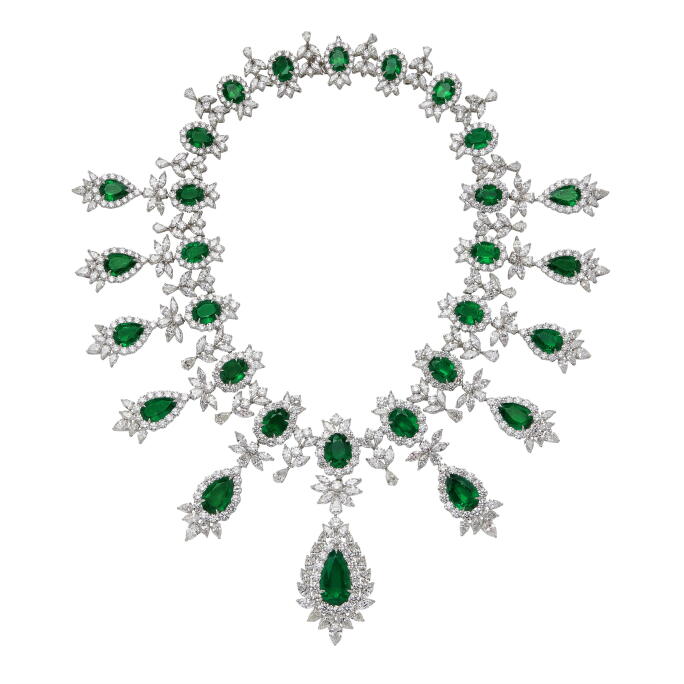
Ruby, Sapphire or Emerald? A Collector’s Guide to the “Big Three” Gemstones
Explore what makes ruby, sapphire and emerald the “Big Three,” from color and rarity to origin, treatment and what collectors should know about value.

Ruby, sapphire and emerald have occupied a singular place in the world of colored gemstones for centuries. Collectively known as the “Big Three,” they have appeared in royal collections, historic jewels and important designs by the world’s leading jewelry houses. Their status is also rooted in rarity: while all three gemstones are available across a range of qualities, exceptional examples represent a remarkably small portion of the market.
What defines exceptional quality differs considerably between them. Ruby is prized above all for intense red color, with vivid pigeon blood rubies representing some of the most sought-after examples. Fine blue sapphires can be distinguished by color as well as celebrated origins such as Kashmir and Ceylon, while the finest emeralds are coveted for rich green color and transparency despite inclusions being characteristic of the gemstone. Treatment also matters, particularly when evaluating important stones.
So, which is more valuable: ruby, sapphire or emerald? There is no universal ranking. At the highest level, ruby can achieve extraordinary per-carat values, but rare Kashmir sapphires and exceptional Colombian emeralds can also command significant prices. For collectors, the more useful comparison is understanding what makes each gemstone rare within its own category and why the finest examples of all three continue to occupy the top tier of the colored gemstone market.
| Factor | What Collectors Should Know |
|---|---|
| Ruby | Vivid red color is most prized, with large, unheated pigeon blood rubies among the rarest examples. |
| Sapphire | Fine blue color, origin and treatment are key, with Kashmir and Ceylon particularly celebrated. |
| Emerald | Rich green color is paramount, while Colombian origin and limited clarity enhancement can add significance. |
| Rarity | All three become exceptionally rare when top quality is combined with significant size. |
| Treatment | Unheated rubies and sapphires are particularly prized; emeralds are evaluated partly by the degree of clarity enhancement. |
| Value | No gemstone is always most valuable; quality, rarity, size, origin and treatment determine individual value. |
Ruby, sapphire and emerald are traditionally known as the “Big Three” colored gemstones, a distinction that reflects centuries of importance in fine jewelry and collecting. Ruby and sapphire are both varieties of corundum: red corundum is classified as ruby, while gem-quality corundum in other colors is sapphire. Emerald belongs to the beryl family and owes its characteristic green color primarily to trace elements such as chromium and vanadium.
Their prominence, however, extends well beyond mineralogy. Each gemstone established a recognizable benchmark for exceptional color: the vivid red associated with fine ruby, the celebrated blues of sapphire and the saturated green of emerald. Historic sources further shaped their identities, from Burmese rubies and Kashmir sapphires to Colombian emeralds. These associations developed over generations as certain deposits became renowned for producing stones with particularly desirable characteristics.
What ultimately keeps the Big Three at the forefront of the colored gemstone market is the scarcity of truly exceptional material. Rubies, sapphires and emeralds can all be found in commercial qualities, but stones that combine outstanding color with significant size and limited or no treatment are considerably rarer. For collectors, that gap between a beautiful gemstone and an exceptional one is fundamental to understanding the Big Three.
The value of ruby, sapphire and emerald comes from more than beauty alone. Fine examples require an unusual convergence of characteristics: desirable color must occur in gem-quality material, survive cutting and, at the highest levels, remain exceptional at significant carat weights. The rarer that combination becomes, the greater the distinction between an attractive colored gemstone and one of true collector importance.
Natural quality is another important dividing line. Heating is common in the ruby and sapphire markets, while emeralds are frequently clarity enhanced, so stones requiring little or no treatment can occupy a different tier when their color is already exceptional. Geographic origin may add further significance when a gemstone comes from a celebrated historic source and displays the qualities associated with it. Laboratory documentation becomes particularly important in these cases, helping establish characteristics that cannot reliably be determined by appearance alone.
This is also why the most valuable precious stones cannot be ranked simply by gemstone type or carat weight. A smaller unheated ruby of extraordinary color may command more than a substantially larger stone of another variety, while a rare Kashmir sapphire or exceptional Colombian emerald can reach similarly elevated levels. At the top of the market, value reflects how difficult it would be to find another gemstone with a comparable combination of quality and rarity.
Ruby is the red variety of corundum, with its color produced primarily by chromium. The most desirable stones display a vivid, saturated red that remains bright and lively rather than becoming overly dark. At the upper end of the market, the term “pigeon blood” is associated with an especially coveted vivid red, although precise classifications can vary between gemological laboratories. Color remains fundamental, but collectors also consider transparency, treatment status and size when distinguishing an exceptional ruby.
Fine ruby becomes particularly scarce as carat weight increases, especially when strong natural color occurs without heat treatment. Historically, Myanmar has been the benchmark source, with the Mogok region producing some of the world's most celebrated rubies. Mozambique has also emerged as an important source of exceptional material, including stones capable of achieving the vivid red associated with pigeon blood rubies. A 10.02-carat Mozambique Pigeon’s Blood Ruby and Diamond Ring, currently offered on Sotheby’s Buy Now marketplace, demonstrates the quality possible from the region. Its ruby is accompanied by reports from GRS and Gübelin stating that it is of Mozambique origin with no indications of heating; Gübelin rated the stone “outstanding” at 90.2 points.
Sapphire is the same mineral species as ruby, but its collector market is considerably broader. Although sapphire occurs in many colors, blue sapphire remains the benchmark for the category. The finest examples balance rich saturation with brightness and transparency; stones that appear overly dark can lose some of the visual character collectors prize. Treatment status is also important because heating is widely used to improve sapphire color and clarity, making exceptional unheated stones particularly sought after.
Origin can play an especially prominent role in sapphire collecting. Kashmir sapphires are among the most coveted, renowned for the velvety blue appearance associated with material from the historic deposits. Burmese sapphires are also highly regarded, while Ceylon sapphires, from modern-day Sri Lanka, have been prized for centuries for their luminous blue color, transparency and ability to reach impressive sizes. A 5.02-carat Kashmir Sapphire and Diamond Ring, currently offered on Sotheby’s Buy Now marketplace, centers an emerald-cut sapphire accompanied by reports from SSEF and Gübelin confirming Kashmir origin with no indications of heating. The combination of celebrated origin and unheated status illustrates why fine Kashmir sapphires occupy such a distinctive position within the Big Three.
Emerald is the green variety of beryl, and the finest examples are prized for rich, saturated color that remains vivid rather than appearing overly dark. Unlike ruby and sapphire, however, emerald commonly forms with visible inclusions and fissures. Collectors therefore approach clarity differently: inclusions are expected, while exceptional transparency becomes particularly noteworthy when paired with strong green color. Clarity enhancement is also common, making the degree of treatment an important consideration when evaluating a significant emerald.
Colombia has historically been the most celebrated source of fine emeralds, particularly stones distinguished by intense color and exceptional quality. A Cartier Superb Emerald and Diamond Ring, which sold for $3.7M USD in December 2020, demonstrates the combination collectors seek at the highest level. The signed Cartier ring centers a 21.86-carat Colombian emerald, accompanied by reports from AGL and SSEF identifying Colombian origin and only minor clarity enhancement. SSEF further described a natural Colombian emerald of its size and quality as “rare and exceptional.”
Color is the dominant quality factor across the Big Three, but the ideal looks different for each gemstone. Fine rubies are prized for vivid red with strong saturation, with pigeon blood representing a particularly coveted classification at the highest level. Blue sapphires should display richness without becoming overly dark, allowing the color to remain lively across the stone. In emerald, collectors seek a saturated green with enough brightness to reveal the gemstone’s characteristic depth and transparency.
Intensity alone does not determine quality. Tone, saturation and evenness all influence how color is perceived, while cut can either strengthen or diminish it. A Platinum, 36.20ct Madagascar Sapphire and Diamond Convertible Collar Necklace, currently offered on Sotheby’s Buy Now marketplace, demonstrates the impact a blue sapphire can achieve at significant scale. Its cushion-shaped Madagascar sapphire is accompanied by a gemological report noting indications of heating, another reminder that color and treatment status should be evaluated separately.
Descriptive terms such as pigeon blood can provide additional context, but they should not replace evaluation of the stone itself. Laboratory reports may document recognized color classifications alongside origin and treatment, while the visual quality of the gemstone ultimately determines whether those designations are accompanied by the characteristics expected of an exceptional stone.
Some of the most celebrated names in colored gemstones refer not to varieties, but to places. Burma, now Myanmar, and particularly the Mogok region has long been a benchmark for exceptional ruby. Kashmir occupies a similarly rarefied position for sapphire, while Burma and Sri Lanka, formerly Ceylon, are also important historic sources. Colombia has long been associated with the finest emeralds, particularly stones distinguished by exceptional green color.
A prestigious origin, however, does not guarantee an exceptional gemstone. Its importance is greatest when a stone also displays the qualities for which that source became famous. A 27.17-carat Ceylon Sapphire and Diamond Ring, currently offered on Sotheby’s Buy Now marketplace, illustrates the distinction. Its substantial cushion-shaped sapphire is documented by AGL as Ceylon type and heat treated, showing how origin and treatment represent separate parts of a gemstone’s evaluation.
Laboratory documentation helps bring those distinctions into focus. An independent report can provide an opinion on geographic origin while separately identifying treatment, giving greater context to descriptors such as Burmese ruby, Kashmir sapphire or Colombian emerald. The name of a celebrated source may add significance, but the quality and natural characteristics of the stone ultimately determine how meaningful that origin becomes.
Treatment is common across the Big Three, but it does not mean the same thing for every gemstone. Rubies and sapphires are frequently heated to improve their color or appearance, while emeralds are more commonly treated with oil or other substances to reduce the visibility of surface-reaching fissures. These are established practices within the gemstone market, making disclosure and the extent of treatment more important than simply assuming every treated stone is undesirable.
Natural quality becomes particularly significant at the highest level. Fine rubies and sapphires displaying exceptional color without indications of heating are considerably scarcer, which can contribute to greater collector interest and value. A useful contrast can be seen in two important stones currently offered on Sotheby’s Buy Now marketplace. A 6.06-carat Burmese Pigeon’s Blood Ruby and Diamond Ring is accompanied by reports identifying Burmese origin with indications of heat treatment, while the 10.02-carat Mozambique Pigeon’s Blood Ruby discussed earlier is documented as having no indications of heating. Both are significant rubies, but their treatment histories form an important part of how each stone is understood.
Emerald requires a different framework. Because fissures are characteristic of the gemstone, clarity enhancement is widely encountered and laboratory reports may describe its degree rather than simply classify a stone as treated or untreated. Minor enhancement can therefore coexist with exceptional quality, as demonstrated by the 21.86-carat Colombian emerald in the Cartier ring discussed earlier. At this level, gemological reports allow buyers to distinguish between treatments that are customary for a gemstone and the unusually natural characteristics that can make an already fine stone considerably rarer.
Carat weight alone tells relatively little about the rarity of a colored gemstone. What matters is how difficult it is to find a stone of significant size without sacrificing the qualities that define the finest material. This threshold varies considerably across the Big Three. Ruby becomes exceptionally scarce at larger carat weights, while sapphire can occur in substantially larger crystals. Emerald can also reach impressive sizes, although maintaining saturated color and strong transparency becomes increasingly noteworthy as scale increases.
The rarity of large fine ruby is particularly striking. A pair of Ruby and Diamond Pendent Earrings with tops by Harry Winston, which sold for 15.6M HKD in April 2023, featured Burmese rubies weighing an extraordinary 20.19 and 18.68 carats. Reports from SSEF, Gübelin and AGL found no indications of heating, with SSEF noting the unusual combination of remarkable size, attractive red color and fine purity. AGL similarly described an untreated Mogok ruby of this carat weight as exceedingly rare.
Emerald demonstrates scale differently. An 80.45-carat Colombian emerald set in a Harry Winston brooch/pendant combination sold for 3.2 CHF in May 2021. Despite its extraordinary weight, SSEF noted the stone's homogeneous saturated color and fine purity, along with only a minor amount of oil in fissures. Together, these examples show why size becomes meaningful when exceptional quality survives with it. A gemstone's carat weight may attract attention, but rarity is determined by what the stone manages to preserve at that scale.
The significance of ruby, sapphire and emerald can extend beyond the quality of an individual gemstone. In important signed or historic jewelry, the maker, design and period can become integral to how a piece is understood. Rather than treating the setting as secondary, collectors may consider the complete jewel, particularly when it represents a distinctive moment in the history of a major Maison.
The Boucheron Ruby and Diamond Necklace, which sold for $1.3M USD in December 2025, is a striking example. Created circa 1888 as a flexible laurel wreath, the necklace features seven cushion-cut rubies among diamond-set leaves. Six of the rubies were identified by AGL as Burmese and one as Thai, all with no indications of heating. Its importance also lies in the survival of the design itself: the necklace belonged to Marie-Louise Mackay and later Countess Mona Bismarck, and archival research connected the jewel to Boucheron's nineteenth-century records.
A Van Cleef & Arpels Emerald, Ruby, Diamond and Onyx Pendent Necklace, which sold for 16.8 HKD in October 2022, approaches colored gemstones very differently. Its carved emeralds and ruby beads form part of an elaborate signed composition rather than functioning simply as faceted center stones. Examples such as these broaden the way the Big Three can be collected: an important ruby, sapphire or emerald may derive significance from its intrinsic rarity, but in great jewelry, design can become inseparable from the gemstones themselves.
There is no universal ranking of ruby, sapphire and emerald, because rarity and value depend on the quality of the individual stone. Fine ruby is particularly scarce at significant carat weights, especially when vivid red color occurs without heat treatment. Kashmir sapphires present a different kind of rarity, with limited historic production making exceptional unheated examples especially sought after. Fine emeralds can reach greater sizes, but stones combining saturated green color, strong transparency and minimal clarity enhancement are much harder to find.
These differences make direct price comparisons difficult. Ruby can command particularly high per-carat prices at the top of the market, yet rare Kashmir sapphires and exceptional Colombian emeralds can also achieve extraordinary values. Rather than gemstone type alone, it is the combination of color, natural quality, size and origin that determines where an individual stone sits within the Big Three.
Ruby, sapphire and emerald each offer a different expression of rarity. A collector evaluating an important stone should first understand the standards specific to that gemstone: the quality of its color, whether treatment is present, how unusual its size is for the material and whether a celebrated origin meaningfully adds to its significance. Laboratory documentation becomes increasingly important as these distinctions become more consequential.
The finest examples ultimately resist simple comparisons. An exceptional ruby may be remarkable for achieving vivid natural color at a size rarely encountered, while a Kashmir sapphire can derive part of its importance from the scarcity of its historic source. A Colombian emerald may stand apart for preserving extraordinary color and transparency despite the characteristics inherent to emerald. That individuality is precisely what makes the Big Three such a compelling area of colored gemstone collecting.
No. Celebrated origins can command significant interest, but origin is most meaningful when the stone also displays the color and quality associated with that source.
Highly important at the top of the market. Exceptional unheated rubies and sapphires are scarcer than treated counterparts, particularly when strong natural color is maintained at significant size.
No. Kashmir origin carries exceptional prestige and rarity, but individual quality still matters. An important Ceylon sapphire can surpass a lesser Kashmir stone depending on color, size and treatment.
Some enhancement is common in emerald. For important stones, minor or insignificant enhancement is generally more desirable than more extensive treatment, particularly when paired with exceptional color and transparency.
Fine ruby becomes particularly scarce at larger carat weights, especially when vivid color and unheated status occur together. Large sapphires and emeralds exist, but top-quality examples remain rare.
Whether you're a seasoned collector or new to the world of fine jewelry, Sotheby’s offers a trusted, seamless way to buy and sell colored gemstones on the secondary market.
Trust our worldwide network of leading jewelry specialists from a globally renowned auction house established in 1744.