Icons of Design: Cartier Jewelry
Discover the history, iconic motifs, and enduring collector appeal of Cartier jewelry, from the Panthère design to the vibrant Tutti Frutti creations that define the maison’s legacy.

Cartier was founded in 1847 by Louis-Francois Cartier. The Parisian jewelry brand Cartier has dominated international jewelry design in the early 20th century under the auspices of his three enterprising sons: Louis Cartier in Paris, Pierre Cartier in New York and Jacques Cartier in London.
| Category | Takeaway |
| Heritage | Founded in 1847, Cartier became a global leader in jewelry design through innovation and craftsmanship |
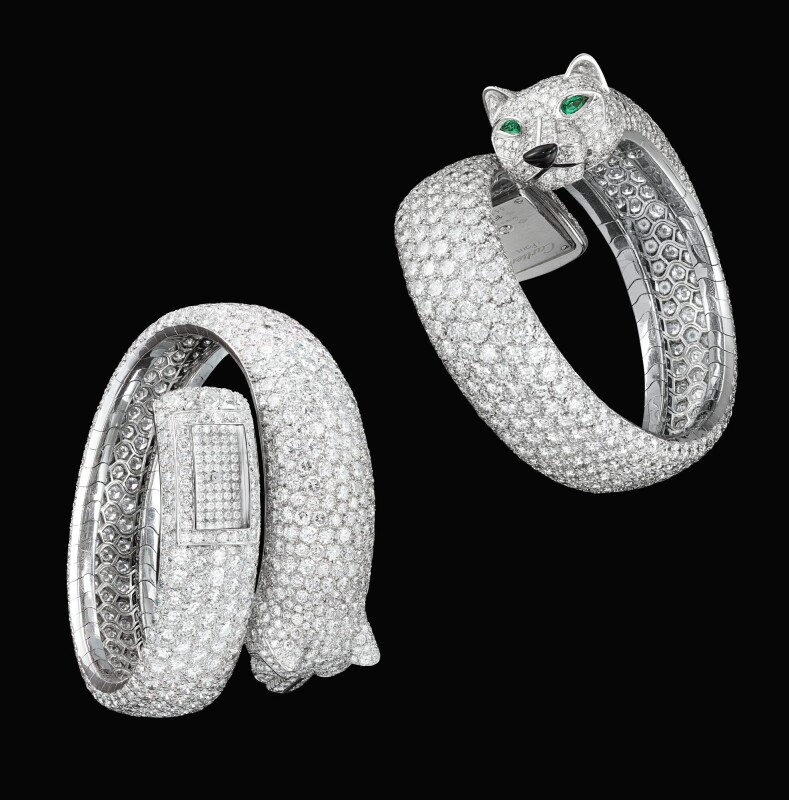
| Iconic Motif | The Panthère design, introduced in the early 20th century, remains one of Cartier’s most recognizable symbols |
| Design Influence | Visionary creative director Jeanne Toussaint shaped Cartier’s bold, sculptural jewelry style |
| Signature Style | The Tutti Frutti collection blends carved gemstones inspired by Indian jewelry traditions |
| Pricing Range | Cartier pieces range from approximately $5,000 to over $1 million, depending on rarity and materials |
| Auction Highlights | Exceptional sets, such as Tutti Frutti jewelry, have achieved multi-million-dollar sale results |
| Collector Appeal | Historic design motifs, strong brand recognition, and enduring craftsmanship make Cartier jewelry highly collectible |
With a roster of visionary designers such as Charles Jacqueau, Pierre Lemarch and and enigmatic creative director Jeanne Toussaint, Cartier’s designs articulated a wide range of influences into highly original and elegant jewels that defined their eras. Their ‘Tutti Frutti’ pieces brought carved emeralds, rubies and sapphires adapted from Indian jewels together in riotous combination from the mid 1920s, while their opulent ‘big cat’ jewels draped themselves across such legendary collectors as Barbara Hutton and the Duchess of Windsor, and became the house’s most beloved mascots.

When tracing the history of Cartier’s iconic jewelry design style, there is one name that continually emerges as the ultimate tastemaker: Jeanne Toussaint. Born in Belgium in 1887, Toussaint survived a challenging childhood and later found herself drawn to the intoxicating streets of Paris, where art, design and societal connections were currency. As a young woman Toussaint became known as a stylish and creative ingénue. It was this charisma that attracted infamous fashion designer, Coco Chanel, illustrator George Barbier, and most crucially, Louis Cartier, one of three brothers managing his late grandfather’s company, Cartier.
In 1913, Louis Cartier commissioned Barbier to draw an advertising campaign to reflect a modern, worldly and alluring woman. The resulting image - Dame à la Panthère - reflects the shift towards Art Deco styling, with an elegant model, adorned with long sautoir necklaces and pearls with a sleek black cat at her feet. It is this drawing that is thought to be the first connection between Cartier and its iconic animal: the panther.
According to some, Louis chose the panther in tribute to Toussaint, who he called his ‘Petite Pantheré (she also famously wore a full-length coat made of panther fur). By the close of 1913, Toussaint had been hired by Cartier to be its director of bags, accessories and objects.
Toussaint stepped away from Art Deco and entered the 1940s with a passion for sculptural and three-dimensional panther creations, typically set with white and yellow diamonds, emeralds and onyx. The first La Pantheré jewel – a gold and enamel panther brooch set with a cabochon emerald – was crafted for the Duchess of Windsor, Wallace Simpson, in 1948. The success of this piece set off a chain reaction, making Cartier Pantheré rings, drop earrings and pendants hugely desirable among European and American elite.
The working relationship between Louis Cartier and Toussaint continued, with Cartier imparting his knowledge of gemstones, diamonds, settings and technique, and Toussaint bringing her joie de vivre, relentless creativity and eye for contemporary fashions, especially the graphic and geometric Art Deco movement. In 1933, Toussaint was named director of Cartier’s luxury jewelry department, signalling one of the most recognisable and collectible eras in the house’s history.

When she wasn’t creating a menagerie of jewels, Toussaint pursued her fascination with India and revealed pieces evocative of Indian Mughal jewelry and ancient Maharajas. Artfully carved rubies, emeralds, diamonds, and sapphires led to a revival of ‘Tutti Frutti’ jewelry under Toussaint’s meticulous direction in the late 1950s. A striking example of this enduring design tradition can be seen in a Cartier Tutti Frutti pendant necklace that sold for 21,640,000 HKD in April 2026, where its vibrant carved gemstones and bold composition reflect the continued relevance of Toussaint’s vision in contemporary high jewelry.
By the time she retired from Cartier in 1970, Toussaint had established her legacy as an artistic visionary, always experimenting, exploring, and creating jewels for those with a worldly outlook and an eye on the future. Her professional fixation with exotic big cats, especially the panther, resulted in the animal becoming a recognizable symbol of Cartier, both then and now.

A refined expression of Cartier’s mastery of diamond design can be seen in a Cartier 'Éclat' diamond necklace that sold for 285,750 CHF in November 2025. Composed of cascading rows of pear-shaped diamonds arranged in a fluid fringe motif, the necklace demonstrates Cartier’s signature ability to balance movement, brilliance, and technical precision. The rhythmic articulation of the stones creates a sense of lightness and flexibility, qualities that have long defined the maison’s most elegant diamond creations and continue to attract collectors seeking timeless sophistication.
More recently, a spectacular Cartier L’Odyssée de Cartier ‘Parcours d’un Style’ Diamond and Rock Crystal Bangle was sold for 46,877,000 HKD in April 2025. Centered on a remarkable 63.66-carat pear-shaped D-color internally flawless diamond, the design exemplifies Cartier’s mastery of sculptural high jewelry and reflects the continued strength of demand for rare, museum-quality Cartier creations at auction.
From the timeless elegance of the Panthère to the vibrant creativity of Tutti Frutti and the architectural brilliance of contemporary high jewelry, Cartier’s most iconic designs continue to shape the global jewelry landscape. These creations represent more than exceptional craftsmanship. They embody innovation, heritage, and artistic vision that has defined the maison for more than a century.
Today, collectors remain drawn to Cartier jewelry for its distinctive style, historical significance, and consistent performance at auction. Whether a celebrated vintage design or a modern masterpiece, Cartier’s icons continue to captivate new generations of collectors and reinforce the brand’s enduring influence in the world of high jewelry.
The Panthère motif is widely considered Cartier’s most iconic design, symbolizing strength, elegance, and innovation. Introduced in the early 20th century, it remains a defining element of the brand’s identity.
Tutti Frutti jewelry features carved emeralds, rubies, and sapphires arranged in colorful, nature-inspired compositions. These designs reflect Cartier’s fascination with Indian jewelry and are among the brand’s most recognizable vintage styles.
Yes, Cartier jewelry is highly collectible due to its historical significance, recognizable motifs, and consistent global demand. Vintage and high jewelry pieces, particularly those with notable provenance, can command strong prices.
Prices vary widely depending on the design, materials, and rarity. Entry-level pieces may start around $5,000, while exceptional high jewelry creations can exceed $1 million at auction.
Whether you're a seasoned collector or new to luxury jewelry, Sotheby’s offers a trusted, seamless way to buy and sell Cartier pieces on the secondary market.
Trust our worldwide network of leading jewelry specialists from a globally renowned auction house established in 1744.