Discover why art editions have become one of the most popular entry points for new collectors and how they can offer access, education, and meaningful connections to some of today’s most important artists.
Discover why art editions have become one of the most popular entry points for new collectors and how they can offer access, education, and meaningful connections to some of today’s most important artists.
Starting an art collection can feel both exciting and overwhelming. For many new collectors, the art market can appear complex, opaque, and financially intimidating. Auction headlines often focus on eight-figure paintings and museum-quality masterpieces, creating the impression that meaningful collecting requires extraordinary resources or years of market experience. As a result, one of the most common questions for new collectors is not simply what to buy, but where to begin.
This is one reason art editions have become such an important part of today’s collecting landscape. From limited-edition prints and photographs to sculptures, textiles, and mixed-media works, editions offer collectors a meaningful way to engage with art at a wide range of price points. They provide access to works by some of the most influential artists in modern and contemporary art, often in formats that are more attainable than unique paintings or sculptures without sacrificing artistic significance.
For many collectors, editions are far more than an entry point. They become an important collecting category in their own right. Some collectors begin with editions before expanding into unique works, while others build highly sophisticated collections focused entirely on editioned art. In both cases, editions offer something uniquely valuable: the opportunity to collect thoughtfully, build confidence, and develop a deeper understanding of the art market over time. The question is not simply whether art editions are a good way to start collecting, but why they continue to be one of the most compelling ways to begin.
Art Editions Key Takeaways
Category
What to Know
Best for New Collectors
Editions are often one of the most accessible ways to begin collecting art.
Price Accessibility
Editions are available across a wide range of price points.
Artist Access
Collectors can acquire works by major artists at more attainable entry points.
Educational Value
Editions help collectors build knowledge about artists, markets, and collecting.
Long-Term Appeal
Many collectors continue collecting editionslong after their first purchase.
Key Consideration
Collect the best work you can within your budget and focus on quality.
What Are Art Editions?
An art edition is a work created in multiple examples under the authorization of the artist. Unlike a unique painting or drawing that exists as a single object, an edition is intentionally produced in a predetermined quantity. Each example forms part of the same authorized release and is considered an original artwork. What defines an edition is not uniqueness, but the artist’s approval of both the concept and the production process.
Although prints are the medium most commonly associated with editions, the category extends far beyond works on paper. Contemporary artists regularly create editioned sculptures, ceramics, textiles, photographs, and mixed-media objects, often in collaboration with specialized workshops or fabricators. These partnerships allow artists to realize works with a high level of consistency while maintaining the integrity of their creative vision across the edition.
For collectors, editions offer a meaningful way to engage with an artist’s work in formats that are often more approachable than unique paintings or sculptures. This accessibility has helped make editions one of the fastest-growing categories in modern and contemporary collecting, particularly for buyers looking to build confidence, develop knowledge, and collect thoughtfully over time.
Pablo Picasso B1296 Madoura, 1961
Why Editions Appeal to New Collectors
One of the most compelling aspects of editions is accessibility. For many collectors, acquiring a unique work by a major artist can feel financially out of reach. Important paintings and sculptures by leading modern and contemporary artists often command prices that place them beyond the reach of many buyers, particularly those just beginning to collect.
Editions create a different entry point. They allow collectors to engage with important artists and meaningful works at more approachable levels, making it possible to begin collecting earlier and with greater confidence. This is part of what makes editions such a valuable starting point. Rather than waiting years to participate in the market, collectors can begin building knowledge and developing their eye through works that still carry real artistic and market significance.
This opportunity to access major artists is one of the reasons editions remain so compelling for new collectors. Through works such as B1296 Madoura, 1961 by Pablo Picasso, currently offered on Sotheby's Buy Now marketplace, collectors can engage directly with Picasso’s printmaking practice in a format that feels far more attainable than a unique painting or sculpture. The signed 1961 linocut, published by Galerie Madoura and printed by Arnéra, exists outside the standard edition as one of 44 proofs in addition to the numbered edition of 100. Examples such as this highlight how editions can offer meaningful access to some of the most important artistic legacies of the modern era.
Beyond accessibility, editions also provide an important educational foundation. They allow new collectors to develop a deeper understanding of artist markets, mediums, scarcity, and collector demand over time. That experience can be invaluable, whether editions remain the primary focus of a collection or serve as the beginning of a broader collecting journey.
Damien Hirst All You Need is Love, Love, Love
Editions Offer Access to Important Artists
One of the most compelling aspects of edition collecting is the opportunity to engage directly with important artists and their broader body of work. Editions often provide access not only to an artist’s imagery, but also to the ideas, themes, and visual language that define their practice. For many collectors, this is where editions become especially meaningful.
This dynamic can be seen across the modern and contemporary art market. Collectors regularly seek out editions by artists such as Pablo Picasso, Andy Warhol, David Hockney, Damien Hirst, Alex Katz, Tracey Emin, and Jean-Michel Basquiat because these works offer a direct connection to some of the most influential artistic voices of the past century. In many cases, editions represent the most realistic way to acquire a work meaningfully tied to these artists’ broader legacies.
For artists with highly recognizable visual identities, editions can provide particularly compelling entry points. All You Need is Love, Love, Love by Damien Hirst, currently offered on Sotheby's Buy Now marketplace, reflects this especially well. Created in 2010 as a silkscreen with diamond dust and issued in an edition of 50, the work captures many of the qualities that continue to define Hirst’s market: visual immediacy, material experimentation, and a strong relationship between beauty and conceptual tension. Works such as this demonstrate why editions can hold lasting appeal. Collectors are not simply acquiring an image. They are engaging with an artist’s legacy through works that remain closely connected to the ideas and aesthetics that shaped their career.
Editions Help Collectors Learn Faster
Starting an art collection is not only about acquiring works. It is also about learning how to collect thoughtfully. This is where editions can be especially valuable, particularly for newer collectors looking to build confidence and develop stronger instincts within the art market.
Because editions involve factors such as edition size, artist proofs, signatures, publishers, scarcity, and secondary market activity, they naturally encourage collectors to ask deeper questions about how value and desirability are shaped. Over time, collectors begin to think more critically about what they are buying. They learn to consider how significant a work is within an artist’s career, how rare the edition may be, whether the work is signed, and how condition or provenance may influence collector demand.
This learning process becomes especially clear when evaluating works such asNight: William Dunas Dance by Alex Katz, currently offered on Sotheby's Buy Now marketplace. The 1983 suite of four lithographs carries far more information than the imagery alone might suggest. Collectors can evaluate the edition size of 100, the presence of 42 artist’s proofs and 3 hors commerce impressions, the role of the publisher Jackie Fine Arts, and the importance of the printing studios involved in production. Examining these details helps collectors understand how editions are structured and why seemingly subtle distinctions can meaningfully influence scarcity, collectibility, and market perception. In this way, editions provide an unusually practical foundation for developing the knowledge and decision-making skills that shape stronger collecting over time.
Editions Can Be Collected at Many Price Points
One of the most common misconceptions about art collecting is that meaningful collecting requires enormous capital from the outset. In reality, the editions market spans an exceptionally broad range of price points, allowing collectors to engage at levels that align with their interests, goals, and budgets.
This flexibility is one of the reasons editions appeal to such a wide range of collectors. Some begin with a single edition by an artist they admire, while others gradually build collections around specific artists, movements, or themes. Over time, collecting often becomes less about spending as much as possible and more about developing conviction, refining taste, and making thoughtful decisions. Starting with a smaller budget does not prevent a collector from building a strong and meaningful collection over time.
This range is visible across both the secondary market and contemporary primary-market editions. Sotheby’sExclusive Editions initiative reflects this especially well, offering collectors access to tightly controlled editions created in close collaboration with leading contemporary artists such as Kehinde Wiley and Peter Halley. These works sit alongside a much broader editions market that spans everything from more accessible entry points to highly sought-after blue-chip editions. The breadth of this category is part of what makes it so compelling. Regardless of where a collector begins, editions offer the opportunity to participate thoughtfully and build a collection with intention over time.
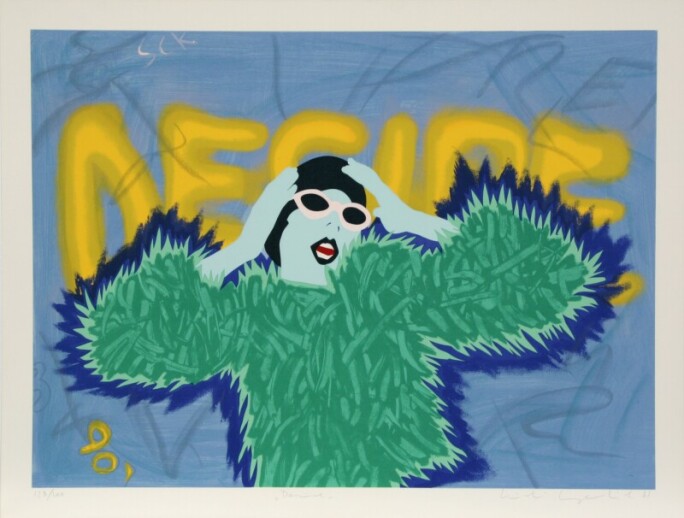
Kiki Kogelnik Desire
What Makes a Strong First Edition Purchase?
Not every edition carries the same level of artistic, historical, or collector significance. For new collectors, a strong first acquisition is rarely defined by price alone. More often, it is shaped by the quality of the work and the thoughtfulness behind the decision.
The strongest first purchases tend to begin with genuine personal interest. Collectors should gravitate toward artists, imagery, or ideas they feel meaningfully connected to, while also considering how the work fits within the artist’s broader practice. A compelling first edition is often one that feels closely tied to the visual language or themes that define an artist’s career. Just as importantly, the edition itself should be well produced, thoughtfully issued, and supported by clear documentation that helps establish authenticity and market confidence.
Beyond the artwork itself, collectors should also pay close attention to practical factors such as condition, signatures, edition structure, and broader market context. Above all, the goal should be to buy the best work possible within your budget rather than rushing into a purchase for the sake of getting started. A strong first acquisition often becomes foundational, shaping how a collector develops their eye, builds confidence, and approaches collecting for years to come.
Ai Weiwei The Papercut Portfolio
Common Mistakes New Collectors Make
One of the most common mistakes new collectors make is moving too quickly. Excitement is a natural part of starting a collection, but rushing into purchases without fully understanding the artist, the edition, or the broader market can lead to decisions that feel less thoughtful over time. Strong collections are rarely built through impulse buying. They tend to develop gradually through curiosity, research, and a growing sense of conviction.
Another frequent mistake is focusing too heavily on a single factor, whether that is price, edition size, or short-term market hype. A lower price does not automatically make a work a better entry point, just as a smaller edition does not automatically make it more desirable. The strongest collecting decisions come from evaluating the full picture, including the importance of the artist, the quality of the work, the structure of the edition, and long-term collector demand.
Thoughtful collectors often train themselves to pause and ask deeper questions before buying. The Papercut Portfolio by Ai Weiwei, currently offered on Sotheby's Buy Now marketplace, is a good example of the kind of work that rewards closer consideration. Before purchasing, a collector might evaluate how the 2019 portfolio relates to Ai Weiwei’s broader practice, what significance the papercut medium carries within his work, and how the edition of 250 influences scarcity and market positioning. Developing the discipline to ask these questions is often far more valuable than rushing into a purchase. Patience remains one of the most important skills a collector can build.
Jeff Koons Balloon Animals I
Why Many Experienced Collectors Still Love Editions
Editions are not only for new collectors. Many experienced collectors continue to actively collect editions throughout their careers because editions offer qualities that can be difficult to replicate elsewhere in the market. They provide access to iconic imagery, important moments within an artist’s practice, and works that often hold real significance within broader art history.
For many seasoned collectors, editions are appealing precisely because they occupy a unique position between accessibility and collectibility. Some build highly focused collections centered entirely around prints, photographs, editioned sculptures, or other multiples because they appreciate the combination of artistic significance, thoughtful production, and market depth. In these cases, editions are not a stepping stone toward collecting unique works. They are an intentional collecting category in their own right.
This becomes especially compelling in categories such as sculpture, where scale, practicality, and accessibility can shape how collectors engage with an artist’s work. Balloon Animals I by Jeff Koons, currently offered on Sotheby's Buy Now marketplace, offers collectors access to one of Koons’s most recognizable sculptural forms in a format designed for private ownership. Issued in 2017 in French Limoges porcelain with a chromatic coating and produced in an edition of 999, the work captures the playful visual language that defines Koons’s broader practice while existing at a scale that integrates naturally into personal spaces. For many collectors, this is exactly what makes editions so compelling. They provide meaningful access to important works and artistic ideas in forms that can be lived with, displayed, and enjoyed in everyday environments.
Robert Indiana Four Seasons of HOPE Gold
So, Are Art Editions a Good Way to Start an Art Collection?
For many collectors, art editions represent one of the most compelling ways to begin collecting. They offer a rare combination of accessibility, artistic significance, and educational value that makes them especially well suited to those entering the art market for the first time.
More importantly, editions help collectors develop the skills that shape stronger collecting over time. They encourage a deeper understanding of how to evaluate quality, scarcity, condition, provenance, and market demand. These lessons extend far beyond editions themselves and often become foundational to how collectors approach every category of art, from prints and photographs to unique paintings and sculpture.
The strongest collections rarely begin with a single perfect purchase. They are built gradually through curiosity, thoughtful decision-making, and a growing sense of conviction. Whether the goal is to build a focused contemporary collection, acquire works by artists you admire, or simply engage more deeply with art, editions offer a meaningful and rewarding place to begin. For many collectors, they are not only the start of the journey. They remain an important and lasting part of it.
Frequently Asked Questions About Starting an Art Collection with Editions
Are art editions a smart way to begin an art collection?
For many collectors, yes. Editions offer an accessible and practical way to enter the art market while building knowledge around artists, scarcity, and collector demand.
Are editions considered original works of art?
Yes. Authorized editions are original works created under the artist’s supervision or approval, often in collaboration with specialized publishers, printers, or fabricators.
Are editions less important than unique works?
Not necessarily. Unique works often command higher prices, but many editions hold significant artistic, historical, and market importance, especially when tied to an artist’s most important imagery or periods.
What should first-time collectors look for when buying an edition?
Focus on the quality and significance of the work. Consider the artist, the edition structure, signatures, condition, provenance, and how the work fits within the artist’s broader practice.
Is a smaller edition always better?
No. Smaller editions can increase scarcity, but scarcity alone does not determine desirability. Demand, artist significance, and market context often matter far more.
Can a serious collection be built entirely through editions?
Absolutely. Many experienced collectors build sophisticated collections focused entirely on editions across prints, sculptures, photographs, textiles, and other mediums.
Buy and Sell Editions with Sotheby’s
Whether you are beginning your contemporary art collection or expanding an established one, Sotheby’s offers a trusted, seamless way to buy and sell editions on the secondary market.
Why Choose Sotheby’s?
Expertly Vetted Selection Explore sought-after editions spanning prints, sculptural multiples, mixed-media works, textile editions, and artist collaborations from many of the most influential artists of the 20th and 21st centuries. Sotheby’s offers editions across a wide range of collecting categories and price points, from emerging contemporary editions to rare and highly limited blue-chip works.
Exclusive Global Access Shop editions through our global auctions and Buy Now marketplace, backed by a worldwide network of collectors, consignors, advisors, and specialists in contemporary art.
Flexible Ways to Buy Bid online, participate in live sales, or purchase instantly through Buy Now. You may also work directly with a Sotheby’s contemporary art specialist for tailored guidance.
Exceptional Value Every edition is authenticated and reviewed by Sotheby’s experts to ensure quality, condition, and accurate market pricing. Many works are offered below primary-market or gallery levels.
Constantly Evolving Inventory Discover editions sourced from major collectors, estates, and private consignments, with new works added regularly across auctions and Buy Now.