Barbara Gladstone According to the Friends Who Knew Her Best

Barbara Gladstone According to the Friends Who Knew Her Best

The gallerist and philanthropist’s personal collection of art and design comes to auction on 9 June 2026. In honor of this sale, we spoke to Jane Kaplowitz and Joel Wachs about what made her such a distinctive figure in the art world.

W hen Barbara Gladstone, the legendary New York gallerist passed away in 2024, the art world felt her loss keenly. Tributes popped up, penned by the artists she supported and her peers in the industry. Words like “mentor,” “advocate,” “joyful,” and “formidable,” appear everywhere in reference to the woman who helmed an international gallery with locations in New York, Brussels, and Seoul.

“Barbara left a permanent mark on our art ecosystem through her discerning eye, curiosity and enthusiasm for new and unorthodox ideas, and above all, her commitment to artists whom she held in the very highest regard,” says Lisa Philips, outgoing director of the New Museum. “We are still in awe of her energy, and her lifelong passion for discovery that fueled and filled her life.”

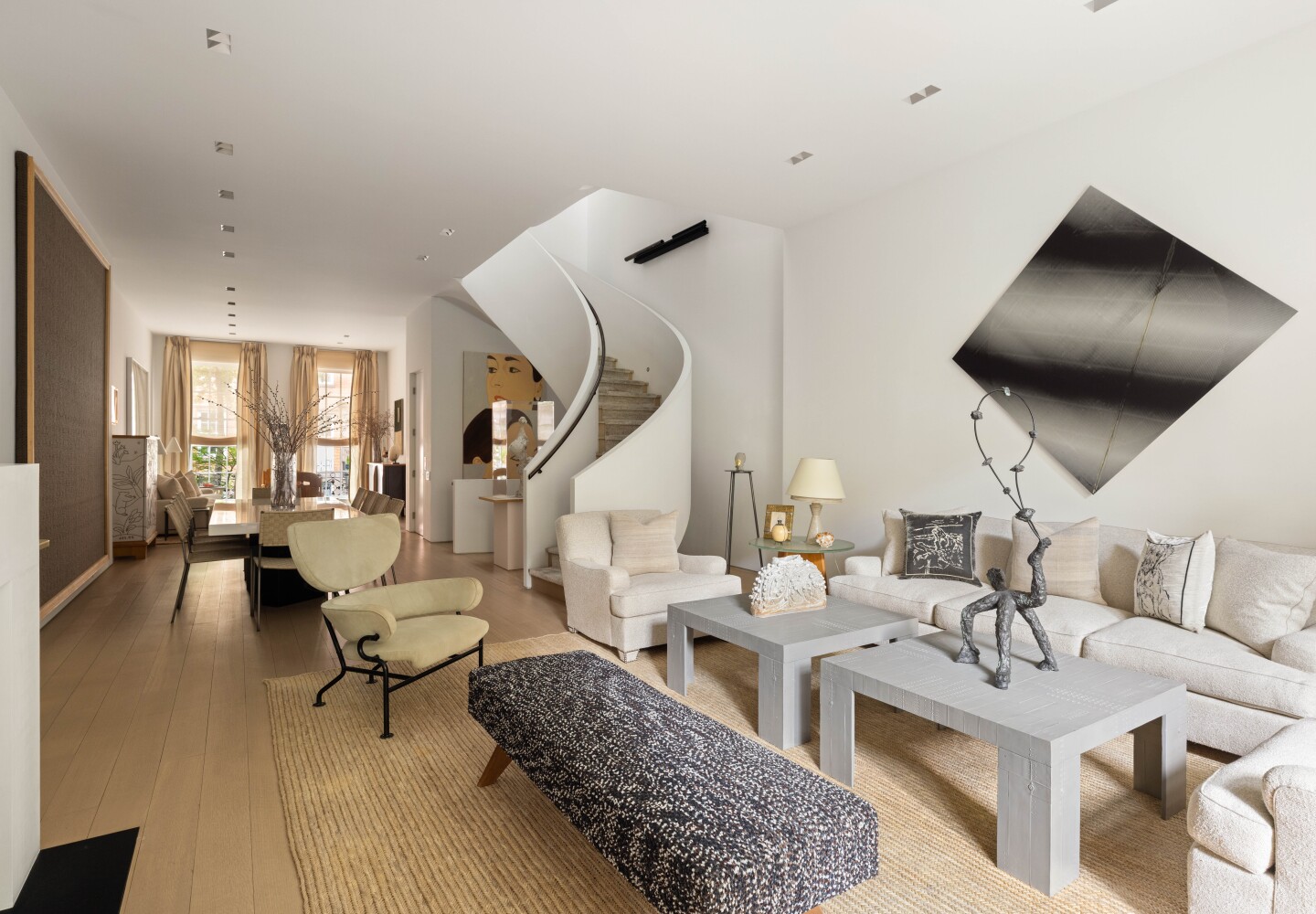
In June, Sotheby’s New York will be hosting a sale of art and design from The Collection of Barbara Gladstone. The auction features works from Richard Prince, Robert Mapplethorpe, Alex Katz, and Caroll Dunham as well as pieces from Franz West, Otto Schultz, Jean Prouvé and Jean Royère. In honor of this sale, we asked two of her good friends, the artist Jane Kaplowitz and Joel Wachs, president of the Andy Warhol Foundation for the Visual Arts, to share their memories of Gladstone and try to distill the undistillable: what made Barbara Gladstone so incredibly special.

Sotheby's: Let’s start with the woman herself: what, in your mind, made her so unique?

Jane Kaplowitz: Barbara Gladstone was a singular figure in the art world, a world often crowded with interchangeable sensibilities, shifting fashions, and rehearsed forms of sophistication. Barbara stood apart from all of it. She possessed an unwavering fidelity to her own eye, her own instincts, her own evolving sensibility. Even as her tastes changed over the years, she never followed trends or succumbed to the gravitational pull of consensus. She moved, always, according to an internal compass.

Joel Wachs: She always stayed fresh. She was always looking, she was always interested. Barbara had strong opinions and she was not afraid to tell you how she felt. I always admired that. If you asked her a question, she'd usually be candid with you, and she expected you to be candid in return. Her honesty was impeccable. If you asked her a question, she would just tell you: I hate this/I love this. And then she’d explain why.

Sotheby’s: We keep hearing that her relationships with artists set her apart. How did you perceive this?

JW: Barbara cared very much about her artists. She was a good businesswoman, but she didn't judge her artists based on just that. She was as loyal to, and as supportive of, artists who did not have great markets as the many who did. And she lived with the art and she supported them. She wasn't only supporting the ones who were having fantastic commercial success. It was the ones that she thought were good artists, artists that enriched her life and thought would enrich yours if you got to experience it.

JK: Barbara’s relationships with artists were profound. If she loved an artist’s work, she wanted to understand the person fully—their history, psychology, references, and emotional life. She often spoke about how Arthur Jafa’s work broadened her own sensibility and deepened her understanding of the world. With Andro Wekua, she felt his personal history was inseparable from the emotional force of the work itself. For Barbara, art was never detached from life.

"She remained intellectually restless throughout her life, constantly looking, learning, refining."
Jane Kaplowitz

Importantly, Barbara did not confine her curiosity to the artists in her own gallery.

JW: Every single space that she had, whether it was her Gallery on 24th street, or in her beautiful space in Brussels, or the Edward Durrell Stone building on 64th street, there were always spaces for artists to stay. Even in the North Fork, in Cutchogue, both on the property where her main house was and a separate house that she bought just for artists. She wanted them and their families to be able to come in to stay. She always wanted to be with her artists. She wanted to enjoy that personal relationship with them as well as just having them be artists whose work she represented.

Sotheby’s: How did you view her as a gallerist? 

JW: Barbara always had a great gallery, she had a wide range of artists, many of whom are really distinctive. She continued in this way throughout her entire career. Even during COVID when everybody else was sitting there saying, oh, my God, what am I going to do? The world is coming to an end, Barbara was expanding her gallery, bringing in artists that she highly admired, bringing Gavin Brown in to partner with her. Barbara was always wanting new challenges. She was always wanting new adventures. She continued, right up to the end.

JK: She remained intellectually restless throughout her life, constantly looking, learning, refining. Like the greatest art historians, she understood that seeing is not static; it is a discipline that deepens with time. Her eye became sharper, more nuanced, more adventurous as she grew older.

Sotheby’s: Our auction includes quite a few design items that she lived with in her home. Can you tell us about some of them?

JK: Her home reflected the same exacting and deeply personal sensibility [as her gallery]. Everything was curated, though never in a sterile or performative way. Each object seemed to exist in a meaningful relation to every other. In her library there was an Anicka Yi piece that hovered ambiguously between sculpture and chandelier, scientific instrument and living organism. It transformed the room. A Franz West table made you feel not simply surrounded by art, but enveloped within a total sensibility. New works would appear as artists entered her orbit and imagination.

"It was never overdone. It was never overstated. It was just always impeccably good taste."
Joel Wachs

JW: When you went to her house on 22nd street, there was fantastic art all over. But it never felt like she was showing off. It felt like she was living with her art and enjoying it. And it was always very personal and very welcoming. You always thought, oh, God, this is a great lamp, and this is a fantastic table. But it was never overdone. It was never overstated. It was just always impeccably good taste.

She would naturally go towards things of other materials before they got popular. She wasn't afraid of ceramics. She wasn't afraid of weaving. All the things that some people called “craft,” she believed in along the way and has proven herself to be right. She just was interested in what the artist did and why they did it and how they did it. And if she liked it, she supported it.

Sotheby’s: The word “loyal” keeps coming up in relation to Barbara. Can you give us your take on that?

JW: A perfect example of Barbara’s loyalty is her relationship with the artist Matthew Barney. I think he is a genius, and has one of the most creative, innovative practices but, you know, he’s dreaming of projects that are really difficult to accomplish and take an enormous amount of resources, dedication and devotion. Barbara always made sure that they happened. She would help make them happen all the way through his career. I remember one time when Matthew had his big show at the Guggenheim. It was like a knockout: massive sculptural installations. I said to Barbara, “you had such an important role in making it happen.” And she said, “Joel, I'm telling you, Matthew is so great that if I wasn't there at all, he would have found another way to make all this happen. That's how great of an artist he is.”

JK: Many people believed Barbara was their closest friend, and in some essential way, she had the capacity to make that true. She possessed a rare combination of intellectual rigor, emotional generosity, and genuine curiosity about other people’s sensibilities, even when they differed completely from her own. My sensibility could not have been more different from Barbara’s in many ways, but that difference interested her. She sought out individuality wherever she found it.

I spoke with her nearly every morning. It is difficult to imagine the world without those conversations, without her voice, her humor, her convictions, her way of sharpening one’s vision simply by being present.

We all sit a little straighter for having known her.

20th Century Design

About the Author

More from Sotheby's

Sell with Sotheby's

Sell with Sotheby's


Wondering what your item could be worth?

Share a few details and photos to receive a complimentary online estimate.

Request an Estimate
Hand holding iphone with Sotheby's estimate tool showing

Stay informed with Sotheby’s top stories, videos, events & news.

Receive the best from Sotheby’s delivered to your inbox.

By subscribing you are agreeing to Sotheby’s Privacy Policy. You can unsubscribe from Sotheby’s emails at any time by clicking the “Manage your Subscriptions” link in any of your emails.

arrow Created with Sketch. Back To Top