Collected Wisdom: Laurent Asscher on the ‘Pleasure Dividends’ of Art
Collected Wisdom: Laurent Asscher on the ‘Pleasure Dividends’ of Art
By
James Haldane| Aug 31, 2026
The Belgian tech entrepreneur and founder of AMA Venezia reflects on building a focused collection, commissioning the largest-ever Jenny Saville painting and why he’d rather have works on his walls than numbers in his bank account.
The Belgian tech entrepreneur and founder of AMA Venezia reflects on building a focused collection, commissioning the largest-ever Jenny Saville painting and why he’d rather have works on his walls than numbers in his bank account.
Describe your collection in three words. American-focused, contemporary and abstract—with a few exceptions on each count.
How has your taste changed through time? I grew up with Joan Mitchell, Sam Francis and Basquiat on the wall. There were also impressionists, including Pissarro and Renoir. My parents were good collectors, but their approach was to have one of each. When I started collecting, I was obsessed with Basquiat, then Twombly. Then I expanded to test other things—at one point, I was buying 10 to 15 paintings a year. Now my taste has narrowed again and my collection is mostly Christopher Wool, Twombly, Marden, Koons, alongside Fontana and a few others, because I like to collect deeply. I also support younger artists, from Justin Caguiat to Jordan Wolfson. I know what I’m looking for and don’t hesitate to redeploy resources when a piece no longer belongs.
Why do you collect? That’s the most difficult question. When I was a kid, a friend of my father’s who was sadly very ill told me: “Laurent, you have to collect. You can collect whatever you want—Post-it notes, wallets—but you have to collect something, because it’s one of the only things that you can transmit to the next generation.” So I collect because of passion, addiction and for transmission.
Do you have a family heirloom, inherited or acquired, to pass on? I kept nothing from my parents’ collection except memories because I wanted to create my own path. My collection is completely new, built since 2012. It will go to my children, who can decide whether to keep it or sell it. I have three kids, and it’s difficult to split a painting. Happily, most paintings will ultimately end up in museums.
How do you live with your collection? I try to rotate pieces between my homes in Monaco and Venice, though it isn’t always easy. In Monaco, I live on the 14th floor and the elevator can only fit two people, so I need a crane. Then I have AMA Venezia, my foundation’s 1,000-square-meter exhibition space in Venice, where we do one public show a year, mainly with my collection. The mission is to show living artists. The current exhibition, “Aura,” puts Joseph Yaeger and Sang Woo Kim alongside Wool. What’s the point of owning art if it’s to keep it only for yourself?
How do you connect with artists? I arrange studio visits to meet artists beyond the brushes and understand their techniques. Once you’re connected, you can do projects together. A good example is Jenny Saville. We have commissioned the largest painting she has ever made: a four-meter-high, eight-meter-long, single-panel work. She almost never accepts commissions. The project began seven years ago at the Venice Biennale, where I hosted a birthday dinner for her. In my apartment, she saw some large Richard Serra drawings and said she loved the format. I replied: “Okay, let’s do one.” I’ve never seen it and I don’t know what it’s about. We’ll unveil it in Venice next year.
Which collectors do you admire? Steve Cohen. He has the eye and the instinct.
Favorite city for art and why? I based my foundation in Venice because art people come for art only, so you get their full attention. In London, Paris or New York, you’re competing with fashion, movies and business. In Venice you become part of a route between institutions like Fondazione Prada, the Pinault Collection, the Peggy Guggenheim Collection, the Biennale itself and, I hope, AMA.
How has your career influenced your collecting and vice versa? I invest in tech, where it’s all about innovation and following young companies. Artists are similar. An artist who does not invent something, who does not have a clear position, will not survive one generation max. And like a startup, you can hold a position for more than a decade before you know whether it’s truly successful.
Best advice from another collector? When I started to collect, Steve Wynn told me: “You can’t be with 20 galleries. You have to choose two galleries, maximum. Otherwise you don’t have their attention and support, so you can’t do what you want.” When you’re obsessed with Twombly, it helps to be close to Larry Gagosian. He gave me access to some amazing Twomblys and Mardens.
Best impulse buy? My Basquiat—my first major acquisition. In 2012, I bought a Basquiat at Christie’s. The next day, I saw another Basquiat at Phillips, “Irony of Negro Policeman,” 1981, and immediately thought: “This is the one I need.” I was still new to collecting, so I called an art advisor friend. We negotiated a deal with Phillips: If I made an irrevocable bid above the low estimate, they would accept the painting I had bought the previous day as part-payment. I didn’t even know what an irrevocable bid was at that point. Then I called Christie’s and asked if they could find a buyer for my painting. “Why?” they said. “You bought it yesterday.” In the end, Christie’s resold the first Basquiat for me—with a $100,000 profit—and I bought the painting I really wanted.
What was your wildest white-knuckle moment at auction? Buying a Wool painting at Sotheby’s New York. I was bidding against another collector, and we went crazy. I prefer nice paintings on my wall and fewer digits in my bank account. You have smaller financial dividends, but you have the pleasure dividends.
What’s the piece that got away? A Lichtenstein painting. It’s always felt too expensive. It might happen one day, but the prices are still going up.
Favorite art-related book? I collect catalogues raisonnés. I have around 20.
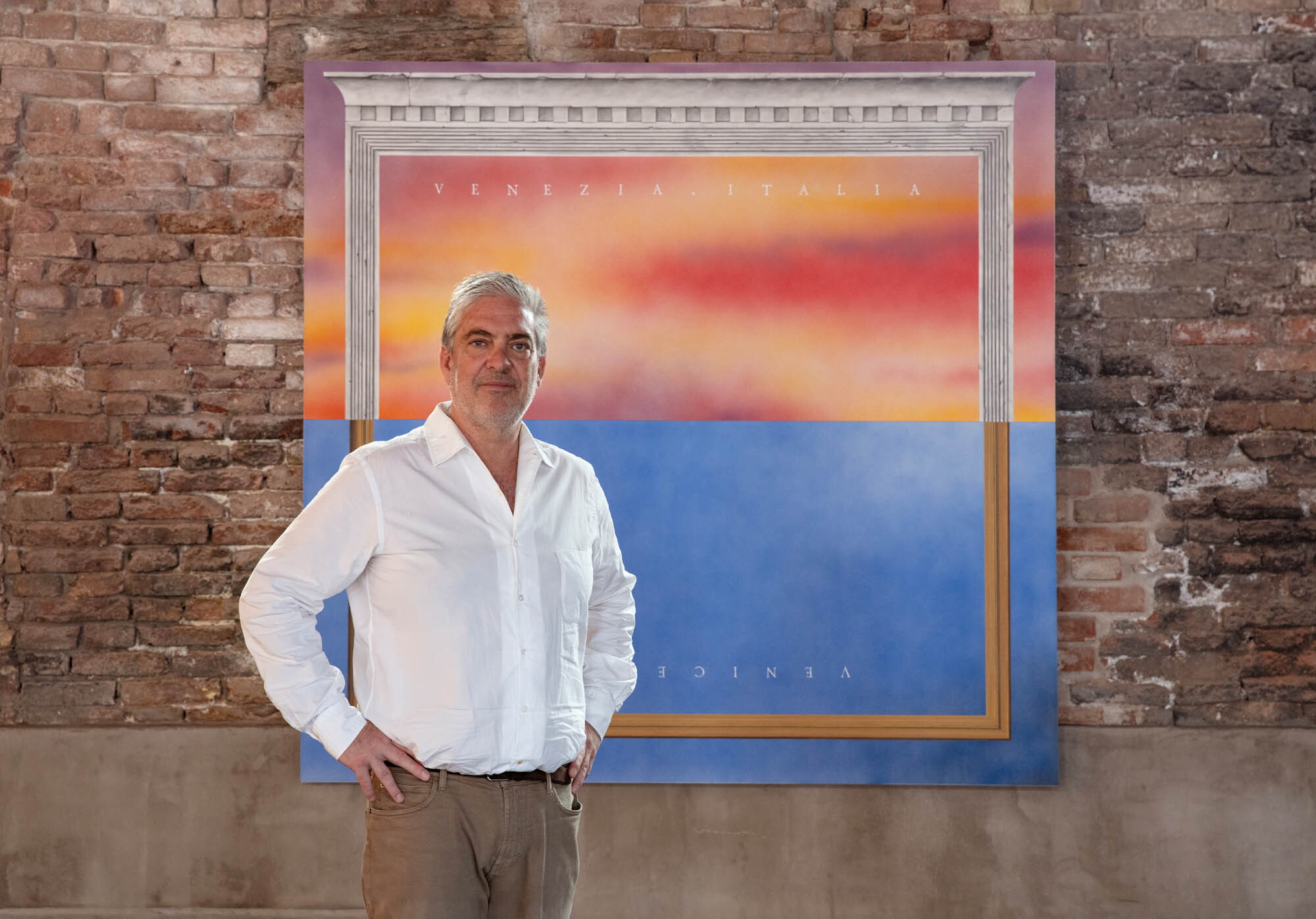
Most recent acquisition? Ed Ruscha created a work for the foundation that begins in Venice Beach in L.A. and ends in Venice, Italy. One side is day, the other night.
What is the best compliment someone has paid to your collection? Apparently a visitor arrived at the entrance of the foundation and told the team that Miuccia Prada had advised them: “You have to go to AMA. It’s the best place in Venice.” I don’t know if it’s true, but I choose to believe it.
Sotheby’s Magazine
About the Author
James Haldane
James Haldane is the Executive Editor of Sotheby's Magazine.