On 1 July, Sotheby’s opened '250 Years of American Art & Culture,’ a selling exhibition at the Breuer commemorating the nation's semiquincentennial. Featured highlights available for private sale include a rare Gilbert Stuart portrait of America’s first president, an Andy Warhol silkscreen of the iconic American dollar sign, working manuscripts by Bob Dylan and Bruce Springsteen, and other extraordinary works that illuminate America’s cultural legacy.
Sotheby's specialists have selected their standouts from the exhibition, and now is your time to explore the very best that 250 years of American art and culture has to offer.
The Declaration of Independence: The Celebrated William J. Stone Facsimile, 1823
Commissioned by Secretary of State John Quincy Adams and authorized by Congress, William J. Stone’s 1823 facsimile of the Declaration of Independence was the first near-exact reproduction of the original manuscript. Of the 201 copies printed, only about 52 are known to survive today. Stone spent nearly three years engraving the document from the original, preserving its appearance as it began to deteriorate. This example is especially significant for its unique presentation inscription, penned and signed by John Quincy Adams himself.
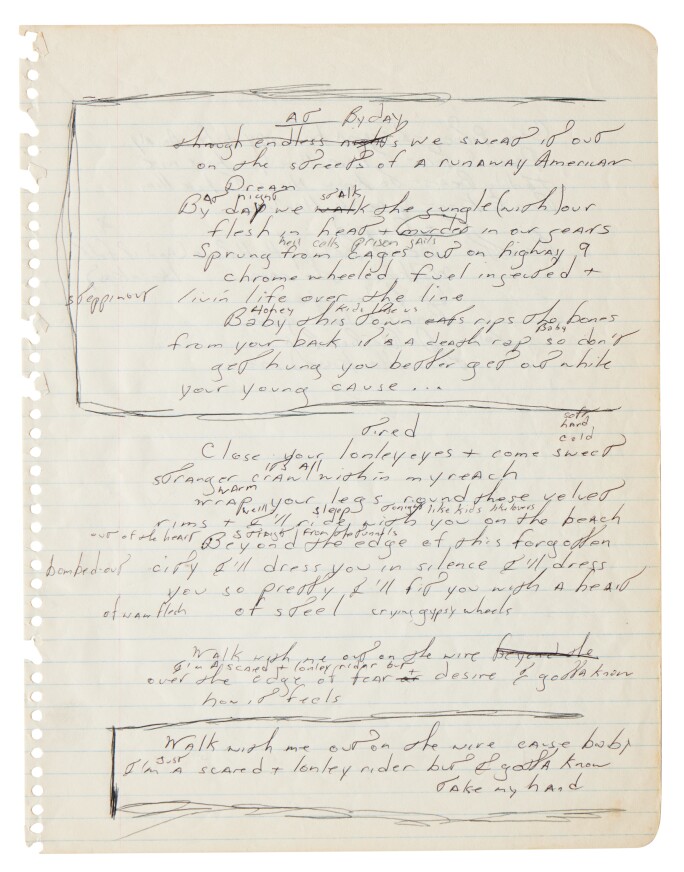
Bruce Springsteen, Born to Run working manuscript, ca. 1974
Bruce Springsteen’s album Born to Run marked a bold evolution for the artist in both sound and ambition. A perfectionist, Springsteen spent six months writing and recording the title track producing roughly 150 versions along the way. While the song explores familiar themes of lust, romance, the open road, dead ends, adolescent angst, Springsteen breathes new life into these everyday American scenes, illustrating grand soundscapes through evocative storytelling and impeccable production. Deeply rooted in the American spirit, yet universally resonant, Born to Run remains one of rock ‘n’ roll’s most celebrated achievements.
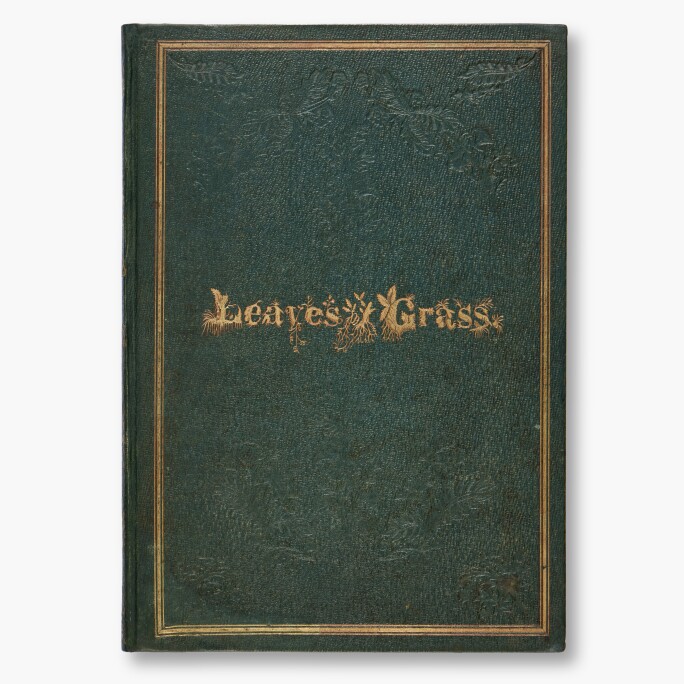
Walt Whitman, Leaves of Grass, 1855
This newly discovered first edition of Leaves of Grass, Walt Whitman’s groundbreaking first poetry collection, has remarkable provenance. Passed down through the family of Whitman’s friend Frank Baker, a physician, founding member of the National Geographic Society, and former superintendent of the National Zoo, this copy offers a rare connection to the poet's personal circle. As one of the most influential works in American literature, it embodies Whitman’s bold vision of democracy, individuality, and the American experience.
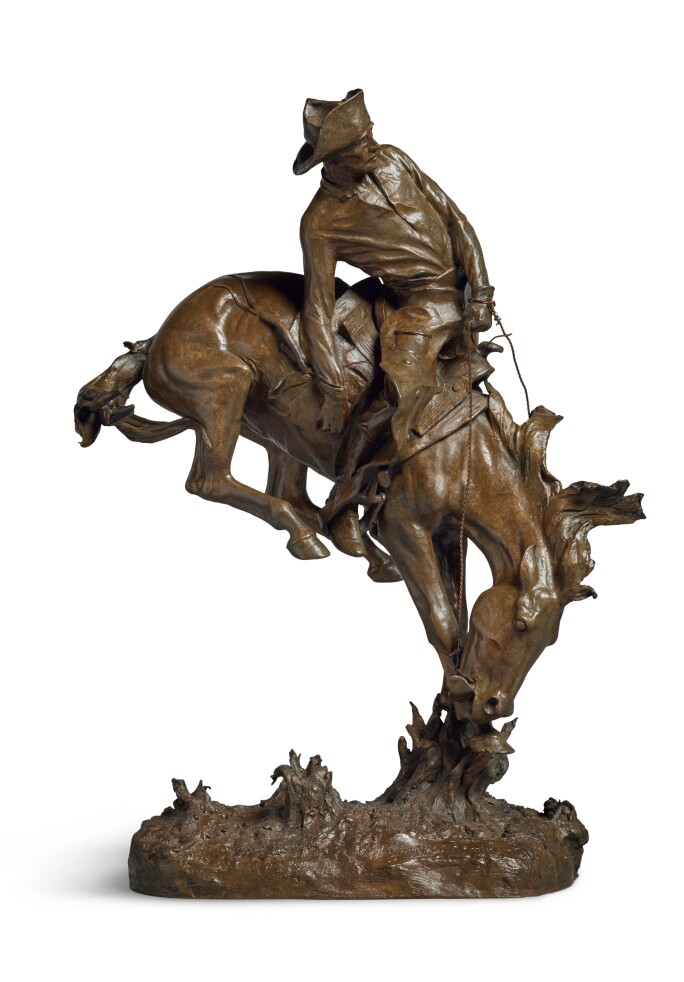
Frederic Remington, The Outlaw, conceived in 1906 and cast in 1909
In many ways, the modern image of the horse-wrangling cowboy and adventure-filled frontier has been ingrained into the American consciousness by Frederic Remington’s tension-filled sculptures, paintings, and illustrations documenting life out west. Conceived 16 years after the official close of the American frontier, The Outlaw captures Remington’s tribute to a nearly-bygone era he had dedicated his entire life’s work to depicting. This cast is one of only 15 produced from this celebrated model in the artist’s lifetime and succinctly captures Remington’s mastery over bronze in the ambitiously-balanced pose, the intricate details of the horse's powerful musculature,and the modeling of his rider’s expressive face.
The Ray Sipherd Sesame Street Archive, 1969–1985
This extensive archive of original Sesame Street scripts and production materials chronicles the development of one of America’s most influential children’s television programs. As one of the show’s four original writers, Emmy Award-winner Ray Sipherd helped shape its educational mission and beloved characters. Spanning from the pioneering early test episodes through the 1980s, the archive includes scripts, song lyrics, research materials, and annotations documenting the creation of iconic figures such as Big Bird, Bert and Ernie, Elmo, and Kermit the Frog, offering a unique window into a cultural institution.
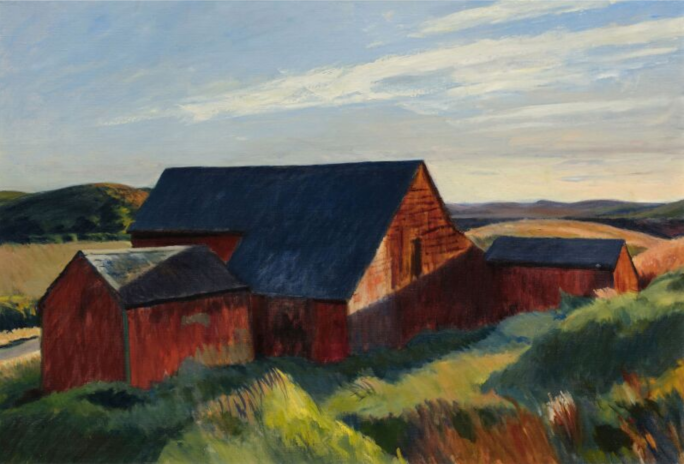
Edward Hopper, Cobb's Barn, South Truro, 1930-33
Cobb’s Barn, South Truro embodies Edward Hopper’s defining themes of solitude and introspection and marks the beginning of his lifelong engagement with Cape Cod. Begun during Hopper’s inaugural summer in Cape Cod in 1930 and completed in 1933, the year the Hoppers built their permanent residence in South Truro, this painting reflects the luminous atmosphere, nuanced color, and architectural focus that shaped Hopper’s distinctly American visual language. Its significance is underscored by an exceptional provenance: held in the collection of the Whitney Museum of American Art for over fifty years, it was later displayed in the Oval Office during Barack Obama’s administration, affirming Hopper’s enduring place in American art.
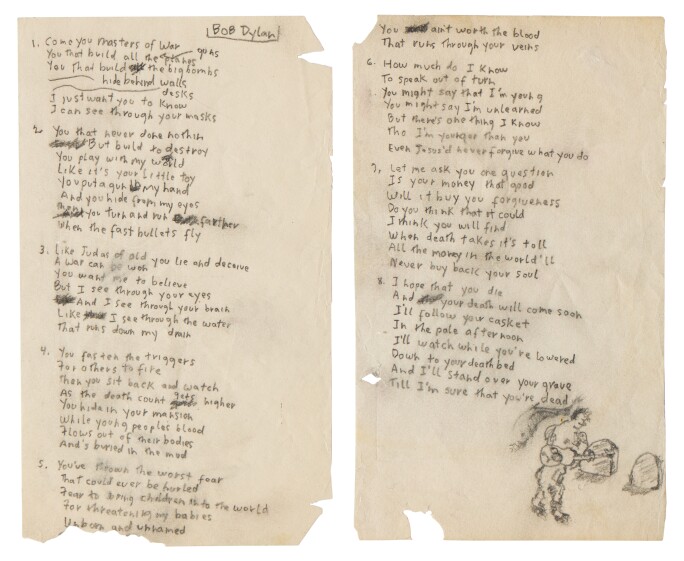
Bob Dylan | "Masters of War" working manuscript, ca. 1963
Bob Dylan’s 1961 arrival in New York City marked a turning point in both his career and the Greenwich Village folk scene. Drawn to the neighborhood that served as the epicenter of America’s 1960s artistic and countercultural movement, Dylan quickly emerged as a powerful new voice. This early working draft of “Masters of War” contains several variations from the final lyrics, offering a rare glimpse into the songwriter's creative process. The enduring antiwar anthem remains one of Dylan’s most powerful and influential compositions.
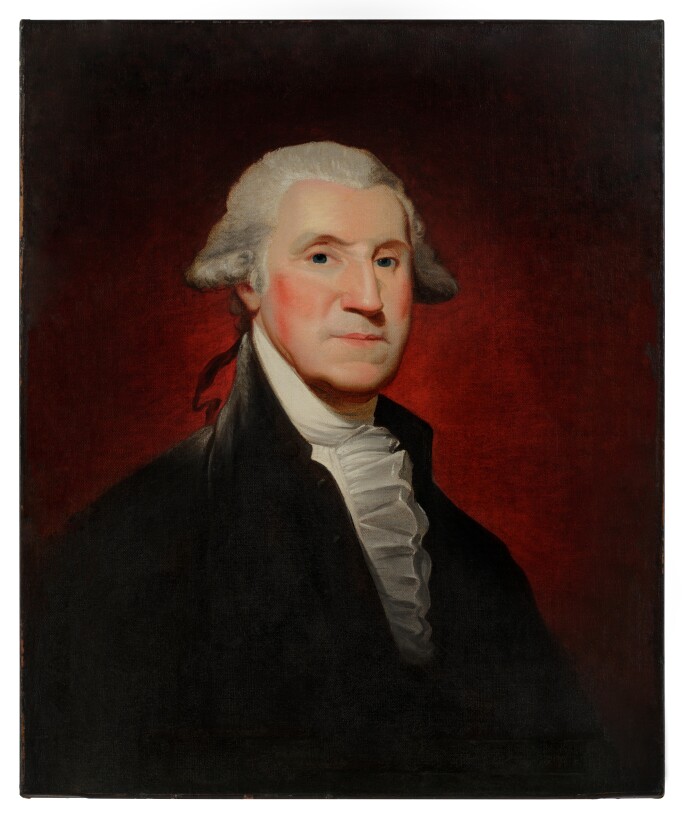
Gilbert Stuart, The Steigerwalt-Parker-Hart Portrait of George Washington (Vaughan Type), 1795
Gilbert Stuart is best known for his over 100 depictions of George Washington, with The Steigerwalt-Parker-Hart Portrait of George Washington belonging to Stuart’s “Vaughan type,” all executed in 1795-96 from Washington’s first sitting for Stuart. The rarest of his three types of Washington portraits, it depicts the president in a three-quarter profile facing left and is named for John Vaughan, the Philadelphia merchant that commissioned the first-known work of this type. Stuart’s unparalleled ability to capture the likeness of his sitters while conveying an imbued sense of command has marked him as America’s preeminent portraitist, and most of his coveted Vaughan type works reside in museum collections today.
The Bill Evans Archive, 1959–1982
Jazz is a quintessentially American art form, and Bill Evans was one of its most influential pianists. Renowned for his lyrical, introspective style, Evans expanded the jazz tradition through innovative compositions and expressive ballads. This archive of twenty-one original manuscript works spans more than seven albums released between 1959 and 1982, including “Time Remembered” and “A Simple Matter of Conviction.” Through drafts, notes, and revisions, the collection reveals Evan’s creative process and enduring impact on the evolution of jazz.
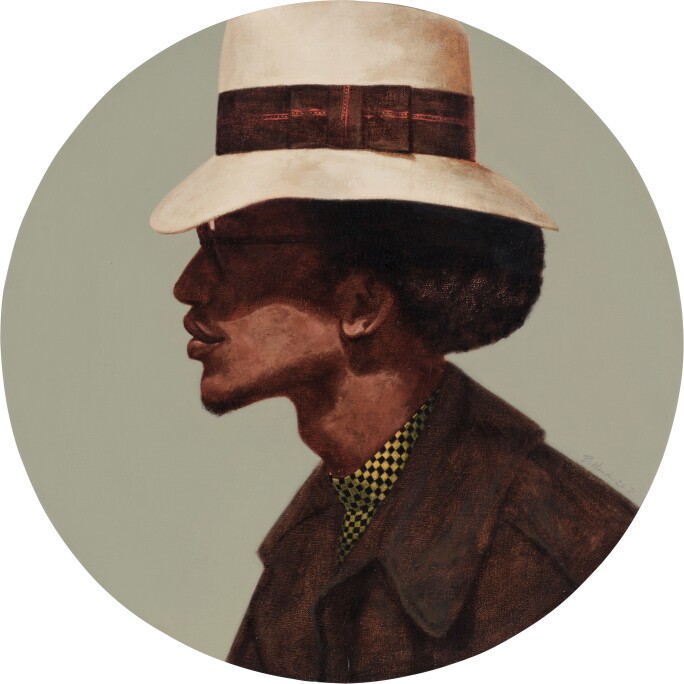
Barkley L. Hendricks, New Michael, 1971
New Michael is a striking example of the style of portraiture that garnered Barkley Hendricks his acclaim. Executed as a tondo, the work makes explicit reference to a format that was central to the Renaissance and the broader western canon, realms where Hendricks continuously asserted the black figure as protagonist. He took the language of European portraiture, referenced in the circular canvas as in the gilded background, and used it to immortalize his friends, peers, and himself—presenting black figures rendered with majesty, poise, and unflinching presence.
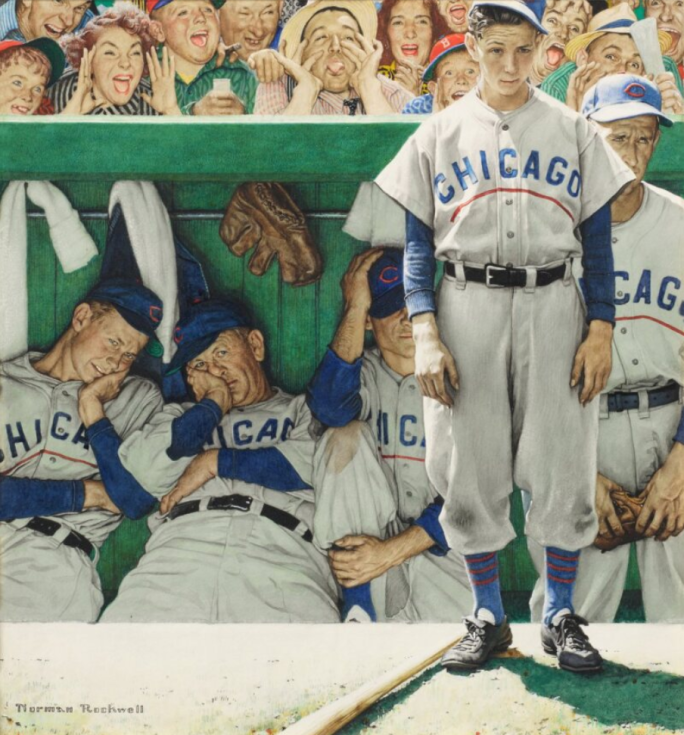
Norman Rockwell, The Dugout (Chicago Cubs in Dugout), 1948
Across more than six decades, Norman Rockwell shaped the visual mythology of 20th-century America by transforming the rituals of everyday life into images of extraordinary narrative and visual clarity. The intricately detailed The Dugout (Chicago Cubs in Dugout) stands as one of his rare watercolors selected to illustrate a Saturday Evening Post cover. Rendered from Rockwell’s reference photographs taken of players and fans alike during a 1948 doubleheader against the Boston Braves, the present work peeks into Rockwell’s precise photography-based process and paints an endearing portrait of America’s national pastime.
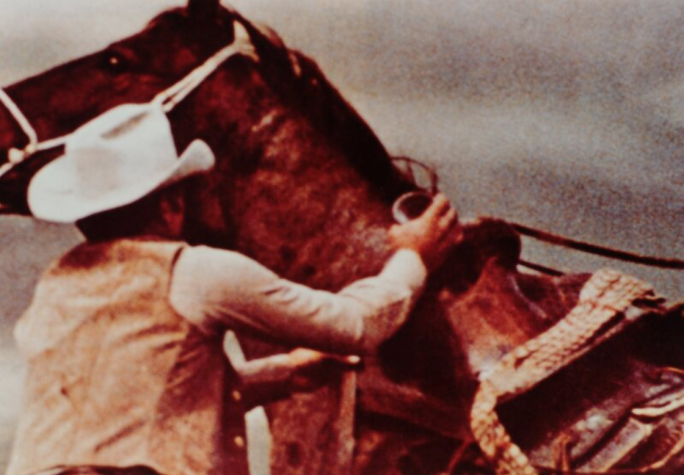
Richard Prince, Cowboys No. 8, 1980–1984
Cowboys No. 8 is a paradigm of Richard Prince’s celebrated Cowboys. For the series, Prince re-photographed Marlboro cigarette advertisements, recontextualizing the source material as an investigation into the way that American visual culture evolves upon itself. Prince not only challenged the nature of photography and conventional notions of authenticity, but also deconstructed these images that were shaped by a nation’s collective imagination. The cowboy is poised as the ultimate embodiment of that figure-type, stunning in its quixotic vision of the American west.
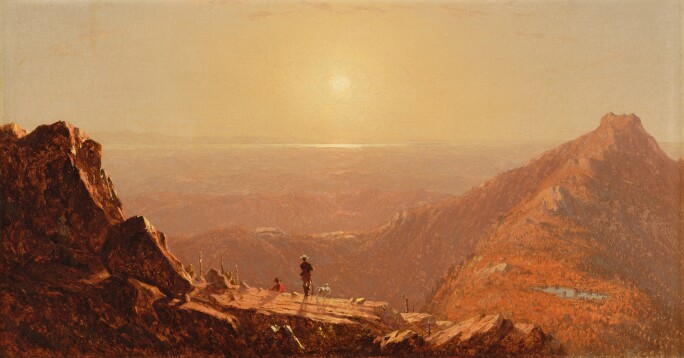
Sanford Robinson Gifford, Mount Mansfield, Vermont, 1859
Painted in 1859 after Sanford Robinson Gifford’s sketching expedition to Vermont’s Green Mountains, Mount Mansfield, Vermont is one of the artist's earliest and most significant engagements with the region. Closely related to a smaller sketch located at the D’Amour Museum of Fine Arts in Springfield, Massachusetts and a larger exhibition work considered by the artist himself to be second amongst his “chief paintings,” Mount Mansfield, Vermont exemplifies Gifford's mature Luminist style through its radiant late-afternoon light, atmospheric depth and carefully-refined detail. The figures surveying the vast wilderness evoke the Hudson River School’s fascination with the American landscape as both a sublime natural wonder and a symbol of national promise, posing poignant commentary on the past, present and future of American expansion.
Andy Warhol, Dollar Sign, 1981
The present work is a magnificent explication of one of Andy Warhol's career-long concerns: the social, cultural and creative potential of the American dollar as a signifier of status. In the Dollar Sign series, Warhol transforms the symbol into a talismanic figure that reflects his fascination with money and consumer culture at large. By isolating the dollar sign from the banknote and magnifying it to a monumental scale, Warhol crafts a universal emblem that encapsulates the materialism that underpins the darker undercurrents of the American Dream.
Mary Cassatt, Children Playing with a Dog, 1807
One of the few women and the only American to exhibit with the Impressionists, Mary Cassatt forged a modern vision of domestic life centered on the lives of women and children. Painted in 1807, Children Playing with a Dog exemplifies her exploration of maternal intimacy and childhood. The pyramidal composition and open window beyond recall Renaissance depictions of the Madonna and Child, while Cassatt's Impressionist handling of color, light, and brushwork—capturing the textures of silk, lace, fur, and skin—transforms the subject into a distinctly modern vision of family life. By including an older child, Cassatt expands her traditional mother-and-child motif into a meditation on childhood development, care, and imitation.