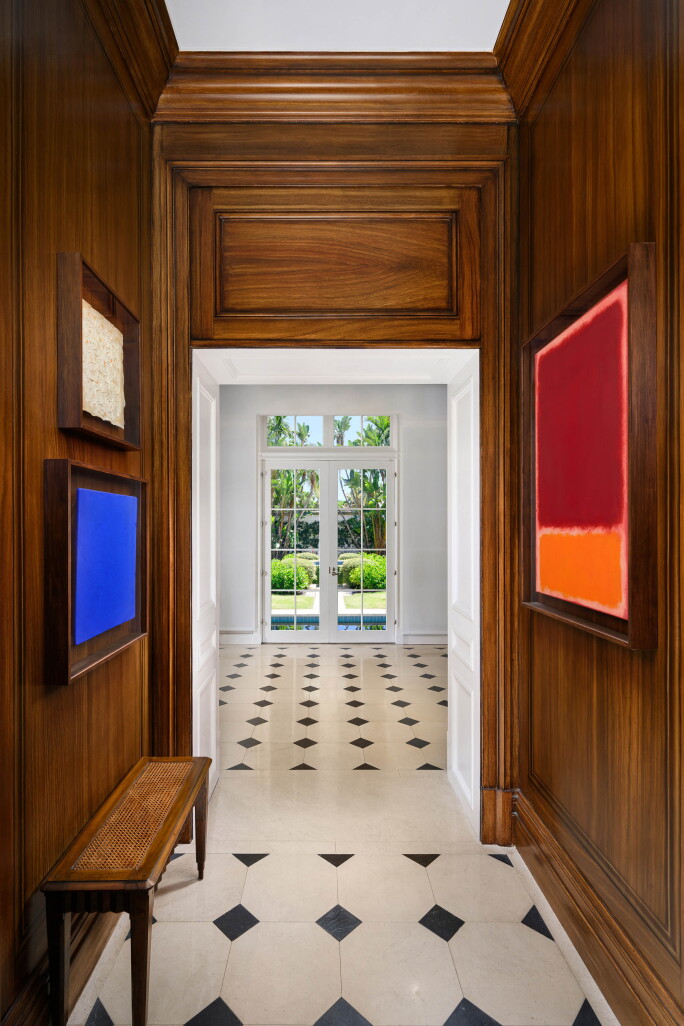
Vision: The Extraordinary Collection of Theodore and Ruth Baum
Vision: The Extraordinary Collection of Theodore and Ruth Baum
By Sotheby's| Oct 8, 2026
A landmark collection of postwar and contemporary art, estimated to exceed $100 million, featuring works by Rothko, Mitchell, Ruscha, Burri, Warhol, Fontana and more, many appearing at auction for the first time in decades.
A landmark collection of postwar and contemporary art, estimated to exceed $100 million, featuring works by Rothko, Mitchell, Ruscha, Burri, Warhol, Fontana and more, many appearing at auction for the first time in decades.
United by a singular vision, collectors and philanthropists Theodore and Ruth Baum’s passion for life, art, design and philanthropy led them on a deeply personal, decades-long pursuit to cultivate an extraordinary collection – one that was not only among the most distinguished private collections encapsulating the developments of 20th-century art history, but reflective of the forward-thinking vision, refined elegance and intellectual rigor that defined them as partners in life and collecting.
As storytellers in every sense, the Baums were guided by their insatiable curiosity as they built a collection that transcended movements, generations and geographies. Throughout the course of two decades, they traveled around the world in pursuit of great works by the visionaries of American abstraction, the innovators of Pop, Minimalism and Conceptualism, and the radical experimenters of post-war Italian art, assembling a constellation of artists engaged in dialogue with one another, each work challenging and illuminating its counterpart.
View Highlights from the Collection
Type: lot
Category: Lot
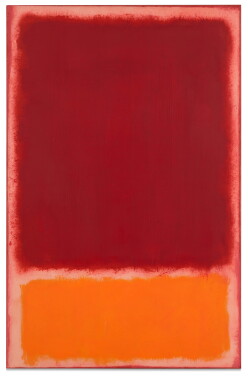
Mark Rothko
Mark Rothko
Untitled, 1967
Type: lot
Category: Lot
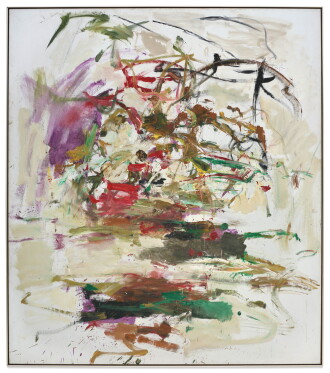
Joan Mitchell
Joan Mitchell
Green Book of Barbara Guest, 1960
Type: lot
Category: Lot
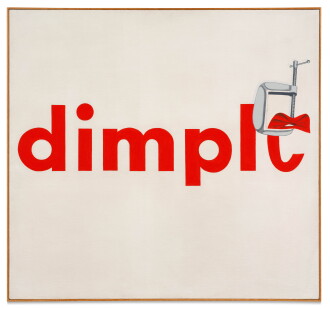
Ed Ruscha
Ed Ruscha
Dimple, 1964
Type: lot
Category: Lot
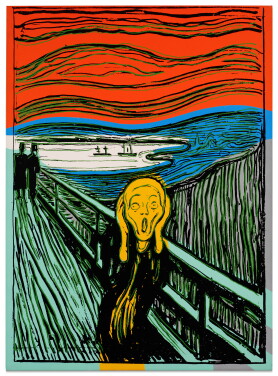
Andy Warhol
Andy Warhol
The Scream (After Edvard Munch), 1984
Type: lot
Category: Lot
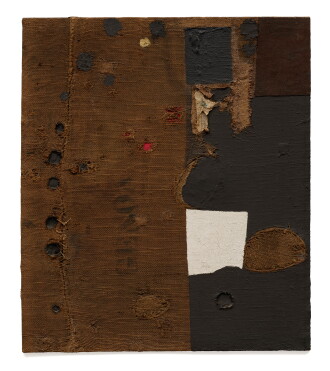
Alberto Burri
Alberto Burri
GA1, 1954
Type: lot
Category: Lot
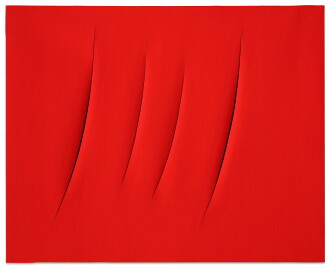
Lucio Fontana
Lucio Fontana
Concetto Spaziale, Attese, 1960
“Ted and Ruth were among the most committed collectors of their generation. I was immediately struck by their inquisitiveness and the deep level of their research. No doubt they came to European abstraction via the touch points of post-war American abstraction. They instinctively understood that artists like Lucio Fontana and Yves Klein were vital to the history of 20th-century abstraction and could sit perfectly well situated in their beautiful interiors alongside Rothko, de Kooning, Mitchell and others. Every work to enter their collection had to pass their extremely high bar of research and curation. Relationships mattered to them, and they cultivated them assiduously. It shows in the deep level of quality that’s a hallmark in this collection.”
Oliver Barker, Sotheby’s Chairman, Europe
The collection is highlighted by a radiant red-and-orange 1967 painting by Mark Rothko, their first acquisition of contemporary art 43 years ago and the catalyst of their collecting journey; alongside an expansive canvas by Joan Mitchell, also held in the Baum’s collection for four decades and making its auction debut this November; an early text painting by Ed Ruscha; post-war European masterworks by Alberto Burri and Lucio Fontana; and more.
Kicking off Sotheby’s New York sales week this November, more than 20 works will be offered in a dedicated Evening Auction on 16 November, with a dedicated Day Auction following on 17 November, with additional works offered through 2027. Featuring works largely unseen at auction for decades, the collection is estimated to achieve in excess of $100 million. Highlights will travel to London, Hong Kong, Paris, and Los Angeles, and New York for pre-sale exhibition.
“The Baums’ life was one that was filled with sophistication, beauty and intelligence, which was embodied in their remarkable collection of Contemporary art, their love of family and travel and the panache of their homes. From the first time we bid together in the 90s, throughout the course of the following years, Ted, Ruth and I all learned together as they shared their insights and enquiries about Contemporary art and the evolving art market. Ted and Ruth’s passion was inspiring- they re-defined what contemporary collecting could be.”
Leslie Prouty, Senior Advisor, Senior International Specialist, Modern & Contemporary Art
The Baums’ Extraordinary Collecting Journey
The Baums’ collecting journey began, as many great collections do, with a single acquisition – a John Sloan sketch purchased by Ruth at a charity auction in the late 1970s. What started with one drawing soon evolved into an exploration of drawings and watercolors on paper by 20th century Modern artists such as Fernand Leger and Pablo Picasso. As their passion for collecting grew, the Baums set their sights on acquiring what they imagined would be “one great painting.” In 1983, they believed they had found it when they encountered a radiant red-and-orange 1967 painting on paper by Mark Rothko, their first acquisition of contemporary art. Instead, the painting marked not an endpoint of their collecting ambitions, but became the catalyst for a decades-long pursuit.
As they continued collecting through the 1990s, they acquired works by Joan Mitchell, Sam Francis, Hans Hofmann and more, which together created a rich dialogue of postwar American abstraction. Acquisitions of works by Tom Wesselmann and Roy Lichtenstein in 1999 marked a new chapter introducing American Pop Art, Minimalism and Conceptualism. Subsequent acquisitions marked the formation of a panorama of midcentury American innovation, crowned by the inclusion of two masterworks: Ed Ruscha’s Dimple - which paid tribute to Ted’s love of witty wordplay - and Andy Warhol’s The Scream (After Edvard Munch), one of the most iconic examples of Pop appropriation of art historical precedent.
The Baum’s artistic curiosity knew no bounds, as they began travelling far and wide visiting galleries, auctions, exhibitions and art fairs. The Baums assembled an exceptional group of European postwar masterworks over the following years, including important works by Piero Manzoni, Lucio Fontana, Yves Klein and more.
“The Baums’ acquisition of Rothko’s Untitled in 1983 ignited their love affair with Contemporary Art. Selling an Impressionist and Modern works on paper collection to fund the purchase, they said they would never need to buy another picture after they fell in love with the Rothko. Luckily, the Collection tells a different story and from that moment, they began on a journey of curiosity and discovery to form what would come to be one of the most distinctive collections of its time. Ruth was kind and warm, and discerning - her eye was remarkable as she designed their homes and had a vision for how their art should live together. As much as the Baums loved collecting artworks, they loved living with them and cherished them over many decades.”
Charlotte Van Dercook, Senior Specialist and Head of Marquee Private Sales, Contemporary Art
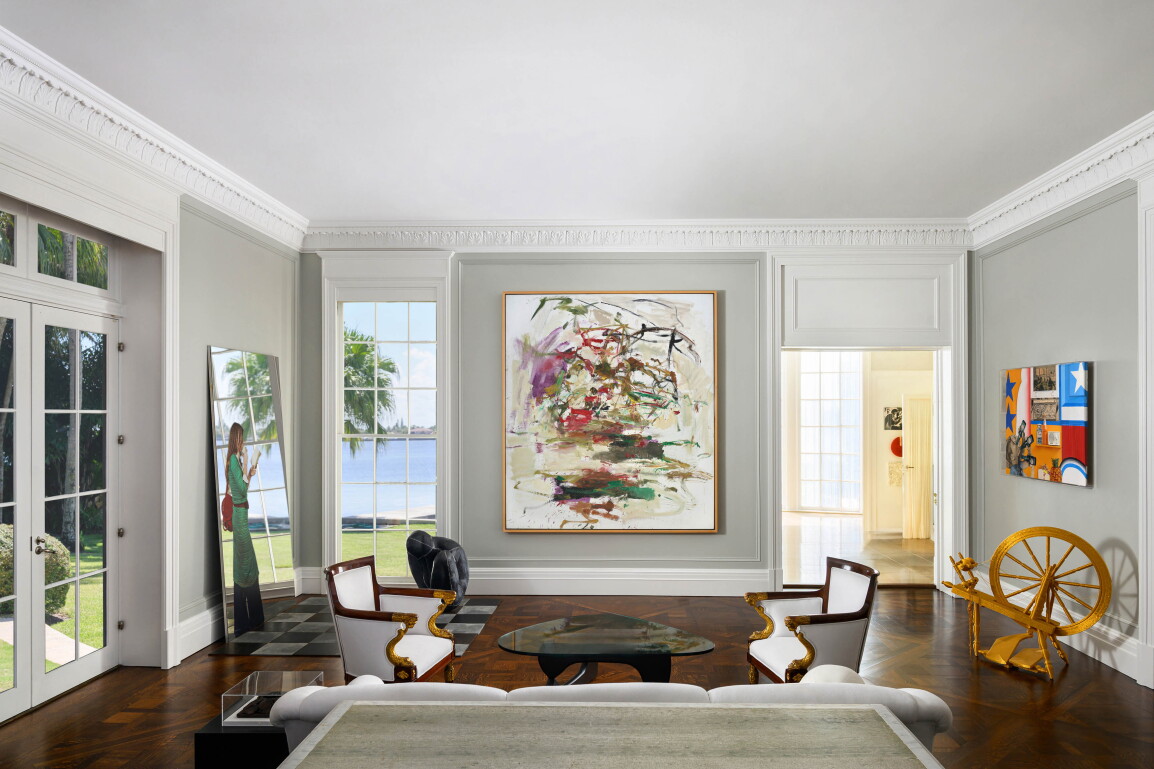
Once acquired, each work began a new life within the Baums’ homes in Palm Beach, Southampton, New Jersey and New York City. As Ruth once explained: they “love the process and love living with the works.” To enter their home was to enter their world of art, where they curated inspiring installations: a radical sculpture against fine European furniture, or a work of abstraction before the expansive view of the ocean. The works that filled the walls of their homes were cherished companions in their daily lives, and their homes were places where friends and family as well as museum groups and guests at philanthropic events alike gathered amid warmth and elegance.