

The Ray Sipherd Sesame Street Archive, 1969–1985
Price upon request
Taxes not included
VAT and other taxes are not reflected in the listed pricing. Read more
Details

Description
The Ray Sipherd Sesame Street Archive, 1969–1985
"Can you tell me how to get, how to get to Sesame Street?" — SESAME STREET THEME
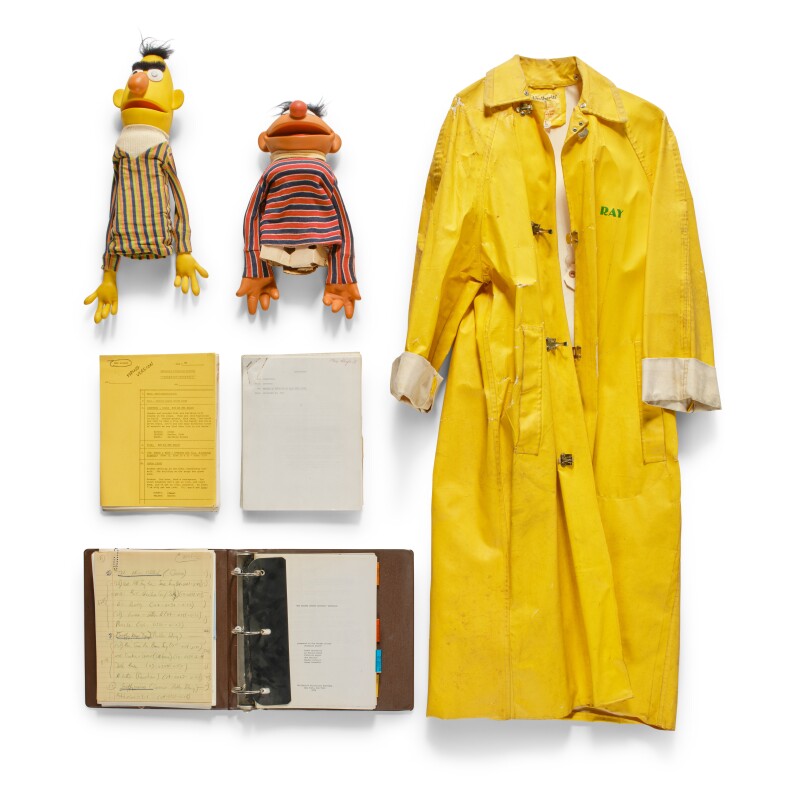
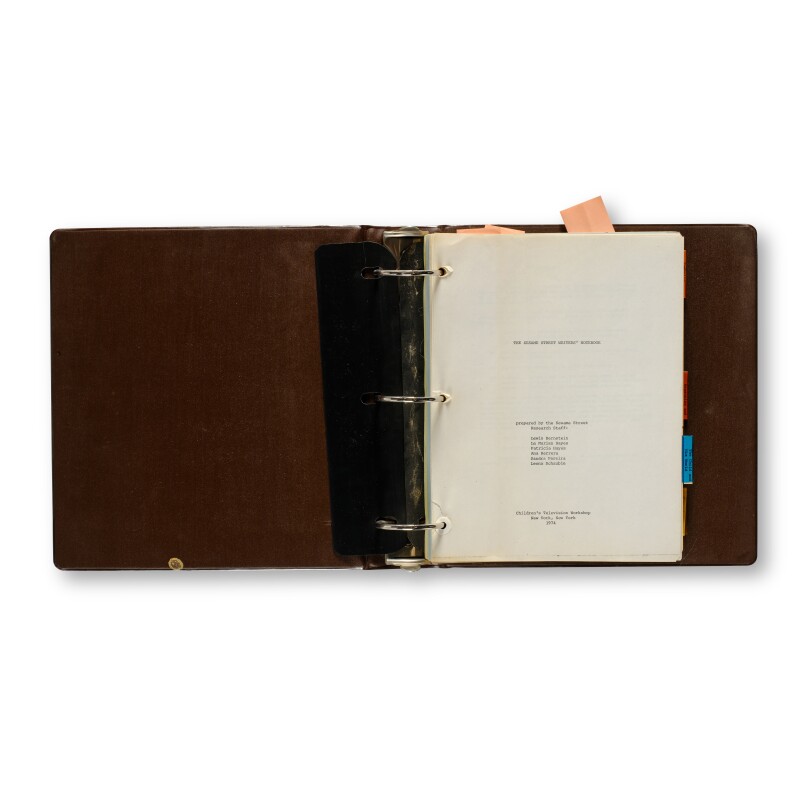
A remarkable archive of Sesame Street's production dating from its earliest episodes, comprising:
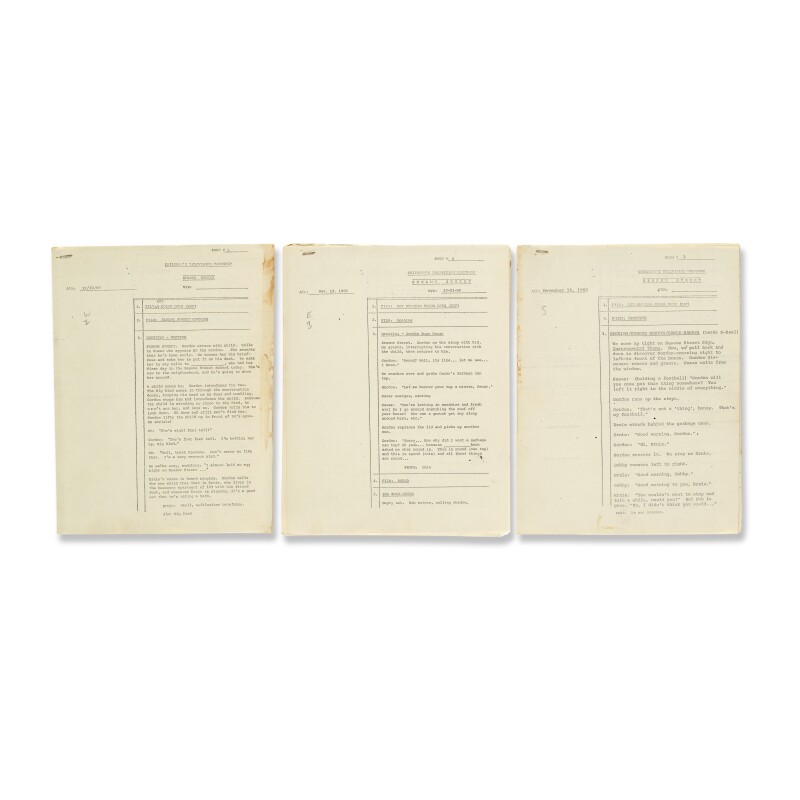
- Hundreds of mimeographed typescripts, beginning in November of 1969, and running through December 1985, many with Ray Sipherd’s manuscript annotations
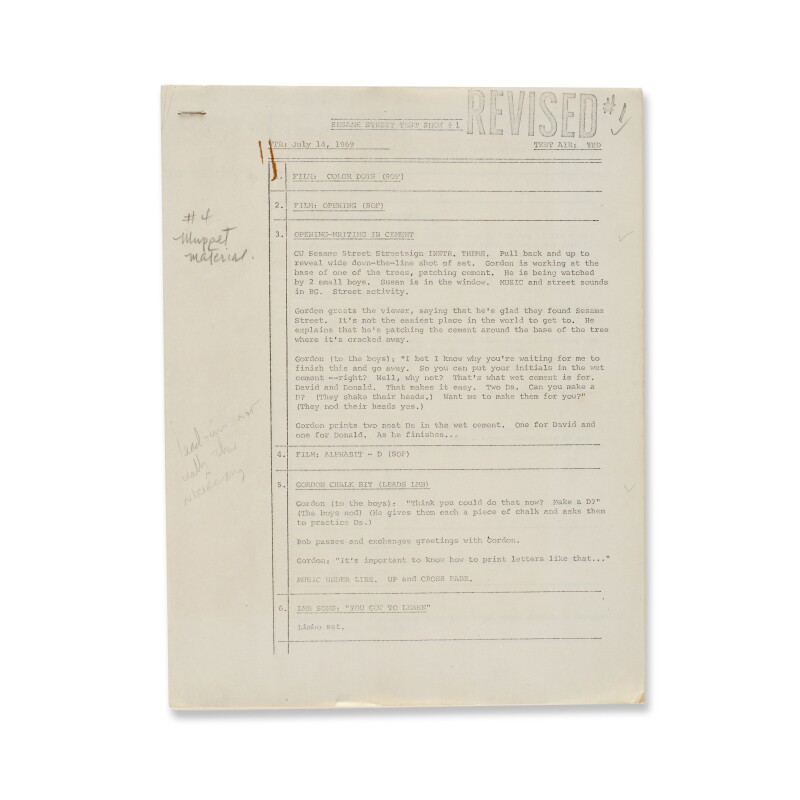
- Mimeographed typescripts for test episodes that predate Episode 1
- Manuscript notes related to rewrites and brainstorming sessions “The Sesame Street Writers’ Notebook,” which served as the show’s curriculum
- Numerous daily production schedules
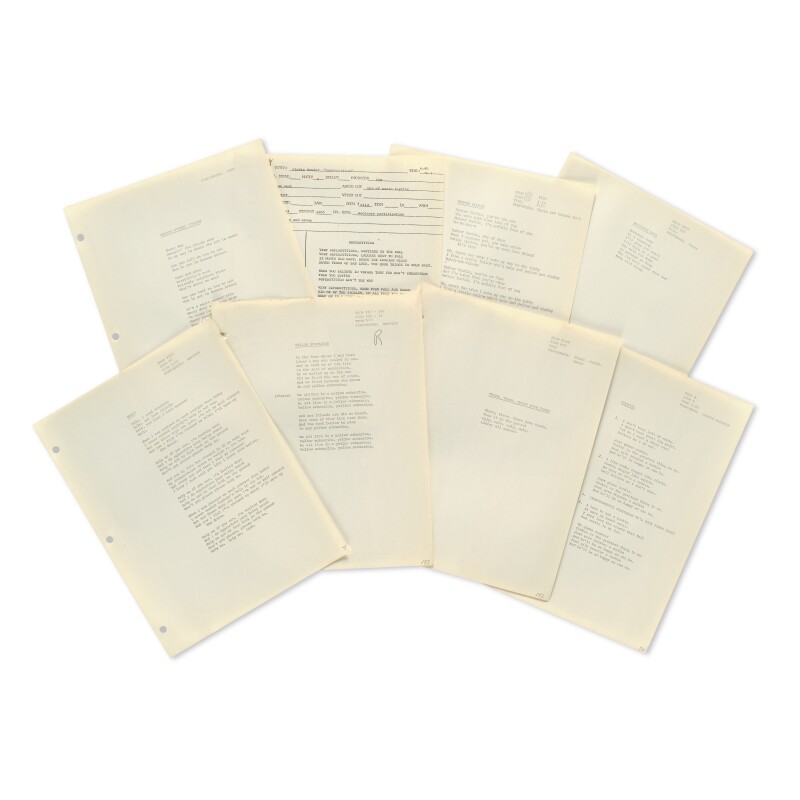
- Lyric sheets
- Guest lists
- Bert and Ernie puppets, dating to the early days of Sesame Street
- Ray Sipherd’s personalized, official “Production Staff” raincoat
Detailed inventory available upon request.
From its very first episode, Sesame Street captivated the imaginations of America’s children. Created by Joan Ganz Cooney and Lloyd Morrisett in the late 1960s, the show aimed to not only entertain, but to educate. Sesame Street is now regarded as the largest—and least costly—early childhood intervention to ever be implemented in the United States. It is undoubtedly part of the American cultural fabric.
Three-time Emmy Award-winner Raymond ("Ray") Duke Sipherd was one of the four original writers of Sesame Street, and he contributed to the show for 17 years. The present archive captures not only the highlights of Ray's career with Sesame Street, but also the origins and development of countless iconic characters, songs, and stories that have inspired children and adults alike in the nearly 60 years since the show's premiere.
Sesame Street was founded upon tenets of developmental psychology in children, and in order to reach a diverse audience, it applied a research-based approach behind-the-scenes. The present archive contains not only the "Writers' Notebook," which outlined the writers' theories about effective youth education across socioeconomic backgrounds and long-term goals for the show, but also the scripts of the test episodes which aired before the first season premiered. Test audiences of children in Philadelphia and New York watched and responded to five episodes of the variety show in July 1969 before the show's official first episode on 10 November 1969—the script of which is also contained in the archive.
Among the highlights of the archive is the pilot script, which introduces iconic characters like Big Bird, Oscar the Grouch, and Bert and Ernie (who also appear in the archive as early puppets). There are song lyrics, from Ernie's Grammy-nominated signature song "Rubber Duckie," to Kermit's poignant ballad "Being Green," to the show's memorable theme song. The script for Episode 1439 introduces Elmo, the red puppet who developed from a non-speaking unnamed character to one of the most beloved and recognizable characters in the series; other scripts highlight guest stars like Carol Burnett, James Earl Jones, C-3PO and R2-D2, Stevie Wonder, and more. Throughout, Sipherd's annotations to scripts, lyric sheets, call sheets, and research documents illuminate the day-to-day development of the storylines and characters over the years.
The nearly comprehensive archive provides a glimpse into the production of America's most iconic children's series, capturing the intersections of American television history, developmental psychology, socioeconomic policy, and childhood nostalgia.