A s treasured Chinese works of art are brought under the hammer at Sotheby’s this May, we take a closer look at the stories behind some of these exceptional objects.
The Yangling Hufu, an exceedingly important and rare gold-inlaid bronze tiger tally, Qin dynasty
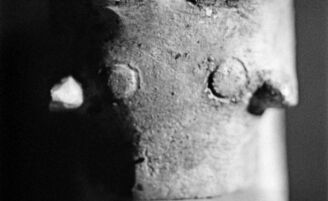
Tiger tallies (hufu) were first produced in the late Warring States period and the Qin dynasty as objects that conferred absolute imperial authority. The present tally consists of two matching halves. Cast from bronze and inlaid with delicate gold script, one half was held by the emperor, the other by his general. Only when a messenger delivered the emperor’s half – allowing both parts to be physically matched together – was the emperor’s command to his general formally activated. Because they symbolised the transfer of royal power to the individual in possession of the completed tally, tiger tallies have remained elusive and highly charged tokens of rule. A famous example of an inscribed tiger tally from the same period, the Yangling Tiger Tally, which bears the same twelve-character inscription as the present tally, was formerly in the collection of the Qing scholar Luo Zhenyu (1866–1940) and is now in the collection of the National Museum of China, Beijing.
A unique and large inscribed black limestone sculpture of a hound, Tang - Song dynasty, 8th - 12th century
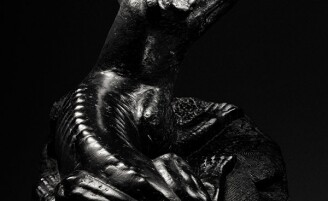
Few images are as enduringly cherished as the watchful hound, and at 68 cm tall this nearly life-sized black limestone sculpture is an extraordinary, likely unrivalled example of Chinese statuary. Lying serenely yet poised to pounce, it demonstrates remarkably naturalistic carving and a rare degree of expressive detail – observe its arched tail, spine, ribs, and even its warm, careful smile. Zoomorphic sculpture existed long before the Tang and Song dynasties – from zodiacal tomb figurines to “Spirit Road” stone carvings – but this figure’s touch-worn finish and devotional-like detail are unique. A worn inscription suggests an official presentation or dedication, either in 712 CE during the Tang Emperor Ruizong’s reign, or more plausibly, 1115 CE during the Northern Song Emperor Huizong’s reign. Inscribed animal funerary pieces are uncommon, suggesting that this was a piece made to be treasured by the living rather than interred with the dead.
A superb and large yellow jade figure of a camel, Tang – Song dynasty
Exquisitely carved and exceptionally rare, this coiled yellow jade camel is a masterwork of form and substance. Its unusual size and material distinguish it from the usual Tang dynasty ceramic figurines of camels bearing foreigners or precious cargo that conjured up the Silk Road’s exotic opulence. The camel’s coiled posture evokes the minimalist grace of Han dynasty animal carvings. One of the oldest known examples of a jade camel sculpture dates from the Han dynasty: now in the Taipei Palace Museum, it is incised with an imperial poem composed by the Qianlong Emperor centuries later, underlining the role of the camel in the history of imperial appreciation and delight. Comparable Tang dynasty jade camel figures can be found in the collection of the Victoria and Albert Museum, London, and the Seattle Art Museum.
An exceedingly rare and important imperial falangcai 'geese' teapot and cover, Blue-enamel mark and period of Qianlong, Matching record dated to the 17th day of the 9th month in the 5th year of the Qianlong period (corresponding to 1740)
A painterly scene of migrating wild geese unfurls around this falangcai teapot, a rare expression of Qing courtly taste made for the Emperor’s personal enjoyment and conceived as an object of quiet delight. Documented as created in 1740 within the Forbidden City’s imperial workshops and accompanied by a poetic colophon and rare imperial seals, only five other falangcai teapots from the Qianlong reign – including the pair to this present piece – appear to recorded. Appearing at auction for the first time, this work’s provenance is equally remarkable: formerly in the family collection of a former Qing court lady, later acquired into an Asian private collection, this is the only known falangcai teapot that has remained in private hands to date. Recorded in the Qing Archives of the Imperial Workshops, it serves as the exact companion to a celebrated example in the British Museum’s Sir Percival David Collection.
LOT
An exceedingly rare and important imperial falangcai 'geese' teapot and cover, Blue-enamel mark and period of Qianlong, Matching record dated to the 17th day of the 9th month in the 5th year of the Qianlong period (corresponding to 1740) | 清乾隆 琺瑯彩「飛鳴宿食」圖茶壺 《乾隆年製》藍料款 據錄製於乾隆五年九月十七日
ESTIMATE: 30,000,000 - 80,000,000 HKD
An exceptional and large white jade teapot and cover, Qing dynasty, Qianlong period
This flawless white jade Qianlong teapot and cover is undoubtedly the finest of its kind in private hands. Carved from high-quality Khotan white jade with an elegant, rounded profile and exceptional polish, jade ewers were eulogised by the Tang dynasty poet Wang Changling’s famous line, “An icy heart in a jade pot,” cementing an image of lofty moral purity. Comparable Qianlong pieces intended for use in the Qing court typically show deliberate russet enhancements by the Imperial Palace Workshops to mask imperfections, yet the present example preserves an uninterrupted purity of stone, making it a singular technical and artistic achievement.
Ding Guanpeng, Spring Festival Market in a Time of Peace, 1744
Ding Guanpeng was one of the Qing court’s most admired painters, serving the Yongzheng and Qianlong emperors and excelling in figure painting as well as intricate Buddhist and Daoist subjects. He developed a distinctive East-West style through collaborating with Jesuit missionary artists such as Giuseppe Castiglione (Lang Shining), combining Western techniques – linear perspective, anatomical accuracy, and chiaroscuro – with traditional Chinese brushwork and mineral pigments. This innovative spirit was deeply admired by the Qianlong Emperor, who often inscribed poetry on Ding’s works. Rendered meticulously in ink and colour on silk, Ding depicts a bustling market in the prosperous Qianlong era, rich in joyful, quiet abundance – scholars in conversation, peddlers offering their wares, delighted children, a monkey trainer peering round at the crowd gathering behind him. The painting bears the seals of the Qianlong and Jiaqing emperors, and is recorded in the prestigious Qing imperial painting catalogue, Shiqu baoji sanbian.
A fine and very rare small falangcai grisaille-decorated ‘chrysanthemum’ wine cup, Mark and period of Yongzheng
This exquisitely potted cup, a masterpiece of falangcai (“enamel colour”) porcelain, captures the “hermit among flowers” – the chrysanthemum – in a sumptuous yet refined grisaille “ink style” that testifies to the Yongzheng Emperor’s exacting personal taste for scholarly restraint. The development of this cup is recorded in the imperial archives, starting with an order in 1932 from the Summer Palace to the Imperial Enamel Workshop in the lead-up to the Mid-Autumn Festival, which was fulfilled by the delivery of four white porcelain wine cups decorated with ink chrysanthemums by the first day of the following month. One of only four extant examples, its fluid, naturalistic rendering suggests the masterful hand of court artists, perhaps even influenced by Giuseppe Castiglione (Lang Shining). Combining technical perfection with the symbolic weight of longevity and noble seclusion, this wine cup represents a tangible link between the quiet nobility of the Shizong reign and the pinnacle of Qing imperial porcelain.
An extremely rare puce and blue-enamelled ‘dragon’ handled vase, Seal mark and period of Qianlong
With its striking contrast between puce-red dragons and jewel-like blue scrolling clouds and foaming waves, this Qianlong vase is thought to be unique. No comparable examples of the same vase form and dual-colour palette are known, although a few imperial objects with the same puce and blue enamel palette can be found in the Tokyo National Museum. Puce-hued dragons first appeared in the preceding Yongzheng reign, when the Emperor commissioned the Imperial Palace Workshops to use overglaze enamels to replicate underglaze copper-red dragon vases. Imperial enamellers developed a deep puce enamel that, when deftly shaded and stippled, lent a sense of volume and movement to the copper-red’s mottled depth. The elephant-head handles, painted in a brilliant blue enamel, form a rebus symbolising “peace and prosperity in the universe” (Taiping youxiang). Restricting the decoration to puce and blue enamels is an exceptionally rare scheme on Qing imperial porcelain, reflecting the technical daring of the Qianlong imperial kilns.
Lang Shining (Giuseppe Castiglione, 1688–1766), Gathering of Two Auspicious Signs, Completed in the eighth month of the first year of the Yongzheng reign (1723)
Two extraordinarily rare auspicious signs appeared in the first year of the Yongzheng reign (1723). “Truly, this is the benevolent reward bestowed by Heaven, Earth, the divine spirits, and the sacred soul of my late imperial father,” wrote the Yongzheng Emperor, overjoyed by these signs of the so-called Mandate of Heaven amidst regnal turmoil. This canonical painting by Giuseppe Castiglione (Lang Shining), the famed Italian Jesuit, garnered the Yongzheng Emperor’s trust and laid the foundation for Castiglione’s position in the palace where he would ultimately be remembered as one of the most significant court painters in history. The painting was treasured in the imperial collection, cherished by the Qianlong Emperor, and gifted by Puyi, the last emperor of China, to the powerful warlord Zhang Xueliang (known as the Young Marshal), before entering the influential Soong family where it has remained until recent years.
An exceptionally rare and superb white and russet jade mythical beast, Han dynasty
Eyes bright and fangs bared, this majestic winged bixie (which literally translates to “ward off evil”) is one of the finest and most important examples of Han dynasty jade carvings ever to come to market. Mentioned in the Shiji (Records of the Grand Historian) as a wild beast tamed by the Yellow Emperor himself and by the Book of Han (111 CE) as native to the Western Regions, bixie were thought to protect their owner and point the way to paradise, and monumental stone versions as well as rare small jade renditions of bixie have been uncovered at Han dynasty burial sites.
An exceptionally rare group of five jade pendants, Eastern Zhou dynasty, Warring States period
Yuzupei jade pendant sets were essential accoutrements for the Eastern Zhou dynasty aristocrat. They were markers of high social rank as well as moral purity, their rhythmic clinking ensuring the wearer maintained a dignified and courtly gait. Adorned with the guwen “grain pattern” believed to symbolise agricultural fertility, cosmic harmony, and the endless cycle of life, this striking composition of five jade pendants – a bi disc flanked by openwork dragons, an arched heng pendant with stylised dragon heads, a classic circular bi disc, a flared russet cylindrical bead, closing with a dramatic dragon plaque, all strung together with colourful agate, stone and glass beads – is associated with elite burial traditions of the Warring States period and frequently encountered in high-status tombs across the Central Plains and the Chu cultural sphere. Similar examples have been uncovered at the Jincun tombs in Luoyang, Henan province, as well as the Warring States Chu tombs.
An exceptional and rare jade kneeling figure, Han dynasty
Knelt in reverence, his gentle head slightly turned, sloping shoulders and clasped hands emerging from beneath flowing robes, this remarkable Han dynasty jade figurine is one of the finest surviving examples of early figural jade sculpture ever published. Modelled in the round, its extraordinary naturalism and emotional expressionism contrasts with the figural carvings of the Shang and Zhou dynasties, and even the crude ‘Han Eight Cut’ design composed of a triangular head, body and arms that is commonly uncovered at Han dynasty royal sites. Comparable naturalistic jade figural carvings include the famous bearded man with hands on a low table excavated from the tomb of Liu Sheng, Prince of Zhongshan (d. 113 BCE), in Mancheng, Hebei.
An exceptionally rare and finely painted blue and white 'floral' jar, Mark and period of Chenghua
Standing at a mere 10.5 cm tall, its fine white porcelain painted in smoother and warmer cobalt tones than its “heaped and piled” Yongle counterparts, this jar is a witness to the exceptionally refined imperial porcelains produced during the relatively short Chenghua reign. This period was not defined by major stylistic revolutions, but rather by extraordinary technical precision and sublime proportions, palettes and surfaces that rewarded the intimate gaze. This jar captures a moment of perfect equilibrium, with luxuriant autumn blossoms and budding flowers on leafy stems emerging from the grassy turf, whilst two grasshoppers hover gently above. Chenghua wares were produced in extraordinarily small numbers at Jingdezhen exclusively for court use, with the direct input of high-ranking court officials. Regarded as the pinnacle of blue-and-white wares, they number only a few hundred pieces worldwide, mostly held by institutional collections and primarily still in the Palace collections of Beijing and Taipei.
An extremely rare imperial Junyao sky-blue-glazed hexagonal jardinière, Early Ming dynasty
This luminous sky-blue glazed, tan-rimmed hexagonal flowerpot belongs to the famous, yet mysterious group of wares known as the Numbered Jun. Inscribed at their bases with numerals from one to ten, they were reserved for imperial use. While all fourteen attested Numbered Jun forms are rare, this particular flowerpot and its stand appear to be by far the rarest, with only one flowerpot of this distinctive hexagonal form remaining in the Qing Court Collection at the Beijing Palace Museum. Only five other examples exist, all within public institutions, including one in the Percival David Collection at the British Museum, London, and three in the collection of the Harvard Art Museums, Cambridge.
An exceedingly rare copper-red-ground reserve-decorated 'vine' double-gourd bottle, Ming dynasty, 15th century
The double-gourd bottle, traditionally wielded by Li Tieguai (one of the Eight Immortals) as a container of magic herbs and medicines, was “a symbol of the joining of Heaven and Earth in the adept's own body.” Ceramic versions entered production from around the turn of the 14th century. Combined with the motif of sinuous vines bearing blossoms and smaller gourds, they brought blessings of generations of future descendants. This unique example, with its deep copper-red ground and milky-white slip-painted vines, has an intriguing history, with no direct counterparts among collected or excavated porcelains. Copper red was always among the most challenging colours to achieve both for porcelain glazes and for painted decorations, requiring a precise chemical reaction involving exacting kiln oxygen and temperature levels. This work stands testament to the enterprising spirit and determination of Chinese potters during the heyday of the Jingdezhen imperial kilns.
A rare and large blue and white 'peony' charger, Ming dynasty, Yongle period
Yongle blue and white chargers are extremely rare. This grand charger, spanning 45 cm in diameter, is adorned by two peony blossoms issuing from a single leafy stem, surrounded by nine sprays of fruits and flowers, whilst its exterior is encircled by a meandering pomegranate scroll. It is elegantly painted in varying tones of cobalt blue with the characteristic ‘heaping and piling’ effect of the most sought-after examples of early Ming porcelain, a byproduct of the use of iron-rich imported cobalt, which lends a three-dimensional vitality to the floral details. There are few surviving examples with a similar composition: one example from the Ataka Collection is now in Osaka’s Museum of Oriental Ceramics, whilst another (catalogued as Xuande period) is in the collection of the Shanghai Museum.
A very rare Longquan celadon shiliuzun pomegranate jar, Ming dynasty, Hongwu - Yongle period
This delicate olive-green glazed, pomegranate-shaped vase features a dual cultural symbolism: in Han Chinese tradition, the pomegranate symbolises “many sons and abundant happiness,” whilst for Tibetan Buddhists it symbolises fertility and completeness. Replete with identifiable elements of Tibetan Buddhist bum-pa ritual vessels – the folded rim, drooping edge, and raised boss decoration – its suitability as a religious gift sheds light on the early Ming imperial gift system as well as Sino-Tibetan cultural exchange. The Yongle Emperor particularly valued relations with Tibetan religious leaders and lavished them with gifts of porcelain and other worthy tributes. Comparable examples to this shiliuzun vase are extremely rare, with one identical vessel from the Qing Court Collection now preserved in the Beijing Palace Museum.
A very rare reticulated blue and white lobed 'gourd' tripod incense burner and cover, Mark and period of Jiajing
This Jiajing blue and white porcelain incense burner is extremely rare, with no known similar examples. Standing 12.5 cm tall, it consists of a gourd-shaped body resting on three legs that and flanked by two raised ruyi heads. Alternating ruyi heads and lotus blooms decorate the porcelain exterior, with three of the six lobes pierced by coin motifs, a highly unusual feature usually seen on vases and boxes. This exceptional piece was selected for the cover of the 2009 exhibition catalogue of The Fame of Flame: Imperial Wares of the Jiajing and Wanli Periods (University Museum and Art Gallery, the University of Hong Kong), one of the earliest exhibitions dedicated to Jiajing and Wanli wares.
A very rare pair of blue and white 'fish' bowls, Marks and period of Jiajing
Decorated with a mackerel, catfish, carp, and mandarin fish – a rebus symbolising conjugal harmony, abundance, and integrity – swimming through a dense aquatic forest of lotuses and waterweeds bordered by cresting waves, these high-footed bowls are iconic examples of the Jiajing Emperor’s personal taste. A devout Daoist, he favoured auspicious designs that celebrated the natural world. High-footed bowls of this type remain exceptionally rare, as is the unusual interior placement of the reign marks. Only one similar example is known: now in the Cleveland Museum of Art. To find a well-matched pair in such pristine condition is an extraordinarily rare occurrence: one was acquired in London in the 1990s, whilst its companion was acquired from Sotheby’s London in 1975 and has remained in the same family collection since then for nearly five decades.
A finely painted blue and white 'Li Bai' jar and cover, Ming dynasty, Chongzhen period
This jar belongs to a small but exceptional group of “High Transitional” Jingdezhen wares created over a ten-year period from 1634 to 1643. Ironically, as the Ming dynasty teetered under Manchu threat, and imperial kiln production faltered, this period would become the late Ming dynasty’s last brilliant phase of porcelain production. Jingdezhen potters pivoted towards new patrons, creating fresh designs, refining techniques and innovating on a level hitherto unseen. Local cobalt attained a richer, more saturated hue suited to painterly styles, whilst the graceful new oval form exemplified by this jar resembled a lustrous sheet of paper or silk to be painted on. Depicting a famous scene from the popular Ming‑dynasty collection Stories to Caution the World, Li Bai, the loyal yet uncompromising Tang‑dynasty poet, is summoned by the Xuanzong Emperor to read a “barbarian” war letter. He composes a compelling reply that reasserts Han Chinese cultural authority whilst humiliating its opponent. Turning the jar, we see Li Bai at a court banquet, his detractors now waiting upon him in a reversal of fortunes. The cover, meanwhile, depicts the renowned poet-scholar Sima Xiangru making his vow at Shengxian Bridge, a Western Han story of dedication and eventual triumph.
A rare large inscribed gilt-bronze votive figure of Shakyamuni Buddha, Northern Wei dynasty, dated 2nd year of the Yongping period, corresponding to 509
Dating to the second year of the Yongping period (509 CE), this exceptionally rare Northern Wei gilt-bronze votive figure of Shakyamuni Buddha is a noteworthy acquisition opportunity, having formed part of Mineo Hata’s distinguished Kyoto private collection since the 1950s-1960s. Standing at an impressive 33.8 cm tall, it is cast with striking refinement: smiling serenely, the Buddha is seated within a powerful flaming mandorla, flanked by three dhyani attendants in relief. The softly undulating robes and sensitively modelled face point to early cross-cultural artistic currents, in particular Hellenistic influences on Gandharan sculpture and the Indian traits of early Chinese Buddhist bronze sculpture. Northern Wei gilt-bronzes of this iconography and scale are virtually unheard of. A comparable gilt-bronze Shakyamuni Buddha, surrounded by three smaller Buddha figures and dated to 489, is in the collection of the Shodo Museum, Tokyo.
A four-sided stone Buddhist stele, Northern Wei dynasty
With its elongated forms and distinctive folded drapery characteristic of Northern Wei sculptural art, this intimate devotional shrine showcases the profound influence of Buddhism in 6th-century China. Standing 29.5 cm high, it originates from the esteemed collection of Yamaguchi Kenshiro (1886–1957), son of the prominent businessman and art collector Yamaguchi Yoshirobei. The Yamaguchi Collection, now housed at the Osaka City Museum of Fine Arts, is generally regarded as one of the most important collections of Chinese stone sculpture in Japan, especially strong for pieces dating to the Northern Dynasties.
A massive inscribed stone votive stele with Buddhist triad, Northern Wei dynasty, dated yiwei year, corresponding to most likely 515
The Buddhist triad was a common sculptural subject during the Southern and Northern Wei dynasties. Following a hieratic composition, which emphasises the sacredness of deities through their scale and placement, Shakyamuni Buddha sits enthroned on a raised dais, identified by the flame-shaped mandorla which represents the “Sage of the Shakya clan.” He is flanked by two attendant bodhisattvas, each positioned symmetrically and rendered at nearly half his size, whilst two small lions stand to attention below his feet. Standing at an astounding 97 cm tall, this massive stone stele functioned both as a votive object and site of piety where devout followers could pray for the Buddha’s favour and protection.
Fu Yi Ding, an inscribed archaic bronze ritual food vessel, Late Shang – Early Western Zhou dynasty
Ding are among the most significant vessels to come out of the Bronze Age in China, associated with royal power and legitimacy. According to legend, King Yu, founder of the Xia dynasty, cast nine large bronze dings, one for each of the nine provinces in his kingdom. The ding form was derived from Neolithic pottery tripod vessels, and they became a key part of elite ritual ceremonies by the Shang and early Zhou period, with large numbers found in royal tombs from the era. Standing 22.5 cm high and cast with the ferocious visage of the taotie – bulging eyes, crisp horns, and bared fangs – the sophisticated, sharp-edged profile of this Fu Yi Ding is remarkably well preserved.