
Circuits of Modernism: The Collection of Vicki and David Cox
Charles Green Shaw
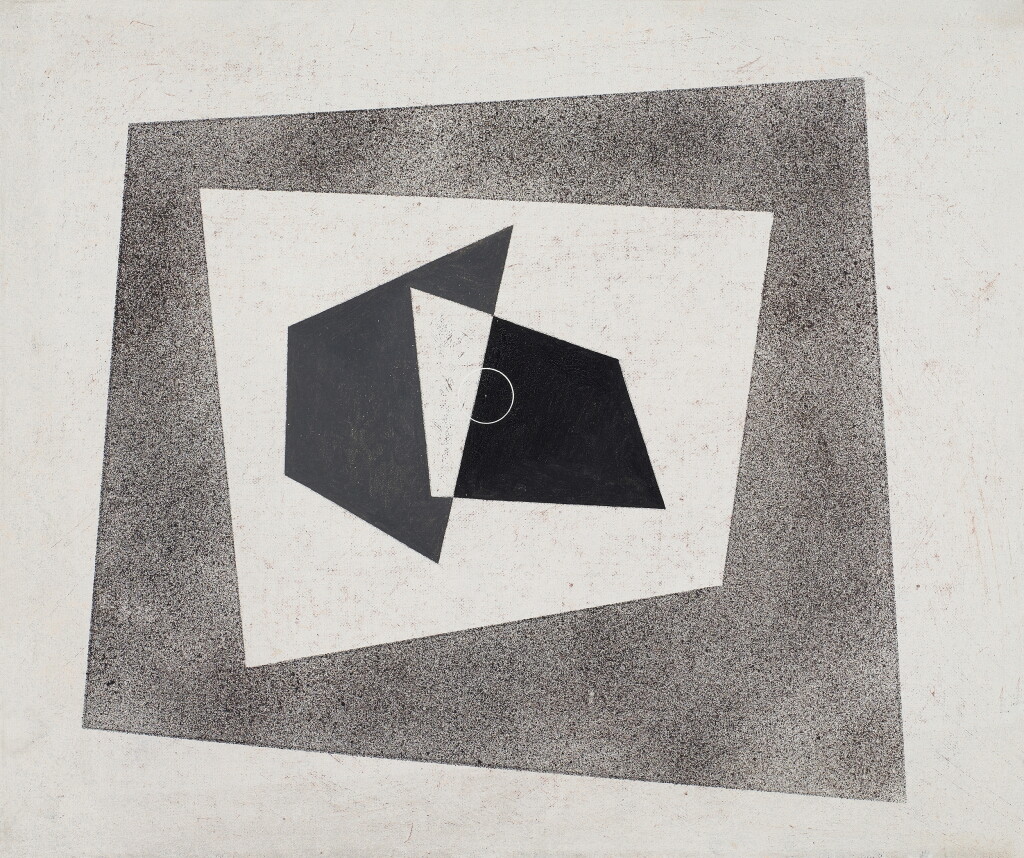
Untitled
Session begins in
November 19, 07:00 PM GMT
Estimate
6,000 - 8,000 USD
Bid
10,000 USD
Lot Details
Description
Circuits of Modernism: The Collection of Vicki and David Cox
Charles Green Shaw
1892 - 1974
Untitled
signed Charles G. Shaw (on the reverse)
oil on canvasboard
15 by 18 in.
38.1 by 45.7 cm.
Executed circa 1941-42.
Estate of the artist
Helander Gallery, Palm Beach, Florida
Washburn Gallery, New York
Private Collection, New York
Michael Rosenfeld Gallery, New York
Acquired from the above in June 2001 by the present owner
Charles Green Shaw occupied a distinctive position within American modernism, combining the worlds of literature, high society, and avant-garde art to become one of the most influential advocates for abstraction in the 1930s. Born in New York City in 1892, Shaw studied architecture at Columbia University after graduating from Yale University, later pursuing artistic training at the Art Students League with Thomas Hart Benton and privately with George Luks. Before dedicating himself to painting, he established a successful career as a journalist, poet, and novelist, contributing regularly to publications including The New Yorker, Vanity Fair, and The Smart Set. Extended travels in Paris and London between 1929 and 1932 proved transformative, exposing him to the latest developments in European modernism and inspiring his transition from writer to painter. Upon returning to New York, Shaw quickly emerged as a prominent figure within the city's abstract art community, exhibiting at the Gallery of Living Art and forming close associations with Albert Eugene Gallatin and George L.K. Morris, with whom he became known as one of the “Park Avenue Cubists.”
A founding member of the American Abstract Artists in 1936, alongside other artists such as Josef Albers, Ray Kaiser, Burgoyne Diller, Shaw was an outspoken champion of nonobjective art and helped articulate its intellectual foundations through his writings and exhibitions. His best-known works, the Plastic Polygon series, translated the geometry of the modern Manhattan skyline into refined abstract compositions characterized by architectonic structure, crisp forms, and innovative relief-like surfaces. Throughout his career, Shaw remained committed to developing an abstract vocabulary that was distinctly American while remaining informed by European modernist precedents. Today, his work is represented in the permanent collections of the Museum of Modern Art, New York; the Metropolitan Museum of Art, New York; the Whitney Museum of American Art, New York; the Solomon R. Guggenheim Museum, New York; and the Smithsonian American Art Museum, Washington, D.C., among other major institutions.
You May Also Like


