
Circuits of Modernism: The Collection of Vicki and David Cox
Albert Eugene Gallatin
Untitled
Session begins in
November 19, 07:00 PM GMT
Estimate
8,000 - 12,000 USD
Bid
7,500 USD
Lot Details
Description
Circuits of Modernism: The Collection of Vicki and David Cox
Albert Gallatin
1881 - 1952
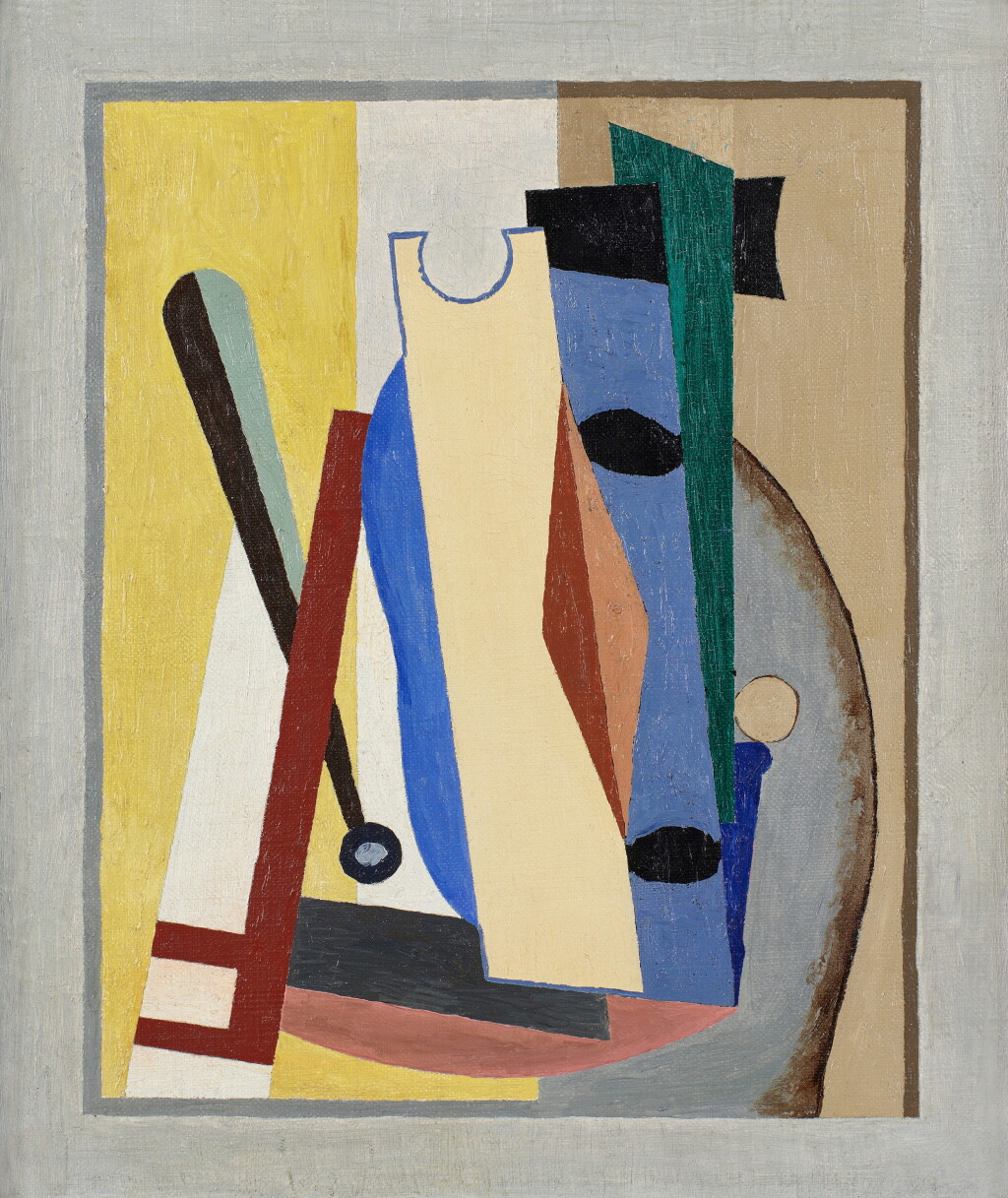
Untitled
signed A.E. Gallatin and dated March 1938 (on the reverse)
oil on canvas
12 by 10 ¼ in.
30.5 by 26 cm.
Executed in March 1938.
Sid Deutsch Gallery, New York
Penny and Elton Yasuna, New York (acquired by 1990)
Beacon Hill Fine Art, New York
J. Donald Nichols, Nashville (acquired by 2003)
Snyder Fine Art, New York
Acquired from the above in May 2004 by the present owner
Massachusetts, Worcester Art Museum; University of Florida, Gainesville, Samuel P. Harn Museum and Wilmington, Delaware Art Museum, The Second Wave: American Abstraction of the 1930s and 1940s, Selections from the Penny and Elton Yasuna Collection, 1991-92, no. 13, pp. 42-43, illustrated in color
New York, Snyder Fine Art, Modern American Artists in Paris in the 1920s and 1930s, 1997
New York University, Grey Art Gallery; Andover, Massachusetts, Phillips Academy, Addison Gallery of American Art and Gainesville, University of Florida, Harn Museum of Art, The Park Avenue Cubists: Gallatin, Morris, Frelinghuysen, and Shaw, 2003 (not in catalogue)
An influential collector, patron, and painter, Albert Eugene Gallatin played a vital role in the advancement of abstract art in the United States, fostering connections between the European avant-garde and a younger generation of American modernists. Trained as a lawyer but devoted to the study of art, Gallatin was initially influenced by artists such as James McNeill Whistler and Aubrey Beardsley before embracing modernism in the 1920s. In 1927 he established the Gallery of Living Art at New York University, creating one of the first public collections in America dedicated to modern European art. Through friendships with figures including Pablo Picasso, Georges Braque, Piet Mondrian, Juan Gris, and Jean Hélion, Gallatin assembled a collection that served as an essential resource for artists seeking firsthand exposure to the latest developments in abstraction.
His support extended beyond collecting: he purchased works by emerging American abstract artists, such as Charles Biederman and Gertrude Greene, sponsored exhibitions, and became an early member and benefactor of the American Abstract Artists. In the mid-1920s, Gallatin pursued his own artistic practice, producing paintings informed by Cubism and, in particular, the clarity and structural rigor of Juan Gris. Gallatin’s work is held in the permanent collections of the National Gallery of Art, Washington, D.C., and the Smithsonian American Art Museum, Washington, D.C., underscoring his important contributions to the development of American abstraction.
You May Also Like


