
Circuits of Modernism: The Collection of Vicki and David Cox
Louis K. Stone
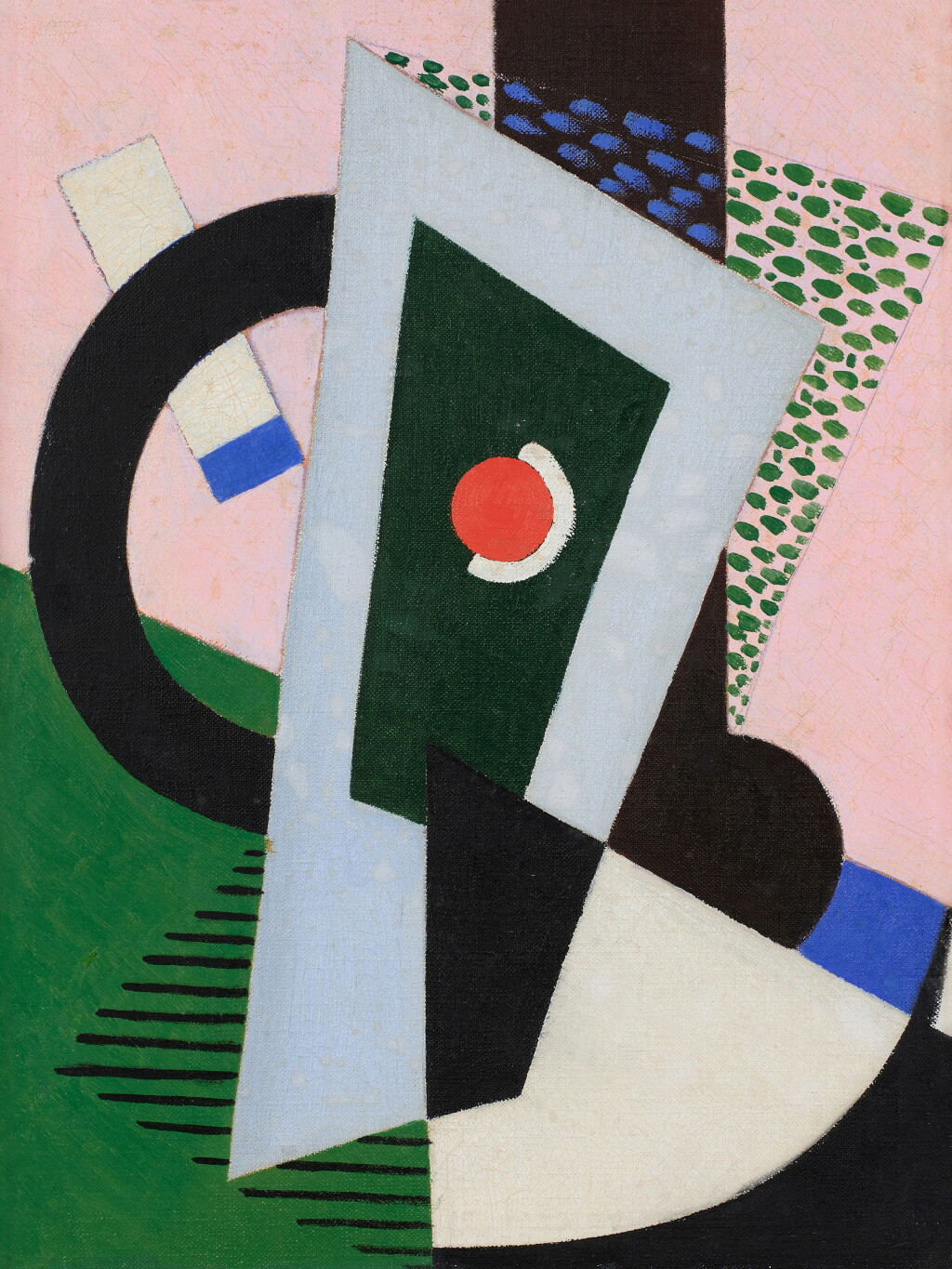
Untitled
Session begins in
November 19, 07:00 PM GMT
Estimate
10,000 - 15,000 USD
Bid
9,000 USD
Lot Details
Description
Circuits of Modernism: The Collection of Vicki and David Cox
The Collection of Vicki and David Cox
Louis K. Stone
1902 - 1984
Untitled
oil on canvasboard
16 by 12 in.
40.6 by 30.5 cm.
Executed circa 1938.
Estate of the artist
Michael Rosenfeld Gallery, New York
Private Collection, Massachusetts
Beth Urdang Gallery, Boston
Acquired from the above in December 2011 by the present owner
New York, Michael Rosenfeld Gallery, Louis Stone: American Modernist, Major Abstract Paintings, 1938-1942, 2002-03, p. 32, illustrated in color
Louis Stone was one of the leading figures of the New Hope Modernist movement, a progressive artistic circle that emerged in and around New Hope, Pennsylvania. The movement challenged the region’s longstanding tradition of representational Impressionism through increasingly experimental and abstract approaches to painting. Stone developed a distinctive abstract style that synthesized European modernism with a highly personal approach to color and form. Born in Findlay, Ohio, in 1902, Stone studied at the Cincinnati Academy of Fine Arts, under Daniel Garber at the Pennsylvania Academy of the Fine Arts, and at the Art Students League in New York. After meeting fellow art student Caroline Hoag in Gloucester, Massachusetts, the two married and departed for Europe, where they lived and worked between 1927 and 1933. During these formative years, Stone studied with Hans Hofmann in Munich and André Lhote in France, became acquainted with Marsden Hartley, and for a time lived and worked in Paul Cézanne’s former studio in Aix-en-Provence alongside his friend Charles Evans.
Returning to the United States in 1933, Stone eventually settled in Lambertville, New Jersey. There he became an active member of the New Hope artistic community and, together with Evans and Charles Ramsey, helped establish the experimental Ramstonev Cooperative Painting Project, an innovative collaborative venture inspired by the improvisational spirit of jazz. Stone’s most acclaimed works from the the mid-1930s to mid-1940s feature vibrant, nonobjective compositions with harmonies of color.
He exhibited at the 1939 New York World’s Fair and participated in numerous exhibitions of progressive American art, including shows at the Newark Museum in Newark, New Jersey, and the New Jersey State Museum in Trenton, New Jersey.
You May Also Like


