Sapphire Jewelry: A Collector’s Guide to the World’s Most Coveted Blue Gemstone
Learn what makes sapphire jewelry valuable, from Kashmir, Burmese and Ceylon sapphires to padparadscha, fancy colors, origin and treatment.
Blue may be the color most closely associated with sapphire, but the gemstone is far more varied than its name might suggest. Even within blue sapphire, appearance can differ considerably. Kashmir stones are celebrated for their distinctive velvety color, while important Burmese sapphires can display rich, saturated blues and Ceylon sapphires are often associated with a brighter, more luminous appearance. The spectrum extends well beyond blue. Sapphire also occurs in pink, yellow, orange and purple, with rare varieties such as padparadscha prized for their balance of pink and orange. Color-change sapphires present another phenomenon, shifting noticeably under different sources of light.
For collectors, this range makes sapphire a particularly nuanced category. Color remains central, but the deepest or most saturated blue is not necessarily the finest; brightness and transparency also influence how successfully that color is expressed. Origin and treatment add further context. Kashmir holds an exceptional position because of the scarcity and distinctive character of material from its historic deposits, while Burma and Sri Lanka, historically known as Ceylon, have produced important sapphires for centuries. Yet these origins are not quality grades. A prestigious source cannot compensate for a weaker stone, just as an unheated sapphire is not automatically more desirable than a finer example that has been heated.
Then there is the jewel itself. Important sapphires have long been used by leading jewelry houses and designers, where the setting can contribute a different kind of significance. In vintage and signed pieces, period, craftsmanship and design may become as relevant to collectors as the characteristics of the gemstone. From an important unheated Kashmir sapphire to a unique Schlumberger jewel centered on an exceptional pink Ceylon stone, collecting sapphire jewelry ultimately requires looking at the stone on its own merits and understanding what the finished jewel adds to it.
| Primary quality factor | Color leads. Fine blue sapphires balance strong saturation with brightness and transparency rather than simply displaying the darkest possible blue. |
| Most important origins | Kashmir occupies a particularly rare position, while Burma (Myanmar) and Sri Lanka (Ceylon) are historically important sources. Origin alone does not determine quality. |
| Treatment | Heating is widely encountered and accepted. Fine unheated sapphires can become considerably rarer as quality and size increase. |
| Padparadscha sapphire | One of sapphire’s rarest color varieties, defined by a delicate balance of pink and orange. The designation refers to color rather than geographic origin. |
| Fancy-color sapphires | Sapphire occurs beyond blue in pink, yellow, orange, purple and other colors, as well as rare stones that display a distinct color change under different lighting. |
| Size and rarity | Carat weight alone does not determine sapphire value. Quality sustained at significant size, particularly exceptional color, transparency and no evidence of heating, is considerably more important. |
| Collector perspective | Consider color, treatment, origin, transparency and cut together. In important signed or vintage jewelry, maker, design, craftsmanship and period can add another layer of significance. |
Color sets the foundation for sapphire value, but what constitutes exceptional color depends on the variety. In blue sapphire, rich saturation needs to be balanced with brightness and transparency; a stone can be intensely blue yet lose impact if it appears too dark or closed. Evenness matters as well, since pronounced color zoning can affect the face-up appearance, while cut determines how effectively the stone returns light and displays its color. Fancy-color sapphires require a different lens. Padparadscha is prized for a particular relationship between pink and orange, while the desirability of a color-change sapphire depends in part on how distinct and attractive its shift appears under different lighting conditions.
Origin and treatment can sharpen the picture of rarity, particularly when the sapphire itself is already exceptional. Kashmir occupies a singular position because fine material from its historic deposits is extraordinarily scarce, while Burma and Sri Lanka, historically known as Ceylon, have produced important stones for centuries. Heating is common and accepted, making fine unheated sapphires especially notable when strong natural color and transparency are preserved at significant size. Gemological reports can provide opinions on origin, disclose evidence of treatment and, in qualifying cases, apply terminology such as “royal blue” or padparadscha. These findings carry weight, but they are context rather than a verdict: no origin, treatment status or laboratory designation can substitute for the quality of the sapphire itself.
The finest blue sapphires are not simply the darkest. Saturation needs to be balanced by brightness, creating a blue that feels rich and concentrated without becoming overly dark or losing transparency. Tone can vary considerably, and secondary violet or green components may subtly change the overall impression. Viewed face-up, an exceptional stone should remain lively and relatively even, with enough openness for light to move through it rather than disappearing into areas of dense color.
How that color is distributed across the stone can be equally revealing. Some sapphires show visible zoning, with stronger and weaker areas of blue, while extinction can leave portions of the stone looking dark or inactive. Cut and orientation can either emphasize or minimize these effects, which helps explain why sapphires with similar descriptions on paper may look very different in person. Laboratory terms such as “royal blue” can provide useful context for qualifying stones, although criteria vary between institutions. The designation carries the most weight when the stone’s color and transparency are equally convincing to the eye.
Kashmir sits apart from other historic sapphire sources largely because of how little material entered the market. Discovered in the Himalayas in the late 19th century, the deposits produced important sapphires for a relatively brief period, and fine examples are extraordinarily scarce today. Their reputation rests on more than rarity. The finest stones can display a rich blue with the soft, velvety appearance long associated with Kashmir material, created in part by microscopic inclusions that diffuse light while allowing the color to remain vivid.
That combination becomes particularly unusual at significant size. The 20.18-carat Kashmir Sapphire and Diamond Pendant-Necklace, sold for $2.14M USD in September 2022, centers an emerald-cut sapphire determined by AGL, Gübelin and SSEF to be of Kashmir origin with no indications of heating. Both Gübelin and SSEF also issued appendix letters addressing the rarity or exceptional characteristics of the stone. Here, the importance lies in the convergence of a scarce origin, substantial carat weight and an unheated sapphire of notable quality.
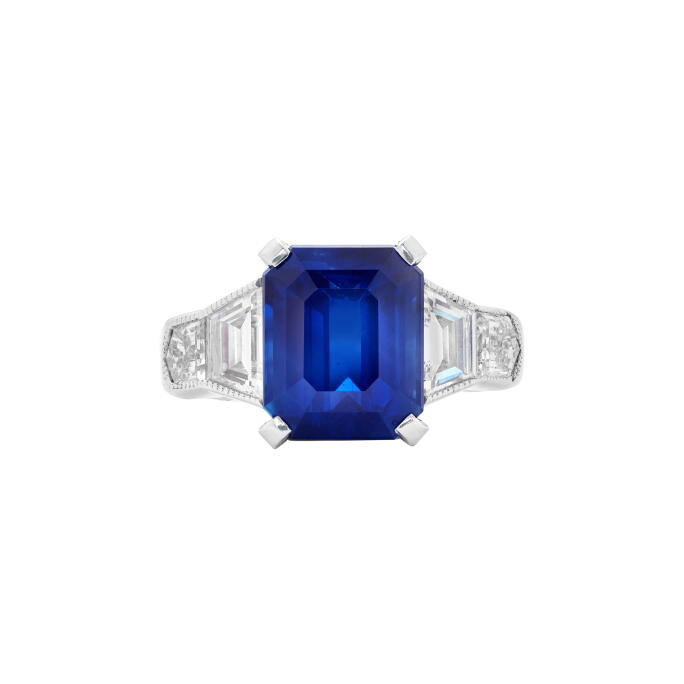
A Kashmir sapphire does not need to reach 20 carats to be significant. The Platinum, 5.02ct Kashmir Sapphire and Diamond Ring, currently offered on Sotheby’s Buy Now marketplace, centers an emerald-cut sapphire identified by both SSEF and Gübelin as Kashmir origin with no indications of heating. At 5.02 carats, it offers a useful counterpoint to the pendant-necklace. Carat weight can heighten rarity, but the quality of the color and transparency, together with treatment status and documented origin, determines how meaningful that size really is.
Burmese sapphires have long provided another benchmark for exceptional blue. Mined in Myanmar alongside the country’s famous rubies, fine examples can combine deep saturation with enough transparency and brightness to keep the color lively. Their character can differ from the soft, velvety appearance associated with Kashmir material; important Burmese stones are often admired for a richer, more concentrated blue. Quality varies widely, however, making the appearance of the individual sapphire more meaningful than origin alone.
The Cartier 20.16-carat Burmese Sapphire and Diamond Ring, sold for 2.8M CHF in November 2022, shows what happens when several desirable attributes coincide. Both SSEF and Gübelin identified the step-cut sapphire as Burmese with no indications of heating and described its color as “royal blue.” Its size makes that combination particularly notable. The Cartier setting, with shield-shaped diamonds flanking the sapphire, gives the ring significance as a finished jewel as well.
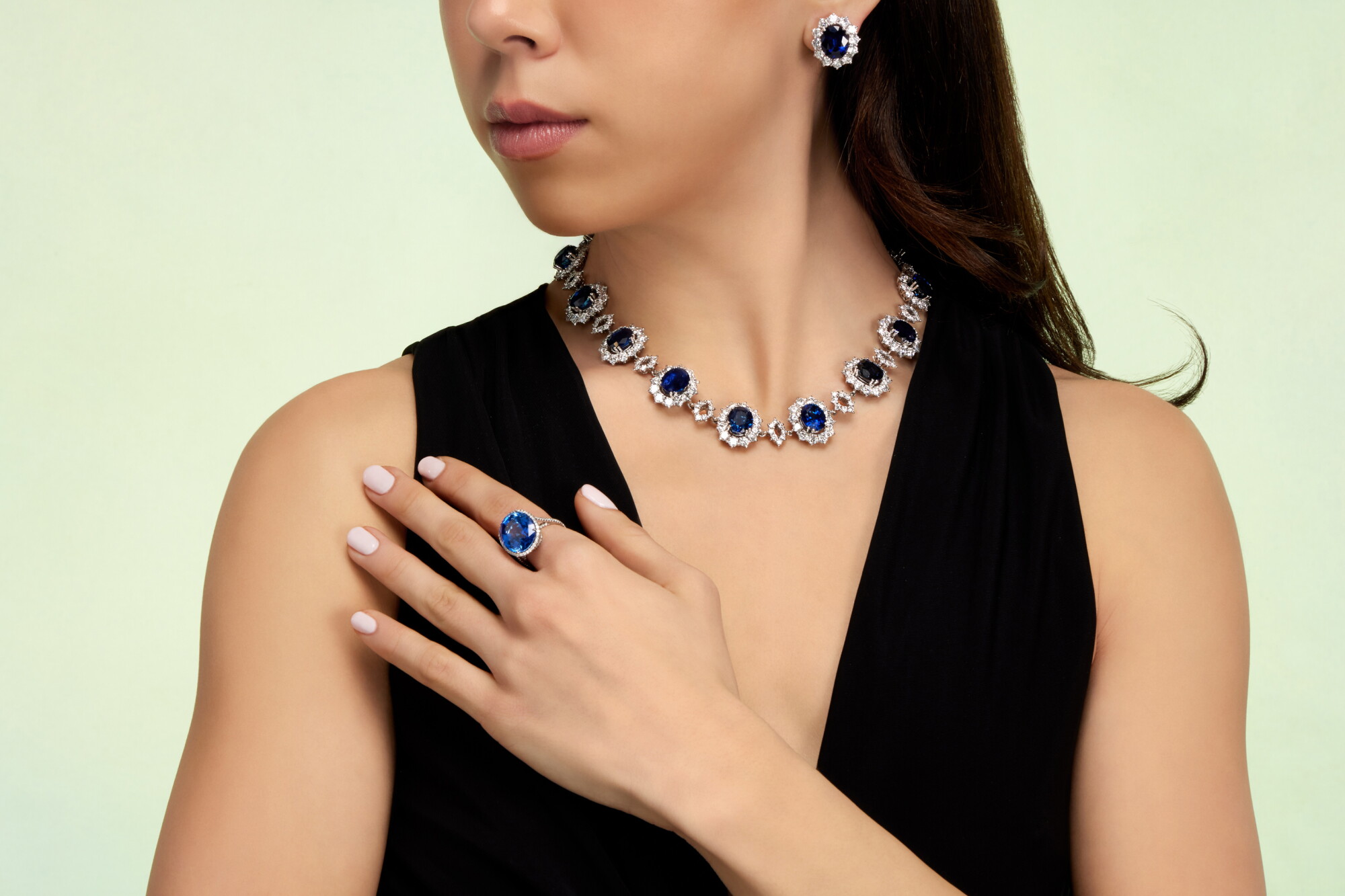
A multi-stone piece demands a different kind of assessment. The White Gold, 21.97ctw Burmese Sapphire and Diamond Necklace, currently offered on Sotheby’s Buy Now marketplace, brings together 16 graduated oval Burmese sapphires totaling 21.97 carats, each accompanied by a GRS report identifying Burmese origin with no indications of thermal treatment. Individual quality still matters, but so does the difficulty of assembling stones that work convincingly together. Color consistency, graduation and the transitions between neighboring sapphires all shape how successfully the necklace reads as a whole.
Sri Lanka, historically known as Ceylon, has one of the longest histories of sapphire production and remains an important source today. Its deposits are notable for their range. Blue sapphires can vary considerably in tone and saturation, with fine examples displaying rich color while retaining a bright, open appearance. The island has also yielded unusually large stones and an array of fancy-color sapphires, including pink, yellow and rare padparadscha material. This combination of scale and color diversity distinguishes Ceylon sapphires from more narrowly defined historic sources such as Kashmir.
The Platinum, 10.79ctw Ceylon Royal Blue Sapphire and Diamond Cluster Earclips, currently offered on Sotheby’s Buy Now marketplace, offer a useful example of why treatment needs to be considered in context. Their cushion-shaped sapphires weigh 5.46 and 5.33 carats, with GRS identifying both as Sri Lankan (Ceylon) origin and describing their color as vivid blue, or GRS-type “royal blue.” The stones show indications of heating. Rather than diminishing the importance of the pair outright, that disclosure becomes one part of a broader assessment that includes the strength of the color, the size of each sapphire and how successfully the two stones match. In paired jewels especially, finding gems with comparable color and visual presence introduces a consideration that a single-stone jewel does not.
Heating has been part of the sapphire trade for centuries and is widely accepted as a way to improve color and, in some cases, clarity. Many important sapphires have been heated. The distinction becomes more significant when a stone achieves exceptional color and transparency without thermal enhancement, particularly at substantial size. Add a scarce or historically important origin, and the number of comparable unheated stones can narrow considerably.
Treatment status, however, describes how a sapphire has been altered; it does not grade its beauty. A poorly colored unheated stone does not become exceptional simply because it shows no evidence of heat, while a heated sapphire may possess superb color and visual presence. Laboratory reports help clarify this part of the stone’s history by identifying evidence of heating and other detectable treatments. The most useful way to read that information is alongside the sapphire itself: first assess the quality of the stone, then consider how naturally it achieved those characteristics and how much rarity that treatment history adds.
Padparadscha occupies a narrow and closely scrutinized part of the sapphire color spectrum. Rather than a single hue, these stones display an interplay of pink and orange, typically described as pinkish orange to orangy pink and generally seen at relatively low to medium saturation. The name comes from Sinhalese terminology associated with the lotus blossom, reflecting the variety’s historic connection to Sri Lanka. Determining where an unusual pink-orange sapphire falls within the accepted range can be complex, which makes laboratory opinion particularly important for significant stones.
Sri Lanka remains the source most closely associated with padparadscha, but geography does not define the variety. Qualifying sapphires have also been found in Madagascar, Tanzania and Vietnam. The Harry Winston 37.92-carat Padparadscha Sapphire and Diamond Necklace, sold for 984K CHF in May 2023, centers an unusually large example. SSEF identified the oval sapphire as Malagasy in origin with no indications of heating. At 37.92 carats, it demonstrates how exceptional size can amplify the rarity of an already narrowly defined color variety.
The name itself still requires context. A padparadscha sapphire must maintain a convincing relationship between pink and orange; stones that lean too strongly toward either hue may fall outside a laboratory’s criteria. Saturation and transparency shape the visual result, while treatment history and size further distinguish important examples. Laboratory identification can establish whether a stone qualifies for the designation, but it cannot capture everything that makes the color successful to the eye.
Sapphire extends well beyond the blues that dominate the traditional market. Pink and yellow are among the better-known alternatives, while orange, green and purple stones reveal just how broad the corundum color spectrum can be. These fancy-color sapphires cannot all be judged against the same standard. In pink sapphire, strength and evenness of color may drive the initial impression; other varieties derive much of their interest from an unusual optical effect. Each requires its own assessment rather than a blue-sapphire benchmark applied to a different hue.
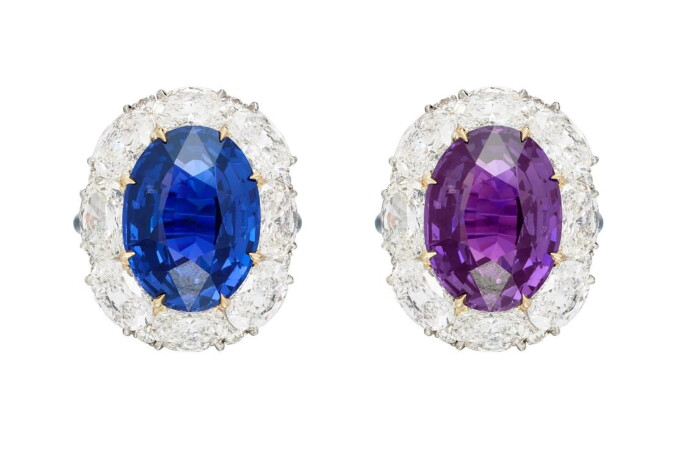
Color-change sapphire is a particularly striking example. The Platinum, 13.88ct Color Change Madagascar Sapphire and Diamond Ring, currently offered on Sotheby’s Buy Now marketplace, centers a 13.88-carat sapphire that appears violet-blue under fluorescent light and pink-purple under incandescent light. AGL and GRS identify the stone as Madagascan with no evidence of heat treatment. Here, neither color tells the full story. The strength of the change, how distinct the two appearances are and the attractiveness of the sapphire in each lighting condition all contribute to its character.
Pink sapphire presents a different proposition. The Jogani Gold, 2.47ct Burmese Pink Sapphire and Diamond Ring, also currently offered on Sotheby’s Buy Now marketplace, features an oval pink sapphire identified by AGL as Burmese with no evidence of heat treatment. Old European and transitional-cut diamonds surround the center stone, giving the jewel a design identity beyond the sapphire’s gemological attributes. Together, these examples show why fancy-color sapphire is best understood as a collection of distinct categories, each with its own visual qualities and considerations.
Sapphire deposits span a much broader geography than the best-known historic sources suggest. Kashmir remains distinct because fine material from its deposits is exceptionally scarce, while Myanmar and Sri Lanka have centuries-long histories of producing important stones. Madagascar has become a significant source in the modern market, yielding notable blue and fancy-color sapphires, including padparadscha and color-change material. Thailand, Cambodia, Australia, Tanzania and Vietnam contribute to the picture as well. Each deposit can produce sapphires with different colors, internal characteristics and levels of rarity.
These sources are better understood as different chapters of sapphire production than as a fixed hierarchy. Kashmir carries exceptional historical and market significance, yet fine Burmese and Ceylon stones can also reach the highest levels of quality. Madagascar demonstrates how newer sources have expanded the field: the 37.92-carat unheated padparadscha and 13.88-carat unheated color-change sapphire discussed above are striking examples of important material emerging outside the traditional blue-sapphire centers. Origin provides valuable context, particularly when supported by laboratory opinion, but its significance ultimately depends on the quality and rarity of the individual stone.
Large sapphires are not inherently rare. The more meaningful distinction is whether a stone retains fine color and transparency as carat weight increases. Greater size can make uneven color zoning, inclusions and areas of extinction easier to see, while cutting for weight retention may result in excessive depth or a less impressive face-up spread. A substantial sapphire becomes far more interesting when its color remains lively and well distributed across the stone rather than simply adding weight.
Rarity can shift again once treatment and origin enter the picture. An unheated sapphire that achieves exceptional natural color at significant size may have relatively few comparable stones, particularly when it also comes from a scarce historic source such as Kashmir. This helps explain why sapphires of similar carat weight can occupy entirely different positions in the market. Size can amplify the importance of a fine sapphire, but it cannot create quality where it is absent.
Inclusions are a natural part of sapphire, and their presence alone says little about the quality of a stone. Their effect is more revealing. Fine sapphires may contain visible internal features yet remain transparent and bright, while dense inclusions or prominent fractures can interrupt the passage of light and create cloudy or inactive areas. Fine needle-like inclusions known as silk are particularly interesting: when appropriately distributed, they can scatter light and contribute to the soft, velvety appearance associated with certain exceptional sapphires. Too much silk, however, can reduce transparency.
Color presents its own internal pattern. Sapphire rough may contain areas of stronger and weaker saturation, producing zoning that remains visible after cutting. Orientation becomes critical here; a skilled cutter can position the rough to minimize distracting zoning or use concentrated areas of blue to improve the face-up color. Rather than looking for a sapphire that is perfectly clean or perfectly uniform, the better question is how successfully its internal characteristics work with the color. Inclusions become problematic when they compromise transparency or durability, while zoning matters most when it noticeably disrupts the stone’s overall appearance.
With sapphire, cutting begins as much with color as with shape. Uneven saturation within the rough may influence how a stone is oriented, allowing the cutter to concentrate stronger color face-up or reduce the appearance of obvious zoning. Weight retention introduces another consideration, particularly with valuable material. The result may be a deeper pavilion, an unconventional outline or proportions that depart from standardized ideals but make better use of the individual stone.
The finished sapphire reveals whether those decisions worked. Excessive depth can hide carat weight below the setting and make a substantial stone appear smaller from above; poorly managed facets may produce extinction or leave parts of the sapphire looking inactive. A successful cut distributes color convincingly while returning enough light to preserve brightness and visual presence. Symmetry and proportions still deserve attention, but in fine sapphire they are most useful as a means to an end: bringing out the best color and character the rough can offer.
A sapphire does not exist in isolation once it becomes part of an important jewel. Designer, period and craftsmanship can reshape how the gemstone is understood, particularly in signed and vintage pieces where the composition has significance of its own. This can challenge conventional hierarchies based on color or carat weight. An extraordinary stone may provide the starting point, but the most memorable jewels are often those in which gemstone and design feel inseparable.
The Unique Pink Sapphire, Sapphire and Diamond Brooch, Monture Schlumberger, sold for 1.7M CHF in November 2022, demonstrates this at an extraordinary scale. Created in the 1950s, the unique jewel centers a 92.01-carat pink sapphire identified by SSEF as Ceylon origin with no indications of heating and described in an appendix as an “Exceptional Pink Sapphire.” Schlumberger transformed the stone through a composition of intertwining branches with sapphire and diamond leaves, making its unusual color and monumental size part of a design characteristic of his imaginative treatment of nature.
The Art Deco Sapphire and Diamond Toi et Moi Ring, sold for 2.8M HKD in April 2025, makes the point from another direction. Its 3.13-carat cushion-shaped sapphire, identified by AGL as Kashmir origin with no gemological evidence of heat, is paired with a 1.89-carat old European-cut diamond in a platinum millegrain setting. At just over three carats, the sapphire is considerably smaller than many examples in this guide. Yet its Kashmir origin and unheated status, combined with the Art Deco toi et moi design, give the ring an importance that cannot be understood through carat weight alone. In signed and period jewelry especially, the gemstone is only part of what makes the object significant.
A fine sapphire is rarely defined by one celebrated attribute. Start with what you can see: the strength and distribution of the color, the transparency of the stone and how effectively the cut returns light. Then consider whether those qualities remain convincing at its size. Origin and treatment can sharpen the assessment, particularly for an unheated Kashmir sapphire or another stone from an important source, but neither should outweigh visual quality. The same principle extends to fancy colors. A padparadscha designation or an unusual color change carries greater meaning when the color itself is exceptional.
Laboratory reports provide essential context on origin, treatment and certain color terminology, but they cannot evaluate the jewel as a complete object. Maker, period, craftsmanship and design may substantially influence the importance of a signed or vintage piece, sometimes shifting attention away from carat weight or conventional gemstone hierarchies altogether. The best sapphire jewelry brings these considerations into balance: a stone with qualities that stand on their own, supported by documentation and set in a jewel worthy of it.
No. Kashmir is exceptionally rare and can command significant collector interest, but origin does not override quality. Color, transparency, treatment, size and overall appearance still determine the importance of an individual sapphire.
No. Fine unheated sapphires can be considerably rarer, particularly at significant sizes, but treatment is only one factor. A superior heated sapphire may be more desirable than an unheated stone with weaker color or transparency.
No. “Royal blue” is a color designation used by certain gemological laboratories, and criteria may vary. Origin, treatment, transparency, size and the appearance of the individual stone remain important.
Yes. Although Sri Lanka, historically known as Ceylon, is the source traditionally associated with padparadscha sapphire, qualifying stones have also been found in countries including Madagascar, Tanzania and Vietnam. Padparadscha describes a particular pink-orange to orange-pink color rather than geographic origin.
Kashmir is generally the most exceptionally scarce of the major historic sapphire origins because production from its celebrated deposits was limited. However, rarity alone does not determine value: an individual sapphire still needs the color, transparency and overall quality collectors expect from an important stone.
Whether you’re a seasoned collector or new to the world of colored gemstones, Sotheby’s offers a trusted, seamless way to buy and sell sapphire jewelry on the secondary market.
Trust our worldwide network of leading jewelry specialists from a globally renowned auction house established in 1744.