Beauty of Blue: Ultimate Guide to Buying Blue Diamonds
From pale blue hues to richly saturated Fancy Vivid diamonds, uncover how boron, color grading and rarity distinguish the finest natural blue diamonds.

The history of blue diamonds begins in India's Golconda region, where some of the world's most celebrated colored diamonds were first discovered. The historic Kollur mine was an early source of these exceptional stones, which later appeared in royal collections and important jewelry commissions. Unlike most natural diamonds, blue diamonds owe their color to trace amounts of boron within their crystal structure. Even small concentrations can produce a remarkable range of hues, from pale blue to deeply saturated tones.
While India and Brazil were important historical sources, South Africa's Cullinan mine has become closely associated with significant modern blue diamond discoveries. Formerly known as the Premier Mine, Cullinan has produced exceptional Type IIb diamonds, a rare classification characterized by the presence of boron and very low nitrogen concentrations. Blue diamonds have also been recovered from Botswana's Orapa mine, while Australia's Argyle mine produced examples before closing in 2020.
Natural blue diamonds account for an exceptionally small proportion of global diamond production, making stones with strong color and substantial carat weight difficult to source. Their value depends heavily on the intensity and purity of their blue hue, although clarity and cut quality also influence desirability. For collectors, understanding these distinctions is essential when evaluating blue diamonds at auction or on the secondary market.
| Category | What to Know |
|---|---|
| Historical Origins | Early blue diamonds were recovered from India's Golconda region, with later discoveries in Brazil and South Africa. |
| Color & Composition | Natural blue color generally results from trace amounts of boron within the diamond's crystal structure. |
| Important Sources | South Africa's Cullinan mine is associated with major blue diamond discoveries. Other sources include Botswana's Orapa mine and Australia's now-closed Argyle mine. |
| Color Grading | GIA grades blue diamonds from Faint to Fancy Vivid and Fancy Deep, with hue, tone and saturation influencing value. |
| Cut & Shape | Cushion, radiant, oval and pear shapes are often used to concentrate color while preserving carat weight. |
| Type IIb Diamonds | Many natural blue diamonds belong to the rare Type IIb classification, distinguished by boron within the crystal structure. |
| Certification | GIA reports establish color origin and grading characteristics, helping buyers distinguish natural-color stones from treated diamonds. |
| Auction Records | The 15.10-carat De Beers Blue sold for approximately $57.5M USD at auction in 2022. |
| Collector Appeal | Exceptional natural color, significant size and documented provenance distinguish the most desirable examples. |
Color is the most important factor in determining a blue diamond's value, with hue, tone and saturation influencing its overall appearance. The Gemological Institute of America (GIA) evaluates hue as the diamond's dominant color, while tone describes how light or dark that color appears. Saturation measures its strength or intensity. Fancy Vivid Blue diamonds are especially prized for their rich saturation, while Fancy Deep Blue stones exhibit a darker tone that creates a distinct appearance.
Secondary hues can also influence desirability. Greenish blue and grayish blue diamonds display different color characteristics from stones with a predominantly blue hue, while violet-blue variations offer another distinctive color combination. Even subtle differences in these modifiers can affect pricing, making an individual diamond's color grade and visual appearance essential considerations.
| Color Grade | Description |
|---|---|
| Faint Blue | A subtle blue tint, often most apparent under favorable lighting. |
| Very Light Blue | A delicate blue hue with slightly greater color presence. |
| Light Blue | Noticeable blue coloration, though still relatively pale. |
| Fancy Light Blue | A more apparent blue hue with moderate saturation. |
| Fancy Blue | A distinct blue color with stronger saturation. |
| Fancy Intense Blue | Rich, pronounced blue color with substantial saturation. |
| Fancy Vivid Blue | Exceptionally saturated blue color, often commanding the highest premiums. |
| Fancy Deep Blue | A darker blue with strong saturation and greater tonal depth. |
As with white diamonds, blue diamonds receive clarity grades ranging from Flawless to Included, along with assessments of polish and symmetry. However, cutting priorities often differ. While white diamonds are generally fashioned to maximize brilliance, blue diamonds may be cut to concentrate their natural color while preserving carat weight. Cushion and radiant cuts are often effective at strengthening face-up color, although oval and pear shapes are also encountered.
Natural color documentation is essential when acquiring a blue diamond. A GIA report confirming the diamond's natural color origin and grading characteristics helps buyers assess its quality. For exceptional stones, documented provenance can provide additional context, especially when a diamond has a significant auction history or can be traced to an important mine.
Cutting a natural blue diamond presents challenges that differ from those of near-colorless diamonds. Blue diamond rough often forms in irregular, asymmetrical crystals, with color that may be unevenly distributed throughout the stone. Cutters must carefully assess the crystal's structure and color distribution before determining how to achieve the strongest possible appearance without sacrificing unnecessary carat weight.
Traditional cutting styles are sometimes modified to enhance color concentration and account for the shape of the rough. This requires considerable precision, as even small adjustments to proportions and facet placement can influence how the finished diamond displays its blue hue. The result is often a balance between color intensity, brilliance and weight retention, with each rough diamond requiring an individual approach.
Sotheby's auction results offer a closer look at the qualities that distinguish exceptional natural blue diamonds, from the saturation of Fancy Vivid stones to the subtler appeal of lighter blue hues. Historic diamonds such as the Hope Diamond and Wittelsbach-Graff Diamond have long connected the category with royal collections, while more recent sales demonstrate how color, clarity and cutting decisions influence value.
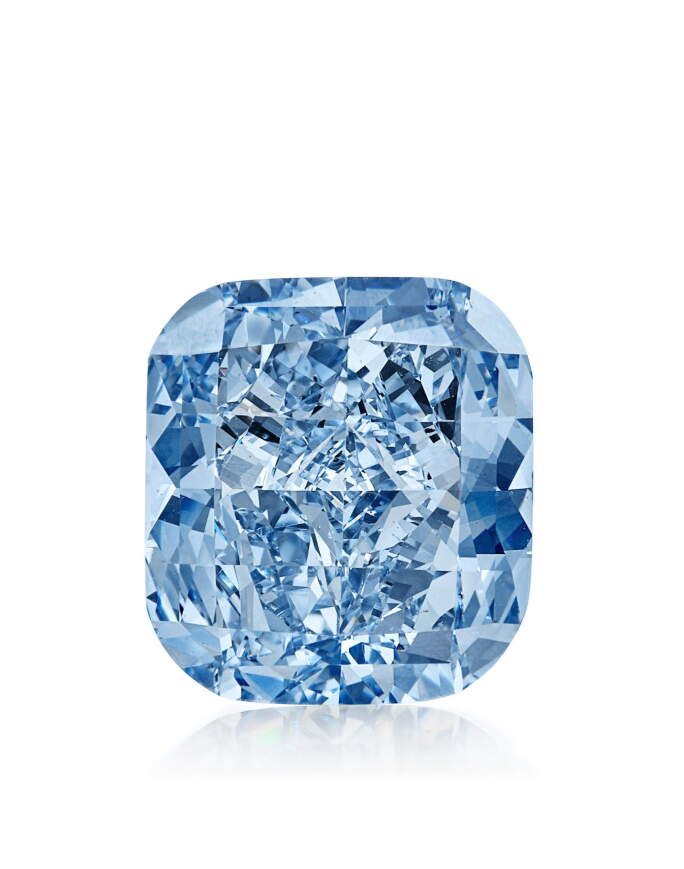
The Mediterranean Blue sold for 17.9M CHF in May 2025. Weighing 10.03 carats, the cushion-modified brilliant-cut Fancy Vivid Blue diamond originated from a 31.93-carat rough stone discovered in South Africa. Its transformation took more than six months, with the cutting process documented through a series of photographs that trace the diamond's development from rough crystal to polished gemstone.
Classified as Type IIb, the Mediterranean Blue combines exceptional color saturation with significant size. Its cutting history offers a detailed look at the precision involved in fashioning important blue diamonds, where preserving carat weight must be carefully balanced against achieving the strongest possible color.
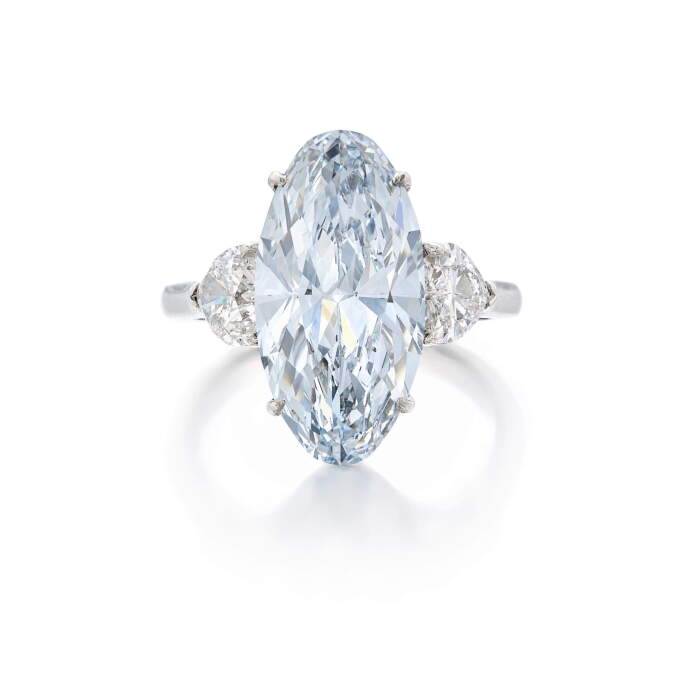
A 5.83-carat oval-shaped Fancy Light Blue diamond ring achieved 1.3M CHF in May 2025. Graded Internally Flawless by GIA, the natural blue diamond is flanked by two heart-shaped white diamonds weighing 0.52 and 0.50 carats, both D color and Internally Flawless. The combination of exceptional clarity and a delicate blue hue distinguishes this ring, illustrating how lighter-colored diamonds can achieve significant prices when paired with strong grading characteristics.
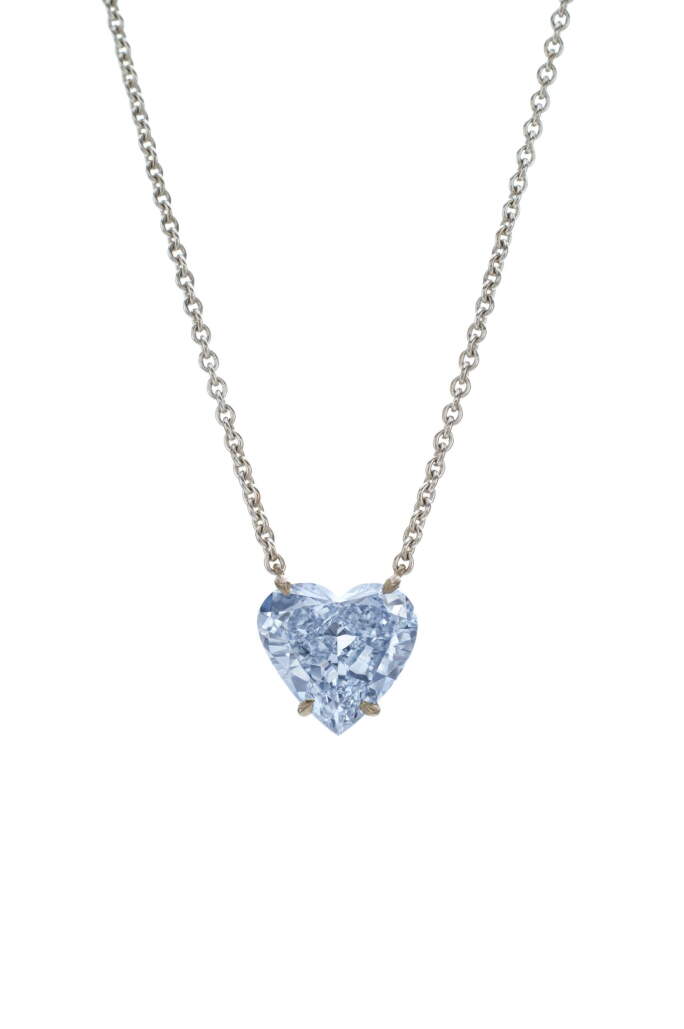
This 4.05-carat heart-shaped Fancy Blue diamond pendant necklace sold for 953K CHF in May 2025. The diamond was graded Internally Flawless by GIA and classified as Type IIb, with its natural blue color complemented by a simple cable-link chain. The heart-shaped cut gives the stone a distinctive silhouette, while its clarity and Type IIb classification add to its significance. The understated setting keeps attention on the diamond's color and shape.
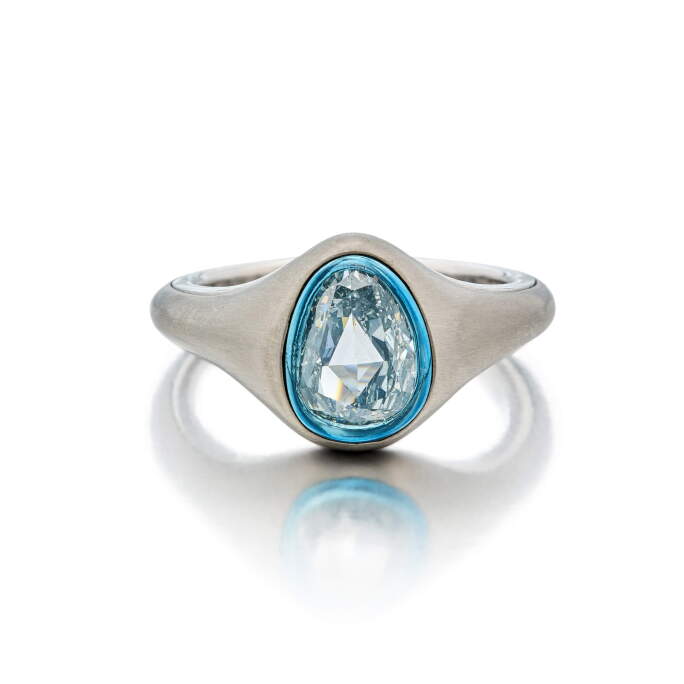
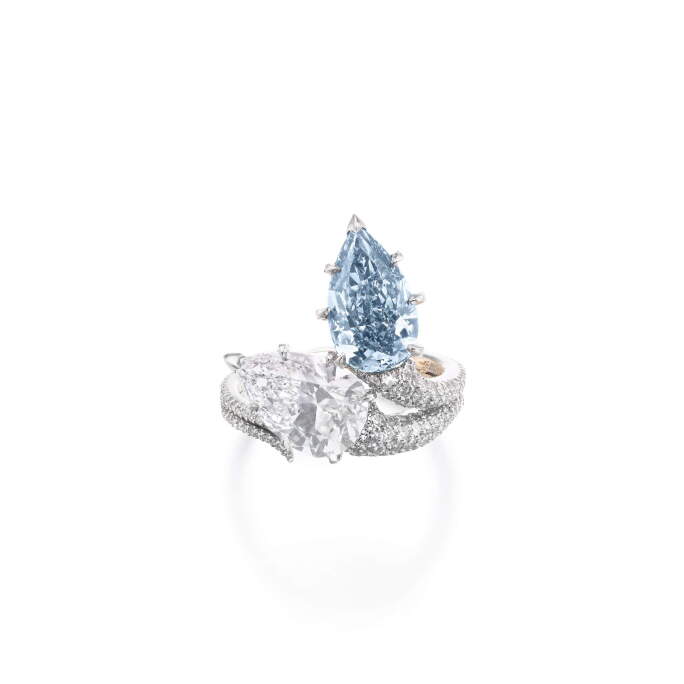
A Toi et Moi ring featuring a 3.03-carat pear-shaped Fancy Intense Blue diamond achieved 823K CHF in May 2024. Graded I1 clarity, the natural blue diamond is paired with a 2.82-carat pear-shaped white diamond of D color and VVS1 clarity. The contrasting stones create a distinctive interpretation of the Toi et Moi design, with the colorless diamond emphasizing the saturation of its blue counterpart. The result also demonstrates how strong natural color can influence desirability despite a lower clarity grade.
Natural blue diamonds command substantial premiums over comparable white diamonds, with color intensity and carat weight playing the greatest roles in determining value. Fancy Vivid Blue diamonds generally achieve the highest prices, although exceptional Fancy Intense and Fancy Deep examples can also command significant sums. Secondary hues, clarity and the distribution of color throughout the stone further influence pricing.
Among the most expensive blue diamonds sold at auction is the De Beers Blue, a 15.10-carat step-cut Fancy Vivid Blue diamond that achieved approximately $57.5M USD in April 2022. Graded Internally Flawless and classified as Type IIb, the diamond combined exceptional saturation with a size seldom encountered in natural blue diamonds. Its sale established an important benchmark for the category.
At smaller sizes, natural blue diamonds with lighter color grades may range from approximately $30,000 to $50,000 per carat, while Fancy Intense and Fancy Vivid examples can command several hundred thousand dollars to over $1 million per carat. Prices rise sharply with stronger saturation and greater carat weight, although clarity, secondary hues and overall quality also influence value. Exceptional stones above five carats can achieve substantially higher premiums, making each diamond's individual characteristics essential to determining its price.
Natural blue diamonds are distinguished by their extraordinary scarcity, with the finest examples combining strong color saturation and exceptional quality. While Fancy Vivid Blue diamonds often command the highest premiums, lighter hues and unusual secondary colors can be equally interesting to collectors, especially when accompanied by significant size or exceptional clarity.
Beyond color, provenance and independent grading play an important role in evaluating a blue diamond. Stones with documented natural color, strong GIA grading characteristics and traceable histories offer greater confidence when buying at auction or on the secondary market. Understanding how these qualities influence desirability allows collectors to assess each diamond on its individual merits.
Type IIb diamonds contain trace amounts of boron and exceptionally low concentrations of nitrogen. They represent a small fraction of natural diamonds and include some of the most important blue diamonds sold at auction.
Fancy Vivid Blue generally commands higher premiums due to its strong saturation and brighter appearance. Fancy Deep Blue diamonds have a darker tone, although size, clarity and overall color quality can influence individual prices.
Greenish, grayish and violet modifiers influence a diamond's appearance and market desirability. Diamonds with a predominantly blue hue generally command stronger premiums, although exceptional examples with secondary colors can achieve significant prices.
Yes, although color intensity typically has a greater influence on value. A strongly saturated blue diamond with visible inclusions may command a higher price than a lighter-colored stone with superior clarity.
Prioritize natural color confirmed by a GIA report, paying close attention to saturation, tone and color distribution. Cut quality, clarity and provenance should also be considered, especially when evaluating important stones at auction.
Whether you're a seasoned collector or new to fine jewelry, Sotheby’s offers a trusted, seamless way to buy and sell diamond jewelry on the secondary market.
Trust our worldwide network of leading jewelry specialists from a globally renowned auction house established in 1744.