The Brilliant History of Tiffany and Co Jewelry
Explore the rich history of Tiffany & Co., from its founding to its legendary collaborations with iconic designers and its lasting influence on pop culture.

Over nearly two centuries, Tiffany & Co. has evolved into one of the most recognizable names in luxury jewelry, synonymous with refined craftsmanship and enduring design. While many maisons are defined by a particular era, Tiffany’s identity has been shaped by its ability to balance heritage, innovation, and cultural relevance over time.
Founded in 1837 by Charles Lewis Tiffany and J.B. Young as Tiffany & Young, the company began as a “fancy goods” store in New York, with first-day sales totaling just $4.98. From the outset, its emphasis on quality and presentation distinguished it within a growing retail landscape.
By 1853, Charles Lewis Tiffany assumed full ownership and officially renamed the company Tiffany & Co., marking its transition into a dedicated luxury house. Key innovations soon followed, including the Blue Book in 1845, one of the first direct mail catalogs, which expanded access to Tiffany’s collections beyond its physical storefront.
Throughout the late 19th century, Tiffany established itself as a leader in silver and diamond jewelry. By the time it relocated to Union Square in 1870, the maison had become a destination for New York’s elite, earning Charles Lewis Tiffany the title of the “King of Diamonds.”
| Designer / Milestone | Era | Notable Features |
|---|---|---|
| Charles Lewis Tiffany | 1837–1870s | Founded Tiffany & Co.; established reputation for American luxury, introduced gemstones as a core focus |
| Tiffany Setting | 1886 | Six-prong engagement ring design that elevates the diamond for maximum light and brilliance |
| Jean Schlumberger | 1956- | Nature-inspired designs; enamel, gold, and gemstone combinations; whimsical high jewelry pieces |
| Elsa Peretti | 1974- | Organic, sculptural forms; Bone Cuff, Open Heart, and Diamonds by the Yard collections |
| Paloma Picasso | 1979- | Bold, graphic designs; use of vibrant color, X motif, and strong artistic identity |
| Return to Tiffany® | 1969 (revived 1990s–present) | Inspired by key ring tags; engravable, accessible silver jewelry with strong brand recognition |
| Tiffany T Collection | 2014–present | Clean, modern lines centered on the “T” motif symbolizing connection and strength |
| Tiffany HardWear | 2017–present | Industrial-inspired links and bold silhouettes; reflects urban and architectural influences |
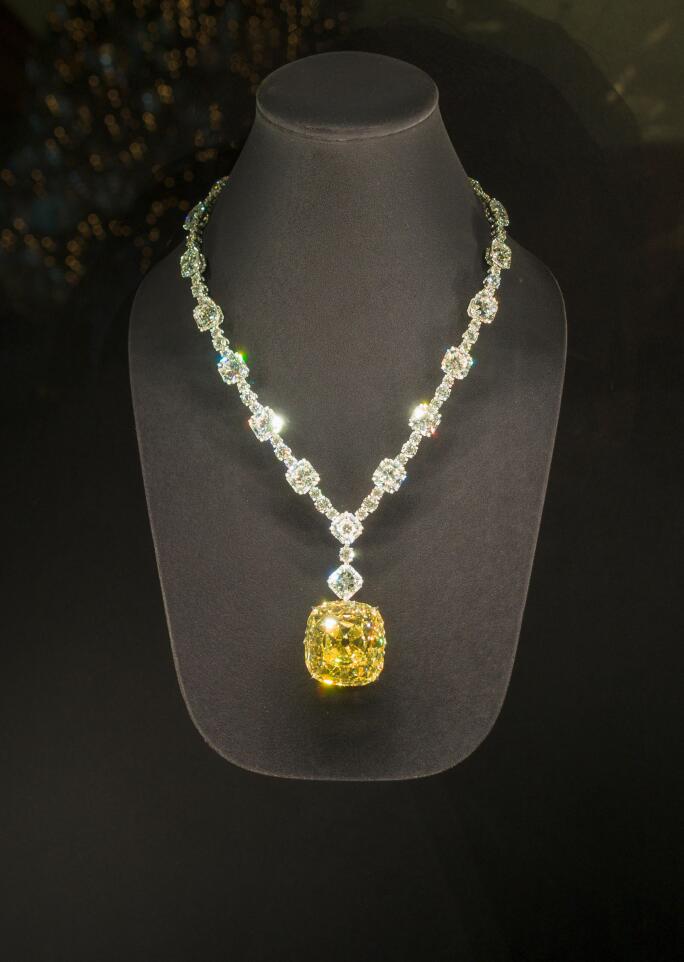
A defining moment in Tiffany’s history came in 1878 with the acquisition of a 278.42-carat rough yellow diamond, later cut into the 128.54-carat Tiffany Diamond. This gemstone remains one of the largest and most recognizable fancy yellow diamonds in the world.
Beyond its size, the Tiffany Diamond reflects the house’s early commitment to exceptional stones and presentation. It helped establish a precedent for Tiffany’s leadership in high jewelry and continues to serve as a symbol of rarity and excellence.
In 1886, Tiffany introduced the Tiffany Setting, a six-prong solitaire design that elevated the diamond above the band to maximize light exposure. By lifting the stone away from the metal, the setting allows light to enter from multiple angles, enhancing brilliance and giving the diamond a more prominent visual presence.
This innovation marked a significant shift in engagement ring design, moving away from ornate, metal-heavy settings toward a more diamond-centric approach. The result was a cleaner, more modern aesthetic that emphasized the quality and beauty of the stone itself.
Its influence extends far beyond Tiffany, becoming the benchmark for contemporary engagement rings. Today, the six-prong solitaire remains widely used across the jewelry industry, underscoring the enduring impact of Tiffany’s design on both craftsmanship and proportion.
The house’s signature blue color, known as Tiffany Blue, became a defining aspect of the brand’s identity throughout the 20th century. Introduced in the 1940s and later standardized as “1837 Blue,” it is now instantly associated with Tiffany & Co. across global markets.
More than a packaging detail, Tiffany Blue functions as a powerful visual code that signals quality, heritage, and luxury. Its consistent use across boxes, campaigns, and store design has created a level of recognition that extends beyond jewelry itself.
Over time, the color has come to represent the full Tiffany experience, from the moment of purchase to the lasting emotional connection tied to the brand. This ability to embed identity into a single visual element has played a key role in Tiffany’s long-term brand strength.
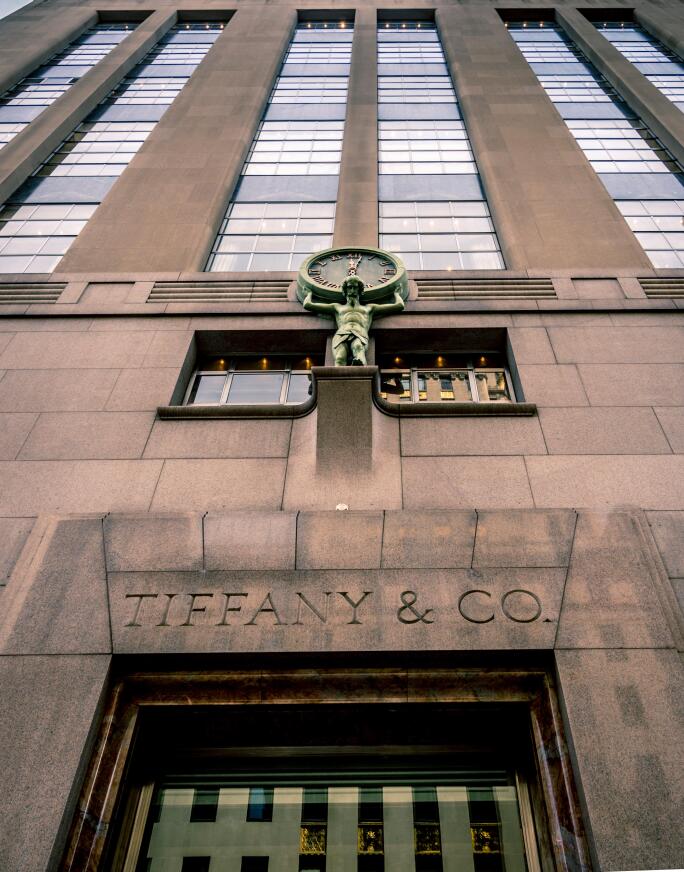
In 1940, Tiffany relocated its flagship store to Fifth Avenue and 57th Street in New York, reinforcing its position within American luxury culture. The store quickly became both a retail destination and a symbol of the brand’s heritage, anchoring Tiffany within one of the most iconic shopping districts in the world.
This presence was further amplified by the 1961 film Breakfast at Tiffany’s, which introduced the maison to a global audience in a cultural context that extended beyond jewelry. The film helped position Tiffany as a symbol of aspiration and modern sophistication.
As a result, the Fifth Avenue flagship became more than a store. It evolved into a cultural landmark that continues to shape how Tiffany is perceived, linking the brand to both New York City and broader narratives of fashion and lifestyle.
In 2021, Tiffany & Co. became part of the LVMH group, marking a new phase of global expansion and strategic repositioning. Under this ownership, the brand has placed renewed emphasis on strengthening its presence across key international markets while refining its contemporary image.
Recent initiatives have focused on blending heritage with modern relevance, incorporating collaborations across art, fashion, and culture. These efforts reflect a broader strategy of engaging new audiences while remaining anchored in Tiffany’s historic identity.
At the same time, LVMH’s influence has supported increased visibility and investment in both product development and brand storytelling. This balance between continuity and innovation allows Tiffany to remain competitive in the evolving luxury landscape while preserving its core design values.
Jean Schlumberger is renowned for his imaginative, nature-inspired creations for Tiffany & Co. Born in 1907 in Alsace, France, he gained early recognition designing for Elsa Schiaparelli before joining Tiffany in 1956.
His work is defined by a masterful use of vibrant gemstones, texture, and intricate goldwork, exemplified by the iconic Bird on a Rock design. A Schlumberger for Tiffany & Co. tanzanite and diamond Bird on a Rock brooch sold for 1.7M HKD in September 2025, demonstrating continued collector demand for his most recognizable creations.
Schlumberger’s paillonné enamel bangles, created using a 19th-century technique layering enamel over gold, remain equally distinctive. His work continues to influence contemporary high jewelry, reinforcing his legacy as one of Tiffany’s most important designers.
Elsa Peretti joined Tiffany & Co. in 1974 and transformed modern jewelry design by elevating sterling silver into a luxury material. At a time when silver was largely absent from fine jewelry, her approach introduced a new, more accessible yet refined aesthetic.
Her organic, nature‑inspired designs became defining signatures of the house, including Diamonds by the Yard, Open Heart, Bean, and the celebrated Bone Cuff. Inspired by forms encountered in her childhood, the Bone Cuff is precisely contoured to the body and designed to be worn on a specific wrist. It remains one of Tiffany’s most enduring modern designs.
A pair of Elsa Peretti Bone Cuff bangles sold for €55,000 EUR in 2023, underscoring the lasting demand for her work and its continued relevance within the secondary market.
Paloma Picasso joined Tiffany & Co. in 1979, introducing bold color and graphic forms that reflected the energy of late 20th‑century design. Her early collaboration began with a table setting for an exhibition, which led to a long‑standing partnership and the creation of her Graffiti collection, inspired by New York street art.
Throughout the 1980s, she expanded Tiffany’s visual language by incorporating vivid, often overlooked gemstones, establishing a more expressive and contemporary aesthetic. A tourmaline necklace composed of multicolored tumbled beads sold for 3,750 GBP in September 2025, illustrating her signature use of color and organic form. Her iconic “X” motif remains one of her most recognizable contributions and a defining element of her work for the maison.
Tiffany & Co. has maintained its position as a defining force in jewelry by consistently balancing tradition, innovation, and recognizable design. From historic milestones like the Tiffany Setting to the creative influence of designers such as Schlumberger, Peretti, and Picasso, the house has shaped the evolution of both fine and high jewelry.
What distinguishes Tiffany is its ability to translate heritage into a modern context, preserving iconic design codes while continuing to evolve through new materials, artists, and cultural references. This balance allows Tiffany jewelry to remain relevant across both vintage and contemporary markets.
As a result, Tiffany & Co. jewelry continues to hold enduring appeal, valued for its craftsmanship, cultural significance, and lasting influence within the world of luxury design.
Tiffany & Co. was founded in 1837 by Charles Lewis Tiffany and J.B. Young as a New York “fancy goods” store. By 1853, Tiffany became the sole owner and rebranded it as Tiffany & Co., setting the foundation for nearly two centuries of American luxury craftsmanship.
The Tiffany Diamond is a 128.54-carat fancy yellow gemstone acquired in 1878 and remains one of the world’s most famous diamonds. It symbolizes the brand’s commitment to exceptional quality, rarity, and heritage.
Tiffany’s creative legacy includes Jean Schlumberger, known for his nature-inspired masterpieces; Elsa Peretti, who elevated silver into fine jewelry; and Paloma Picasso, who brought bold color and contemporary flair. Each helped define Tiffany’s enduring influence in the world of high jewelry.
Whether you're a seasoned collector or new to fine jewelry, Sotheby’s offers a trusted, seamless way to buy and sell Tiffany & Co. pieces on the secondary market.
Trust our worldwide network of leading jewelry specialists from a globally renowned auction house established in 1744.