A Collector’s Guide to Bordeaux and Its Appellations
Discover Bordeaux’s key appellations, history, and terroir, plus expert insights into why its wines remain among the most collectible in the world.

S panning 110,000 hectares and home to more than 6,000 wineries across 65 appellations, including the five First Growths, Bordeaux is the world’s most renowned and celebrated fine wine region.
The jewel of south-west France remains the benchmark for fine wine around the globe, and the region has long been a collector favourite due to the exceptional quality, ageworthiness and proven track record of its wines, which have steadily appreciated in value over the last few decades. Bordeaux has enjoyed a golden age of late, with the 2005, 2009, 2010 and 2016 vintages hailed as among the greatest of the last century.
Global Significance: Bordeaux remains one of the world’s most established and widely traded fine wine regions, spanning 110,000 hectares and 65 appellations.
Long-Term Collectablity: Bordeaux’s First Growths and leading Right Bank estates continue to define the benchmark for ageworthy collectible wine.
Key Regions: Left Bank wines emphasize Cabernet Sauvignon structure, while Right Bank wines highlight Merlot-driven richness.
Classification Legacy: The 1855 Classification remains a central reference point for collectors and continues to influence demand today.
Storage & Condition: Well-stored back vintages are especially sought after in today’s market.
Sweet & White Wines: Sauternes and leading dry whites from Pessac-Léognan add depth to Bordeaux collecting beyond red wines.
Secondary Market: Wines sourced directly from château cellars or professionally stored collections command the strongest demand at auction.
Bordeaux’s winemaking roots stretch back to 60 BC, when the Romans first planted vines in the region, having found the area to be suited to grape cultivation due to its maritime climate and favourable terroir. In 1152 Bordeaux fell under British rule after Henry Plantagenet married Eleanor of Aquitaine, which increased trade of the wines to the UK, helping to build Bordeaux’s reputation in Britain.

While Bordeaux is now most revered for its reds, it was initially sweet wines from Sauternes that first sealed its reputation as a fine wine region. In the late 1700s Cabernet Sauvignon was introduced to the region and in 1855, at the request of Napoleon III, the Bordeaux Wine Official Classification was put in place in time for the World’s Fair in Paris. A century later in 1955, the Saint-Emilion Classification was released.
The 1855 classification of Grand Cru Classé estates into five tiered groups helped to cement Bordeaux’s reputation around the world and is still used to this day, with only a single change – the promotion of Mouton Rothschild from a second to a first growth in 1973.
The 1855 classification thrust the five First Growths into a different stratosphere, and the importance of the ranking still rings true today, with Lafite, Latour, Margaux, Haut-Brion and Mouton Rothschild remaining in a league of their own when it comes to consumer demand and collector appeal. While they will always remain out in front, in recent years demand has been steadily growing among collectors for the so-called ‘super’ second estates, such as Ducru-Beaucaillou, Cos d’Estournel, and Leoville Las Cases.
The 1950s and ‘60s saw the emergence of a new generation of winemakers in Bordeaux who invested time and money into restoring their vineyards and modernising their winemaking equipment, leading Bordeaux into a new, quality-focused era. Early to spot the exceptional quality of the 1982 vintage, American lawyer-turned-wine critic, Robert M. Parker Jr., helped to put Bordeaux on the map in the US, and classed growth wines from the lauded vintage remain in high demand to this day.

Bordeaux has a maritime climate and an average growing season temperature of 18 °C. The region receives an average of 800mm of rain a year, which can pose challenges for winemakers. With Cabernet Sauvignon needing warmer conditions than Merlot to ripen, it’s perfectly suited to the gravel soils of the Left Bank, which hold onto their heat at night and drain easily.
Merlot doesn’t need such warm conditions to ripen, making the cooler clay soils of the Right Bank an ideal home for the more easy-going grape. It reaches its apogee in Saint-Émilion and Pomerol, where clay soils intermingle with gravel, limestone, and iron-rich deposits, ramping up the power, finesse and ageing potential of the wines.
The epicentre of sweet wine production is Sauternes, located in the southern part of the Graves region, southeast of the city of Bordeaux. Morning fog causes the Semillon and Sauvignon Blanc grapes growing in the area to develop a fungus called botrytis, known as ‘noble rot’, which makes the grapes shrivel up and sweeten, helping to create some of the most celebrated sweet wines in the world, including Château d’Yquem, Guiraud, Rieussec, Climens, and Suduiraut.
Just 10% of Bordeaux’s production is dedicated to white wines, but their quality is often excellent. Usually made from a blend of Sauvignon Blanc and Sémillon, styles range from fresh and zippy in Entre-Deux-Mers, to more textured and lemon curd-like in Pessac-Leognan, where Château Haut-Brion creates what many deem to be the finest white in Bordeaux. Rich, creamy, complex, and elegant with notes of white peach, yellow plum, honeysuckle and lime balanced by a mineral backbone, it’s a wine that rewards cellaring.
Lying either side of the Gironde estuary, the Bordeaux region is divided into two banks. On the free-draining gravel soils of the Left Bank, the Médoc shines a light on Cabernet Sauvignon-based wines and is home to many of the region’s most iconic and expensive labels that can age gracefully for decades. The Left Bank boasts some of Bordeaux’s leading appellations, including Margaux, St. Julien, Pauillac and St. Estèphe.
The long-lived wines offer notes of cassis, graphite, eucalyptus, and tobacco, with Merlot, Petit Verdot and Cabernet Franc playing important supporting roles within the blends. With its abundance of clay and limestone soils, the Right Bank is Merlot and Cabernet Franc territory, and home to heavy hitters such as Petrus and Cheval Blanc. Some of the world's most expensive and highly regarded red blends hail from here, beguiling fine wine lovers with their silky tannins and flavours of plum, violets and spice.

In Bordeaux’s northernmost commune, Saint-Estèphe, the wines are known for being powerful, rich and tannic, with a structure that allows for long ageing. Home to Montrose, Cos d’Estournel and Calon-Ségur, the earthy wines can be austere in their youth, but with time they become remarkably elegant and complex.
Hallowed ground in Bordeaux, Pauillac is home to three of the five first growths: Lafite, Latour and Mouton Rothschild, and has a suitably revered reputation. The wines are celebrated for their power, elegance, and ageing potential, and are characterised by their rich black fruit flavours, firm tannins and finesse.
Home to Léoville Las Cases, Ducru Beaucaillou and Léoville Barton, the soils of Saint-Julien combine gravel, clay and limestone. Offering the power of Pauillac and the elegance of Margaux, the wines are full-bodied with velvety tannins and aromas of blackberry, plum and tobacco. Texture is the defining characteristic of Margaux, and its wines are lauded for their supreme silkiness, aromatic complexity and unrivalled elegance. Home to First Growth Château Margaux, Palmer and Rauzan-Ségla, the wines are perfumed on the nose, and on the palate, you’ll find notes of cherries, violets, roses and spices.
Lying south of the city of Bordeaux, the wines from Pessac-Léognan have a distinct mineral character due to their mineral-rich gravel soils, where Cabernet Sauvignon, Sauvignon Blanc and Semillon shine. The appellation is home to La Mission Haut Brion and First Growth Château Haut-Brion.
Southeast of the city is Graves, which takes its name from the gravel-rich soil of the region. Renowned for both its dry whites made from Sauvignon Blanc and Sémillon, and its sweet wines from Sauternes, Graves also produces elegant reds that have won plaudits for their smoky, earthy characteristics.
Nestled on a limestone plateau on Bordeaux’s Right Bank, Saint-Emilion’s chalky-clay soils make it the perfect place for Merlot and Cabernet Franc to excel. Home to Angélus, Ausone, Cheval Blanc and Figeac, its wines are celebrated for their plush, velvety texture, supple body, and lush flavours of red fruits and baking spices.
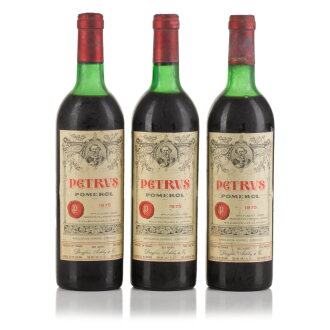
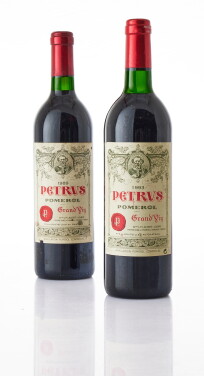
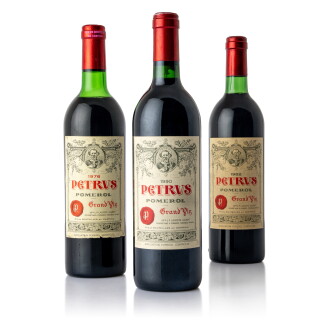
Bordeaux’s smallest appellation, Pomerol, has no formal classification but that hasn’t held it back. The postcode of some of the most in-demand wines on the planet, including Petrus and Le Pin, Merlot dominates here, and is grown extensively across the iron-rich clay soils of the plateau, producing powerful, opulent wines of extraordinary depth and complexity.

In 2024 among the highlights of single-owner auctions at Sotheby’s was a sale celebrating 40 vintages of Château La Mission Haut-Brion under the ownership of Domaine Clarence Dillon, which included a century of wines produced at the estate and at Château Quintus. Comprised solely of bottles sourced direct from the châteaux cellars, the sale comfortably exceeded its estimates and realised a total of US$2 million, with 68% of lots achieving prices above their high estimates.
The fine wine market has changed significantly over the past decade, and where Bordeaux once ruled the roost by the value of its secondary market trade, the overall market share for the region’s wines has reduced with the emergence of Champagne and Burgundy, in particular, as major collecting categories. With these two regions giving Bordeaux competition at auction, the region’s share of Sotheby’s total annual auction sales has dropped over the last decade, from more than 60% in 2014 to around 20% in the present day. This reflects the trends across the secondary market as a whole, but one thing important to note is that this percentage change is as much as reflection of the enormous growth of other regions, rather than a significant reduction in the absolute value of Bordeaux being sold. In Sotheby’s auctions, the top wines of Bordeaux remain highly sought after, and demand is especially healthy for well-stored back-vintages. Indeed, as Burgundy prices continued to climb through 2021 and 2022, mature vintages of the greatest Bordeaux wines saw a real resurgence at auction, as savvy collectors began to recognise the incredible relative value these bottles offer for top quality mature wine, compared to their peers from the east of France. Petrus still leads the way as the top-selling Bordeaux château by value, closely followed by La Mission Haut-Brion, Mouton Rothschild and Lafite, each of which generated more than US$2 million in sales per winery in Sotheby’s auctions last year – a significant amount, for one château alone.
Bordeaux has a long-established classification system, global brand recognition, and a proven track record at auction. Many of its top wines are produced in limited quantities and are known for their ability to age for decades, making them highly attractive to collectors.
First Growth estates such as Lafite, Latour, Margaux, Haut-Brion, and Mouton Rothschild remain among the most desirable. Leading Right Bank estates including Petrus and Cheval Blanc are also consistently in demand, particularly for mature vintages.
Many top Bordeaux wines have demonstrated long-term secondary market demand, particularly when they are well stored and come from strong vintages. Mature bottles from leading estates often attract significant interest at auction.
Provenance is critical. Wines that have been stored professionally or sourced directly from château cellars tend to command stronger prices and buyer confidence in the secondary market.
Recent decades have produced several highly regarded vintages including 2005, 2009, 2010, and 2016, which are often cited among the strongest modern releases.
Whether you are building a cellar or preparing to consign mature vintages, Sotheby’s offers a trusted, seamless way to buy and sell Bordeaux wines on the secondary market.
Trust Sotheby’s worldwide network of leading wine specialists from a globally renowned auction house established in 1744.