A Collector’s Guide to Burgundy and Its Crus
The fine wines of Burgundy remains the single biggest region in terms of Sotheby's Wine auction sales. Join us as we explore its history and crus.

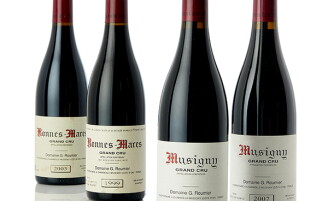
L oved for their heady perfume, beguiling beauty and pure fruit flavours, Burgundy’s wines offer power and delicacy in the same glass. The hallowed ground of the Côte d'Or is home to some of the most prized Burgundy wine producers on the planet, including Domaine de la Romanée-Conti, Ramonet, Armand Rousseau and Domaine Leroy, which continue to smash auction records as an expanding global audience of collectors seeks to snap up standout vintages from these top names.
Global Importance: Burgundy remains one of the most influential and actively traded regions in the fine wine market, consistently representing a significant share of total wine sales.
Limited Production: Grand Cru vineyards account for less than 2% of Burgundy’s total production, creating inherent scarcity and sustained collector demand.
Core Varieties: Burgundy focuses primarily on Pinot Noir and Chardonnay, with each grape expressing subtle yet profound terroir differences across neighboring vineyards.
Classification System: Burgundy’s hierarchy spans Regional, Village, Premier Cru, and Grand Cru levels, forming the foundation for understanding quality and value.
Côte d’Or Focus: The Côte de Nuits is renowned for ageworthy Pinot Noir, while the Côte de Beaune is celebrated for some of the world’s most sought-after Chardonnay.
Fragmented Ownership: Highly divided vineyard holdings mean that many top domaines produce extremely limited quantities, increasing collectability.
Aging Potential: Leading Grand Cru wines often require at least a decade of cellaring and can continue developing for many decades.
Secondary Market: Burgundy consistently commands strong demand among global collectors, particularly for Grand Cru wines from the most respected producers.
Located in east-central France, Burgundy has nurtured vines since the Roman times, with the first evidence of vineyards documented in 312AD. During Charlemagne’s reign in the 8th and 9th centuries, Burgundy carved out a reputation for the quality of its wines, while Cistercian monks later cemented its progress by planting vineyards across the Côte de Nuits in the 11th century.
With over 100 appellations, more than 28,000 hectares of vines and 3,000 producers making some 15 million cases of wine a year, Burgundy can be a complex region to get to grips with; but at its core are the four ‘Vs’: village, vineyard, vigneron and vintage.
Working principally with just one red variety – Pinot Noir – and one white – Chardonnay – the region’s winemakers are respected around the world for their ability to reveal marked differences in Burgundy wines made from grapes grown mere metres apart. Hot summers and harsh winters are the norm in Burgundy, where clay-limestone soils from the Jurassic era abound. Taking in everything from bathonian and bajocian to kimmeridgian and portlandian, each soil type found within the region has its own characteristics which, along with slope and aspect to the sun, account for the differing characteristics of Burgundy’s various vineyards.
Pinot Noir and Chardonnay are the perfect conduits through which to reveal these subtle differences in soil and climate. The Pinots display darker fruit and spice flavours in Burgundy’s cooler areas, and more red fruits and floral characteristics in warmer areas. Elsewhere, Chardonnay adapts well to a range of climates, producing citrus and apple-scented expressions in the cool region of Chablis, and wines full of orchard fruits in the warmer Côte de Beaune.
Established in 1935, there are four quality tiers within Burgundy’s classification system. At the base of the pyramid are the regional appellations, such as Hautes Côtes de Nuits and Mâcon, which account for more than half of all wines produced in the region. Next come the 44 village appellations, such as Volnay and Puligny-Montrachet, which represent around 37% of total Burgundy wine production.
Then come the Premier Cru vineyards, such as Meursault Charmes Premier Cru and Gevrey Chambertin Clos St Jacques Premier Cru, which account for just 10% of the Burgundy wine production in the region. Sitting atop the quality pyramid are Burgundy’s 33 Grand Cru vineyard sites, which account for less than 2% of all Burgundy wine produced in the region each year.
The Côte d’Or is split into two sections: the Côte de Nuits in the north, which is almost exclusively planted with Pinot Noir, and the Côte de Beaune down south, where Chardonnay reigns supreme. The Côte de Nuits is the source of Burgundy’s greatest reds from villages such as Nuits-St-Georges, Chambolle-Musigny and Vosne-Romanée.
Producing silky, ethereal reds, Vosne-Romanée boasts Burgundy’s most lauded vineyards: Romanée-Conti, La Romanée, La Tâche, Richebourg and Romanée-Saint-Vivant, and is home to some iconic producers including DRC, Leroy, Méo-Camuzet and Liger-Belair. The Burgundy wines of Gevrey-Chambertin, meanwhile, are celebrated for their perfume and power. Further south, the Côte de Beaune is the source of Burgundy’s greatest whites and home to villages such as Aloxe-Corton, Chassagne-Montrachet and Meursault.
Land ownership in Burgundy is fragmented. It’s common for a family to own less than a hectare of land, while some preside over just a few rows of vines, meaning what little wine is produced from the top domaines is highly coveted by collectors. Hailing from the heart of the Côte d’Or – a 50km, east-facing ‘golden slope’ – where the balance of clay and limestone is optimal, Burgundy’s top vineyards are the source of the region’s most powerful, complex and ageworthy wines, which are among the most sought-after in the world.
Collector interest remains focused on Grands Crus from producers with enviable reputations, such as Domaine Leroy, DRC, Ramonet and Armand Rousseau. While approachable in their youth, these wines often need at least a decade in bottle to come into their own, but the best expressions from the top vintages will age gracefully for many decades more.
Burgundy wine is beloved within the wine community for many reasons. As a classic French region, its reputation has held strong across generations. Anecdotal stories speak to the experience of the wine, while the data backs its significance within the wine market.
In 2023, Burgundy wines ranked as the second most sold wine region at 25% in Sotheby’s retail division and comprising a significant 34% of auction sales, according to the 2023 Sotheby’s Wine Spirits Market report. Domaine de la Romanée-Conti took up a majority of the most profitable wine auction lots with the vineyard’s Romanee Conti 1999 earning the top spot at $275,000, followed closely by Chevalier Montrachet and Vosne Romanee as an attestation to the significant value of Burgundy wine. Below, we mapped the top selling wine regions by percentage of sales, as well as their total shares within the market.
Burgundy combines extremely limited production, a deeply structured classification hierarchy, and a roster of globally revered producers, making it one of the most sought-after fine wine regions in the world. Unlike larger regions, Burgundy’s vineyard holdings are often fragmented into tiny parcels, meaning supply from top sites is inherently scarce. When coupled with the region’s ability to produce wines of remarkable longevity and nuance, this scarcity has positioned Burgundy at the forefront of fine wine collecting for decades.
Burgundy wines are classified as Regional, Village, Premier Cru, and Grand Cru, with Grand Cru vineyards representing the highest tier and less than 2% of total production.
Collectors consistently focus on domaines with established reputations for quality and consistency. Producers such as Domaine de la Romanée-Conti, Domaine Leroy, Armand Rousseau, and Ramonet remain among the most coveted names in the region. Wines from these domaines are often produced in very small quantities, and top vintages frequently command strong prices due to global demand and limited availability.
Land ownership in Burgundy is highly fragmented, with many families owning only fractions of a hectare. In some cases, a producer may control just a few rows within a Grand Cru vineyard. As vineyard land is passed down through generations, parcels have become increasingly divided, resulting in small production volumes from even the most famous sites. This structural limitation contributes directly to Burgundy’s scarcity and collectibility.
Burgundy’s terroir is defined by ancient clay-limestone soils dating back to the Jurassic era, combined with subtle variations in slope, exposure, drainage, and microclimate. Vineyards located only metres apart can produce markedly different expressions of Pinot Noir or Chardonnay. This extraordinary level of site specificity is central to Burgundy’s identity and is a key reason collectors closely track individual vineyard designations.
Yes. Burgundy remains one of the most influential and actively traded categories in the fine wine market. Despite broader diversification across regions, collector demand for Grand Cru wines and top domaines continues to drive significant secondary market activity. Its combination of scarcity, reputation, and long-term ageing potential ensures Burgundy maintains a leading position among fine wine collectors worldwide.
Whether you are building a cellar or preparing to consign mature vintages, Sotheby’s offers a trusted, seamless way to buy and sell Burgundy wines on the secondary market.
Expertly Vetted Selection
Explore the world of rare and collectible Burgundy wines, ranging from sought-after Village and Premier Cru bottles to the most coveted Grand Cru vineyard sites.
Exclusive Global Access
Access Burgundy wines through auctions, supported by Sotheby’s international network of buyers and consignors.
Flexible Ways to Buy
Bid at auction, purchase Burgundy wines online through our New York and Hong Kong retail sites or in person at our retail locations in New York and Hong Kong.
Exceptional Value
Every Burgundy wine is authenticated and priced by Sotheby’s specialists to reflect true market value.
Constantly Evolving Inventory
Discover Burgundy wines across all price points, with new selections added regularly, available exclusively through Sotheby’s Wine.
Trust Sotheby’s worldwide network of leading wine specialists from a globally renowned auction house established in 1744.