S
otheby's is honored to present A Marvelous Journey: The Collection of Maurice Tempelsman, a single-owner sale bringing together fine art, gold boxes and objects of vertu, antiquities, rare books, furniture and works of deep personal significance assembled over a lifetime of exceptional range and curiosity. The sale offers a portrait of Maurice Tempelsman (1929–2025): the Antwerp-born entrepreneur, philanthropist, civic leader, and devoted collector who, over the course of a remarkable life, moved between the corridors of international power, the newly independent nations of postcolonial Africa, and the most intimate circles of American cultural and intellectual life. He was Chairman of the Africa-America Institute and Corporate Council On Africa and the International Advisory Council of the Harvard AIDS Institute; a Director of the National Democratic Institute for International Affairs (NDI), a member of the Council of Foreign Relations; and was for more than a decade the beloved companion of Jacqueline Kennedy Onassis.
Self-taught, a man of multilingual sophistication, enduring curiosity, and genuine scholarly appetite, Tempelsman served as well on the board of the Academy of American Poets and as trustee of the Institute of Fine Arts. Highlights of the sale include an exceptional Gold and Hardstone Steinkabinett by Christian Gottlieb Stiehl, Dresden, circa 1770 (est. $600,000–800,000) unseen by the public for more than sixty years, alongside personal objects that were given to him by Mrs. Onassis, among them a Greek alabaster head bequeathed to Tempelsman in her will and an inscribed Cartier Tank wristwatch, and important American and maritime paintings including a rare masterpiece by the Robert Frederick Blum (1857-1903), Entrance to the Grand Canal, Venice and a fine group of works by the British maritime painter Montague Dawson (1890–1973).
Read Less“As you set out for Ithaka hope your road is a long one, full of adventure, full of discovery […] Ithaka gave you the marvelous journey. Without her you wouldn’t have set out.”
The life of the businessman, philanthropist and art collector Maurice Tempelsman (1929-2025) epitomises the ‘marvelous journey’ immortalised in Cavafy’s Ithaka and one that took him on voyages throughout many continents and cultures, in constant pursuit of entrepreneurial, charitable and spiritual endeavours. It is an honour to present his collection of fine art and objects, of which he always considered himself a temporary custodian, destined to share its beauty with future generations in search of similar aesthetic and intellectual fulfillment.
"Hope your road is a long one. May there be many summer mornings when, with what pleasure, what joy, you enter harbors you’re seeing for the first time"
Maurice Tempelsman was born in 1929 into a Jewish commodities-trading family in Antwerp, and from his earliest years he absorbed both the commercial rhythms of international trade and a deep fascination with the wider world. Growing up in a city shaped by its harbour, he also developed a lifelong love of the sea and a particular appreciation for maritime objects. In 1940, as Nazi Germany invaded Belgium, the Tempelsman family fled, spending nearly two years moving through France, Spain and Portugal before boarding the steamship Serpa Pinto in Lisbon. They then spent seven months at Camp Gibraltar, in Kingston, Jamaica before being admitted to the United States. Tempelsman eventually settled in New York City and, in 1950, married a fellow Antwerp refugee, Lilly Burkos, with whom he would have three children.
Tempelsman’s father had initially considered supporting his family through a dairy farm he acquired after arriving in the United States. Tempelsman later recounted his father ‘liked a working farm (and the smell of manure) the same way I like the sea and the smell of salt water.’ However, they eventually chose a different path. After studying for two years at New York University, Tempelsman launched a new diamond-trading venture with his father.
"May you stop at Phoenician trading stations to buy fine things, mother of pearl and coral, amber and ebony, sensual perfume of every kind—as many sensual perfumes as you can; and may you visit many Egyptian cities to learn and go on learning from their scholars."
Tempelsman’s inherent cosmopolitan outlook was well suited to the diamond trade, and almost immediately after entering the business he achieved great success. The 1950s and 60s witnessed the decolonization of Africa, and he travelled extensively to forge relationships with the leaders of the newly independent countries across the entire continent. His business activities also brought him into frequent contact with prominent political leaders in the U.S., including Adlai Stevenson, John F. Kennedy, Lyndon B. Johnson and eventually all subsequent presidents from both parties.
“Keep Ithaka always in your mind. Arriving there is what you’re destined for. But don’t hurry the journey at all. Better if it lasts for years, so you’re old by the time you reach the island, wealthy with all you’ve gained on the way...”
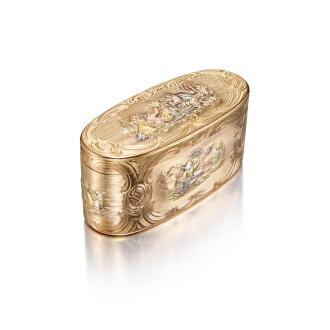
Tempelsman was self-taught, a man of multilingual sophistication, enduring curiosity, and genuine scholarly appetite. In the 1980s he became Chairman of the largest diamond company in the U.S., Lazare Kaplan International. He maintained his close ties to Africa, where his activities were not exclusively commercial, serving as chairman of the Corporate Council on Africa and the Africa-America Institute, working to foster increased cooperation and economic and cultural ties between the United States and African nations. Tempelsman was a strong supporter of Nelson Mandela, helping to organize his inaugural visit to the U.S. shortly after his release from twenty-seven years’ imprisonment by the South African government. He also engaged in extensive philanthropic work, serving on the boards of the Harvard School of Public Health AIDS Initiative, National Democratic Institute (NDI) and the Woods Hole Oceanographic Institution, and as a director of the Academy of American Poets and NYU’s Institute of Fine Arts. He was also a member of the Council on Foreign Relations. The carefully curated group of gold boxes in this collection represent his interest in precious materials from different cultural contexts and in craftmanship, as well as a crossover with literature, science, and nature, most impressively epitomised by the incredible Steinkabinett box which lists and classifies all the eighteenth century hardstones decorating the box, as well as their occurrence.
Unboxing a Rare Gold Cabinet with a Secret Booklet Hidden Inside
"Live in the layers, not on the litter.” […] no doubt the next chapter in my book of transformations is already written. I am not done with my changes."
Tempelsman’s later years saw a gradual transition from the wanderlust of earlier periods to a more settled existence. But as in the words of another of his favourite poems, The Layers by Stanley Kunitz, he was not done with his changes. One of the most precious chapters of this period was spent in the company of Jacqueline Kennedy Onassis, whom he had first met many years prior when she was the wife of then Senator John F. Kennedy. In 1975, following the death of her second husband, Aristotle Onassis, they renewed their friendship and grew increasingly close, sharing a love of art and antiques, music, literature and the French language. They discreetly entertained friends at her Fifth-Avenue apartment and holidayed at Martha’s Vineyard, and Tempelsman cared for her when she was diagnosed with the cancer that would take her life. At her funeral he read aloud Cavafy’s Ithaka and added his own quiet coda: ‘And now the journey is over, too short, alas, too short.’ Devastated but undaunted, Tempelsman followed Kunitz’s exhortation to ‘live in the layers’ and continued on his own marvelous journey for another three decades, enriched by his experiences with her and surrounded by loving family and friends.