Emerald Jewelry: A Collector’s Guide to the Finest Green Gemstones
Discover the qualities that define fine emerald jewelry, including Colombian, Muzo and Zambian origin, clarity enhancement, inclusions and important vintage jewels.

Emerald has been prized for its unmistakable green color for thousands of years, yet the qualities that distinguish an exceptional stone are more nuanced than color alone. The finest examples combine rich, well-balanced green with enough transparency and brightness to give the gemstone life. Colombia has long provided a benchmark for the category, producing important stones from historic mining areas including Muzo, while Zambia has emerged as another major source of fine emeralds. Origin can add considerable significance, but it is never a guarantee of quality.
Clarity requires a different approach with emerald than with many other precious gemstones. Inclusions and fissures are common, often creating the internal patterns traditionally referred to as jardin. Because some fissures reach the surface, clarity enhancement with oil or other substances is frequently encountered. An emerald with no indications of clarity enhancement can therefore be particularly rare, especially when fine color and transparency are preserved at significant size. The presence and degree of enhancement, however, should be considered alongside the appearance of the stone rather than treated as a measure of quality on its own.
The finished jewel introduces a different set of considerations. Important Colombian and Zambian emeralds have appeared in designs by houses and jewelers including Cartier, Van Cleef & Arpels and JAR, while vintage pieces may be valued as much for their design and craftsmanship as for the gemstone they contain. Understanding emerald jewelry means learning to separate the qualities of the stone from the attributes that provide additional context. Color and transparency establish the foundation; origin, clarity enhancement and size help explain rarity, while the setting determines what the jewel adds to the emerald.
| Key Takeaway | What to Know |
|---|---|
| Primary quality factor | Fine emeralds balance rich green color with strong transparency and brightness. |
| Most important origins | Colombia remains the historic benchmark, with Muzo especially celebrated, while Zambia is another major source of fine emeralds. |
| Clarity and inclusions | Inclusions are expected. Their effect on transparency and durability matters more than their presence alone. |
| Clarity enhancement | Enhancement is common. Little or no detectable enhancement can add rarity when color and transparency are also exceptional. |
| Size and rarity | Large emeralds become significantly rarer when fine color and transparency are maintained at scale. |
| Colombian vs. Zambian | Neither is automatically superior. Quality of the individual emerald matters more than origin alone. |
| Collector perspective | Consider the complete jewel. In signed and vintage pieces, maker, period and design can be as important as the gemstone. |
Color is the starting point for emerald value, but intensity alone does not define quality. Fine emeralds typically display a rich, well-saturated green while retaining enough brightness and transparency to appear lively rather than dark or opaque. Hue and tone shape that color, as does how evenly it is distributed across the stone. Cut can strengthen the effect by returning light effectively and presenting the emerald convincingly face-up.
Clarity requires a more nuanced assessment. Inclusions and fissures are common in natural emeralds, so their impact on transparency and durability is generally more important than their presence alone. Clarity enhancement is also widely encountered. Stones with no indications of enhancement, or only insignificant to minor enhancement, can become considerably rarer when they also possess exceptional natural color and transparency. Origin provides further context. Colombian emeralds have long occupied an important position in the market, with historic mining areas such as Muzo particularly celebrated, while Zambia has become a major source of fine material. Neither origin nor treatment status, however, can compensate for a weaker gemstone.
Size makes these distinctions increasingly important. A large emerald is most notable when its color remains strong and its transparency convincing throughout the stone, particularly when clarity enhancement is limited. Gemological reports can establish geographic origin and describe the type or degree of detectable enhancement, helping place those qualities in context. Emerald value therefore depends not on one celebrated attribute, but on how successfully the stone’s color, transparency, rarity and overall appearance come together.
The finest emerald color balances intensity with brightness. Strong saturation is desirable, but a stone that becomes too dark can lose transparency and appear closed, while one that is too light may lack the depth associated with fine emerald. Exceptional stones generally occupy the middle ground: a rich, vivid green that remains lively when viewed face-up. Slight differences in secondary blue or yellow tones can alter the character of the color, but no single shade should be considered apart from the stone’s transparency and overall appearance.
Transparency plays an especially important role in how that green is expressed. Inclusions and fissures can interrupt the passage of light, while the cut may either enhance or diminish the stone’s brightness. Color should also appear reasonably even face-up rather than concentrated in isolated areas. Trade or laboratory terminology such as “Muzo Green” can provide useful context for qualifying emeralds, but the designation alone does not establish quality. The strongest color combines richness with enough transparency and brightness to keep the emerald visibly alive.
Colombia has long provided one of the most important benchmarks for fine emerald. Historic mining districts including Muzo, Chivor and Coscuez have produced stones celebrated for their color and transparency, establishing Colombian material at the highest levels of the market. Fine examples can display a richly saturated green while remaining remarkably bright, but Colombian origin encompasses a wide range of quality. The designation becomes most meaningful when the emerald itself has the color and transparency to support its celebrated source.
The JAR Exceptional Emerald and Diamond Ring, sold for $1.6M in June 2025, brings several important qualities together. Its 8.62-carat square emerald-cut emerald was identified by AGL as Classic Colombian origin with insignificant clarity enhancement using a traditional substance. That limited degree of enhancement is particularly notable in a Colombian emerald of this size and quality. The JAR mounting contributes something different: pavé-set diamonds frame the stone within a signed jewel by one of the most celebrated contemporary designers. Here, the importance of the ring comes from both the emerald and what has been built around it.
Within Colombia, Muzo is perhaps the name most closely associated with exceptional emeralds. Mining in the region dates back centuries, and its deposits have produced stones celebrated for richly saturated green color and strong transparency. That history gives Muzo particular significance in the market, but the name itself is not a measure of quality. An emerald still needs to be judged by the strength of its color, its transparency and the extent of any clarity enhancement.
The Emerald and Diamond Bracelet, sold for 11.3M HKD in October 2023, shows how rarity can increase when multiple important emeralds are brought together. Its 13 graduated step-cut emeralds total 25.74 carats, with SSEF and AGL identifying all as Colombian origin with no indications of clarity enhancement. Eleven are also accompanied by Muzo Certificates of Origin and Traceability. The challenge here extends beyond finding one exceptional stone. Assembling 13 emeralds with comparable color and transparency, a convincing graduation and no detectable clarity enhancement across the group makes the bracelet unusual as a whole.
Zambia has become one of the world’s most important sources of fine emeralds, providing a modern counterpart to Colombia’s historic position. Zambian stones can display strong saturation and impressive transparency, sometimes with a cooler or slightly bluish-green appearance. These characteristics should not be treated as rules, however. Emeralds from both sources vary considerably, and the individual stone remains more important than whether its color conforms to expectations associated with its origin.
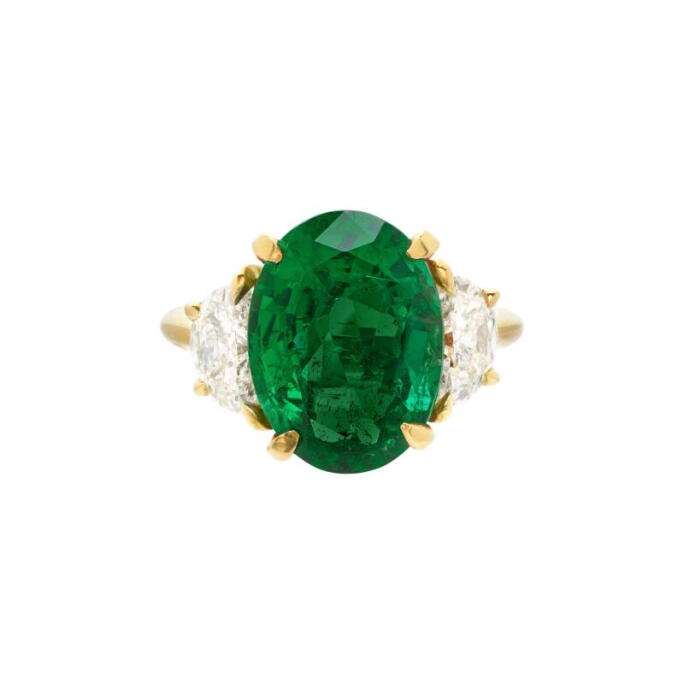
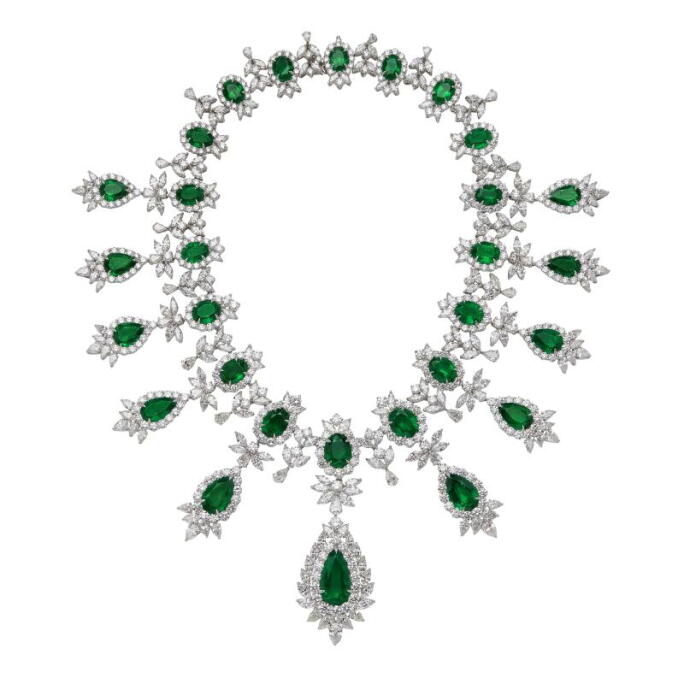
The Gold, 5.05ct Zambian Emerald and Diamond Ring, currently offered on Sotheby’s Buy Now marketplace, centers a 5.05-carat emerald identified by Gübelin as Zambian with no indications of clarity enhancement. The Platinum, 144.07ctw Zambian Emerald and Diamond Necklace, also currently offered through Sotheby’s, presents a different perspective. Its pear- and oval-shaped Zambian emeralds total approximately 144.07 carats and show varying reported degrees of clarity enhancement. Together, the two jewels illustrate the breadth of Zambian material and why origin alone cannot establish a hierarchy. Colombia may carry greater historical recognition, but fine Zambian emeralds can be exceptional on their own merits.
Clarity enhancement is common in emerald because natural fissures can reach the surface of the stone. Traditionally, oils have been introduced into these fissures to make them less visible and improve apparent clarity. Laboratory reports may describe the degree of enhancement as insignificant, minor, moderate or significant, although terminology and grading practices can vary. The substance used is also relevant, making it important to understand both the type and extent of detectable enhancement.
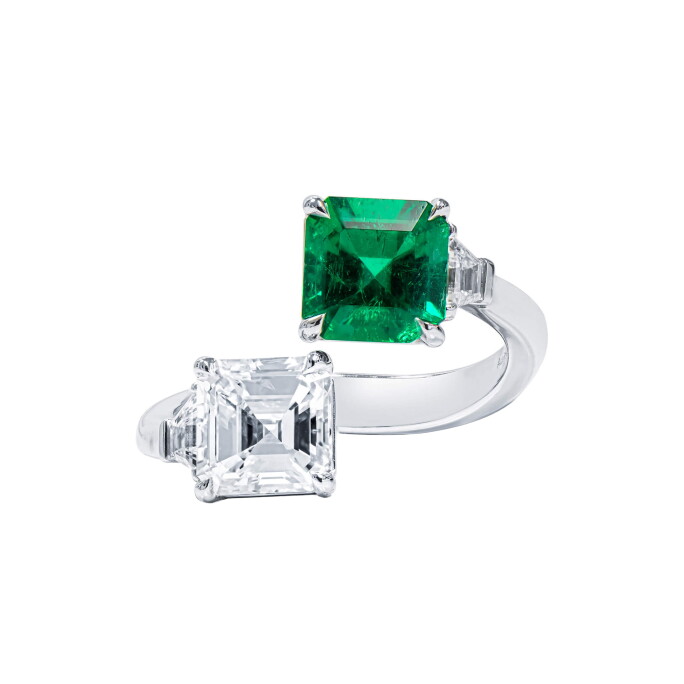
The White Gold, 1.82ct Colombian Emerald and 2.01ct Asscher-Cut Diamond Ring, currently offered on Sotheby’s Buy Now marketplace, shows how several laboratory findings can describe different aspects of the same stone. GRS identified its 1.82-carat emerald as Colombian with minor clarity enhancement using oil and described its color as vivid green, with the trade term “Muzo Green.” These findings should be read separately: Colombian identifies geographic origin, “Muzo Green” describes color rather than establishing Muzo origin and minor oil records the detected clarity enhancement.
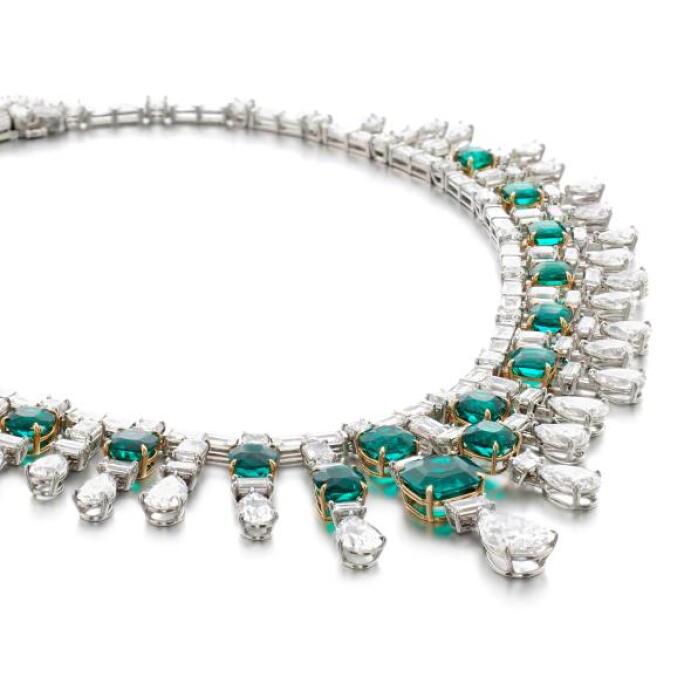
Rarer still are emeralds that retain fine transparency without detectable clarity modification. The Ronald Abram Exceptional Emerald and Diamond Necklace, sold for 1.0M CHF in November 2022, contains 18 Colombian emeralds that SSEF and AGL reported as showing no indications of clarity modification. Finding that characteristic across an entire group is particularly unusual. No enhancement is not a quality grade, however. Its significance rises when an emerald already possesses the color and transparency expected of an exceptional stone.
Inclusions are characteristic of natural emeralds, largely because of the geological conditions under which the crystals form. Internal fissures and mineral inclusions are common enough that the same degree of clarity expected in a diamond is neither typical nor necessary in an emerald. Collectively, these internal characteristics are often described by the French term jardin, meaning “garden,” for the patterns they can create within the stone.
The presence of a jardin does not itself indicate quality. An emerald may contain numerous internal features yet remain remarkably lively if it retains strong transparency and allows light to move effectively through the stone. Dense inclusions can instead create a cloudy or opaque appearance, while prominent surface-reaching fissures may raise durability concerns and provide pathways for clarity enhancement. Exceptional emeralds do not need to be internally flawless. Their clarity is better judged by how successfully the stone preserves transparency and visual life despite its natural inclusions.
Colombia and Zambia dominate discussions of fine emerald, but deposits occur across a much broader geography. Colombia remains the historic benchmark, with mining areas such as Muzo, Chivor and Coscuez associated with important material, while Zambia has become a major source in the modern market. Brazil has produced emeralds for decades as well, and notable deposits are also found in Afghanistan, Pakistan and Ethiopia.
Geology and mining conditions vary between these sources, influencing the characteristics of the emeralds they produce. That does not create a fixed hierarchy of quality. Colombian origin can carry considerable historical and market significance, yet an exceptional Zambian emerald may easily surpass a weaker Colombian stone, and substantial variation exists within every source. Origin is most useful as context: it can help explain an emerald’s rarity and history, but the quality of the individual stone remains the foundation.
Cutting an emerald requires balancing appearance with the physical characteristics of the stone. The rectangular step cut so closely associated with emerald was developed in part to protect vulnerable corners, while its broad, open facets can showcase color and transparency. Those same facets can also reveal inclusions, uneven color or areas where transparency is reduced. Proportions deserve attention as well. Excessive depth may preserve valuable carat weight without giving the emerald equivalent face-up presence.
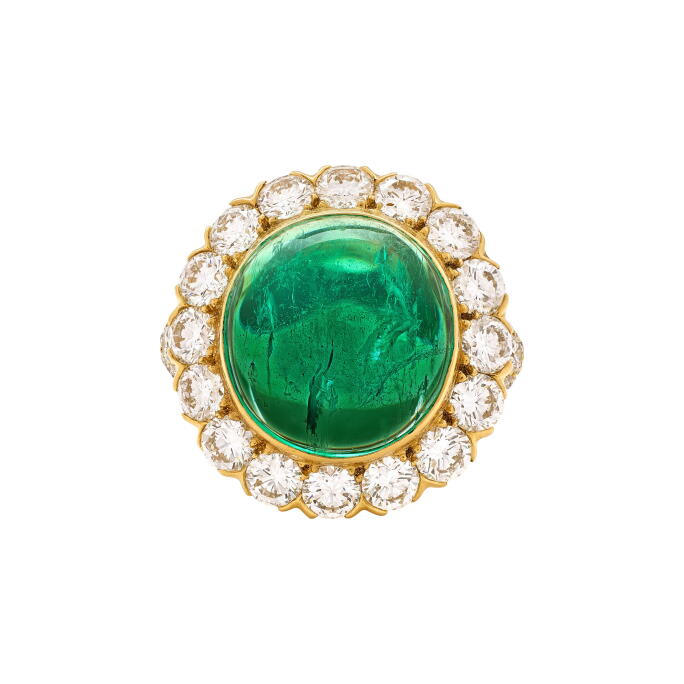
Not every important emerald is faceted. The Vintage Gold, 12.60ct Colombian Emerald and Diamond Ring, currently offered on Sotheby’s Buy Now marketplace, centers a round Colombian emerald cabochon weighing 12.60 carats, with AGL reporting minor clarity enhancement. Rather than relying on facets for brilliance, the domed cabochon emphasizes the stone’s color, volume and surface presence. A successful emerald cut is not defined by one preferred shape, but by how effectively it presents the individual stone while preserving its integrity.
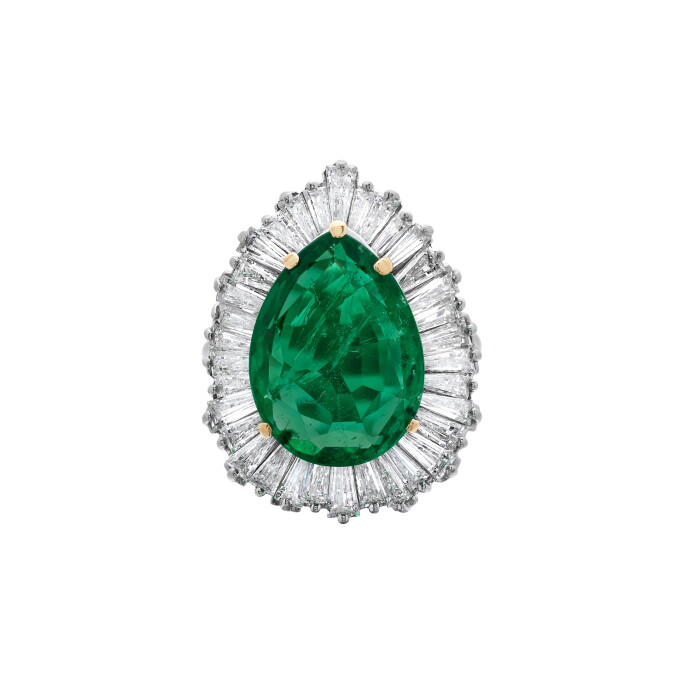
An important emerald can take on different significance when it forms part of a signed or vintage jewel. The maker and period may become relevant alongside the qualities of the gemstone, particularly when the setting represents a recognizable design language. The Vintage Van Cleef & Arpels 5.38ct Colombian Emerald and Diamond Ring, currently offered on Sotheby’s Buy Now marketplace, brings these considerations together. Dating to the 1970s, the signed ring centers a 5.38-carat pear-shaped Colombian emerald that AGL reported as showing no clarity enhancement, framed by tapered baguette diamonds.
The Cartier Art Deco Emerald and Diamond Brooch, sold for 1.3M HKD in October 2020, approaches emerald collecting from a different direction. Its 11.13-carat Colombian emerald is accompanied by reports describing insignificant clarity enhancement, but the center stone is only part of the brooch’s importance. The Persian-inspired composition reflects the geometric forms and international influences found in Cartier’s Art Deco jewelry. In pieces such as these, the quality of the emerald matters, but so does the significance of the jewel created around it.
Finding one exceptional emerald can be difficult; assembling several that work convincingly together presents a different challenge. In necklaces, bracelets and earrings, each stone needs to stand on its own while also relating naturally to those around it. Color and transparency are especially important, as are the progression of size and the consistency of shape. Perfect uniformity is neither expected nor necessarily desirable in natural gemstones, but obvious differences can disrupt the balance of the finished jewel.
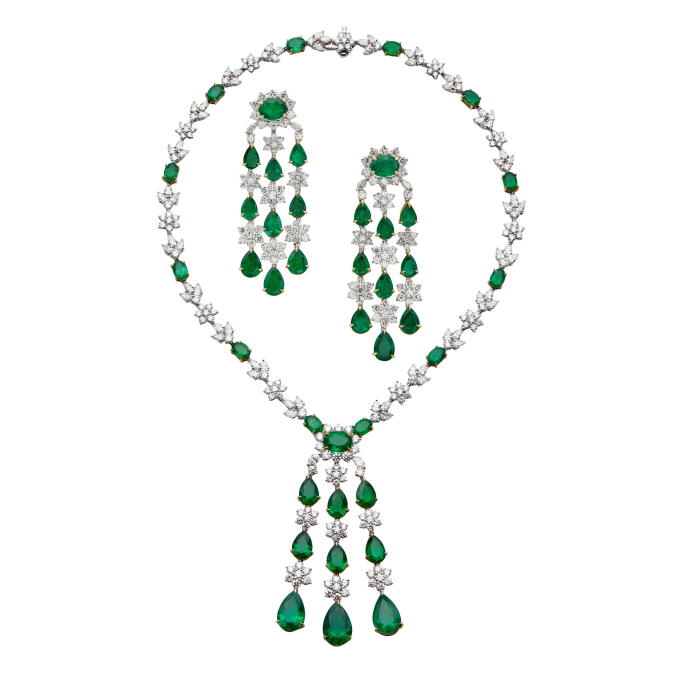
The Platinum, Gold, 59.28ctw Zambian Emerald and Diamond Earring and Necklace Set, currently offered on Sotheby’s Buy Now marketplace, brings together pear-shaped Zambian emeralds totaling 59.28 carats across the necklace and earrings. Accompanying reports describe varying degrees of clarity enhancement among the stones, from minor to moderate. At this scale, no single emerald determines the success of the piece. What distinguishes a well-matched group is the ability of stones with natural variations to read as a balanced and intentional composition.
Start with the qualities visible in the stone itself. Fine emeralds combine rich, well-distributed green color with enough transparency and brightness to remain lively, even when inclusions are present. Look at how effectively the cut presents those qualities and whether the stone maintains its visual strength at larger sizes. Origin can provide important context, particularly for exceptional Colombian emeralds or material associated with celebrated mining areas such as Muzo, but geography should never outweigh the quality seen face-up.
Clarity enhancement deserves particular attention because it is so closely tied to how emeralds are evaluated. Laboratory reports can identify detectable enhancement and describe its degree, helping distinguish stones with no indications of clarity modification from those showing insignificant, minor or greater enhancement. That information is most useful when read alongside the emerald itself: limited or no enhancement becomes especially notable when the stone also possesses exceptional color and transparency. With signed and vintage jewelry, the setting deserves its own assessment. The finest examples succeed both as gemstones and as complete jewels, with neither relying on the other to compensate for weaker quality.
No. “Muzo Green” may be used as a color description, but it does not establish geographic origin from the Muzo mining area. Collectors should distinguish color terminology from documented origin or traceability.
It can be highly significant because surface-reaching fissures and clarity enhancement are common in emerald. The distinction becomes especially important when an emerald also possesses exceptional color, transparency and significant size.
Yes. Minor clarity enhancement with oil is commonly encountered and does not prevent an emerald from being important. Collectors should consider the degree and type of enhancement alongside the stone’s color, transparency, origin and overall quality.
Yes. Colombian origin carries considerable historical significance, but it does not automatically make one emerald superior to another. An exceptional Zambian emerald may surpass a Colombian stone with weaker color, transparency or greater clarity enhancement.
Consistency becomes particularly important. Beyond assessing each emerald individually, collectors should examine how successfully the stones relate in color, transparency, shape and size, as well as whether differences in clarity enhancement affect the overall character of the jewel.
Whether you’re a seasoned collector or new to the world of colored gemstones, Sotheby’s offers a trusted, seamless way to buy and sell emerald jewelry on the secondary market.
Trust our worldwide network of leading jewelry specialists from a globally renowned auction house established in 1744.