
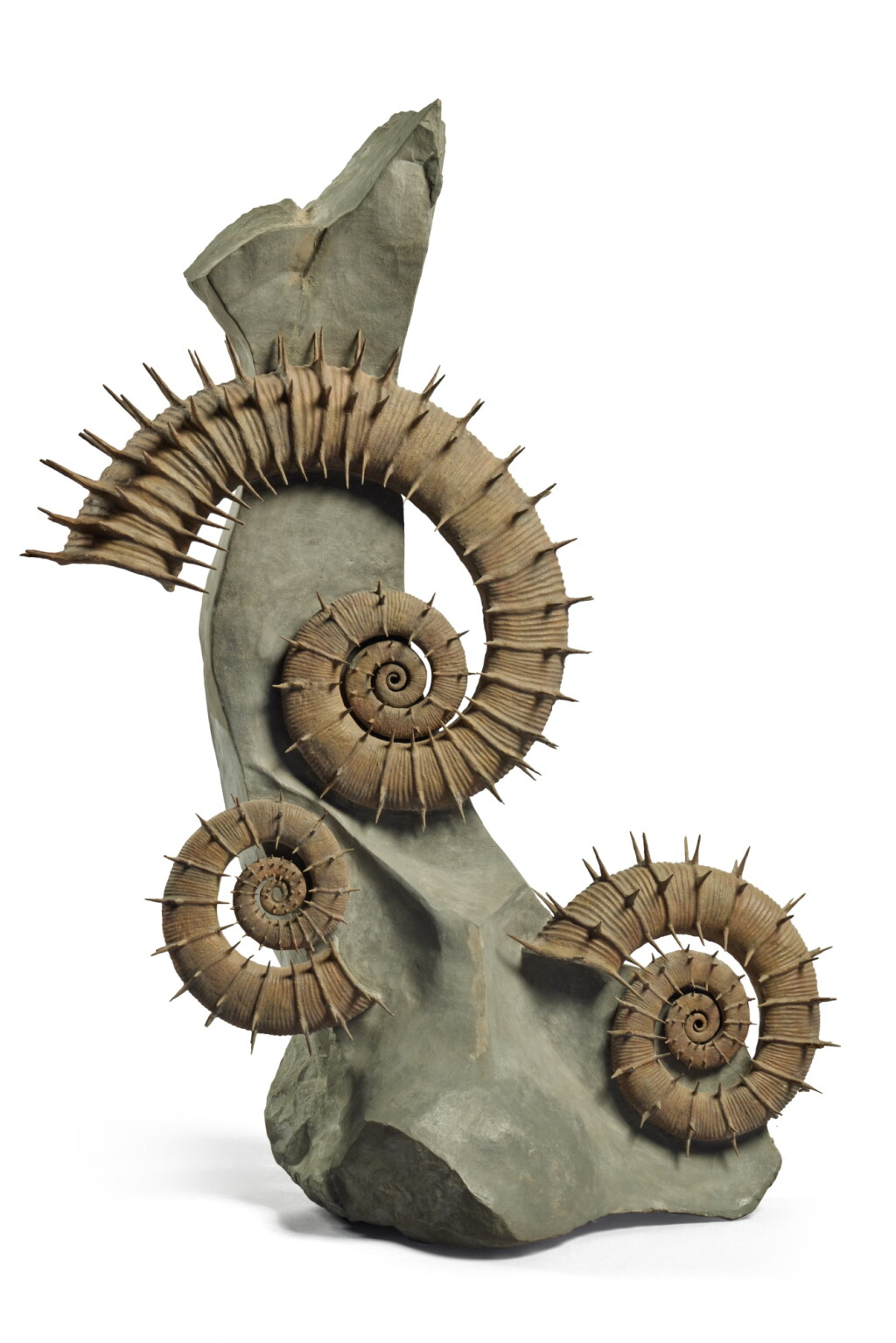
Trio of Cretaceous Ammonites — Spiny Form
Early Cretaceous (approx. 130 million years ago), Peyroules, France
Auction Closed
July 14, 07:13 PM GMT
Estimate
20,000 - 30,000 USD
Lot Details
Description
Trio of Cretaceous Ammonites — Spiny Form
Crioceratites nolani
Early Cretaceous Period (approx. 130 million years ago)
Peyroules, France
38¼ x 22⅞ x 11⅜ inches (97 x 58 x 29 cm), largest ammonite at top measures 21 inches (53.3 cm) in diameter. 200 pounds (90.7 kg).
An exquisite three-dimensional mural of heteromorphic ammonites of the species Crioceratites nolani. Minor repair to some of the spikes of the three ammonite specimens, which is not uncommon for displays of this type.
Alongside trilobites and dinosaurs, ammonites are among the most iconic fossils. Ammonites swam the seas freely during the Jurassic and Cretaceous Periods, evolving rapidly and leaving abundant examples in the fossil record. Ammonites were cephalopods, a taxonomic class that includes today's nautilus, octopus, and squid. They used a long, tubular organ known as a siphuncle to fill or empty their chambers with water and thus move up or down in the water column. Apart from the siphuncle, the animal lived solely in the outermost chamber.
Unlike standard ammonites with tightly coiled shells, heteromorphic ammonites such as Crioceratites nolani developed irregular and surprising shapes, including the prominent spikes that characterize the specimens offered here.
You May Also Like


