Jean-Michel Picart
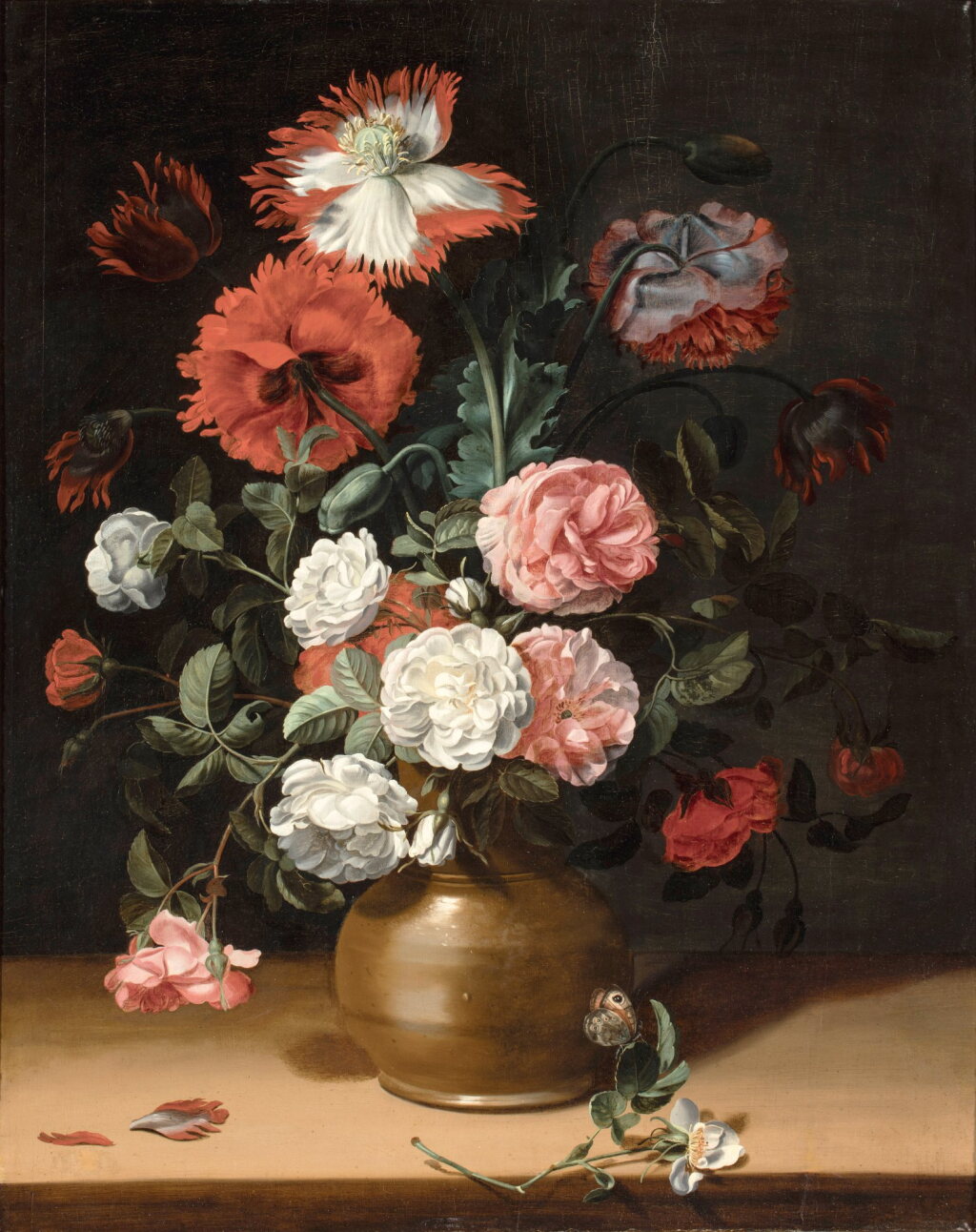
Still Life with flowers and butterflies | Nature morte aux fleurs et aux papillons
Auction Closed
March 23, 03:25 PM GMT
Estimate
20,000 - 30,000 EUR
Lot Details
Description
Jean-Michel Picart
Antwerp 1600 - 1682 Paris
Still Life with flowers and butterflies
Oil on panel
62,7 x 49,1 cm; 24¾ by 19⅜ in.
We are grateful to Mrs Claudia Salvi for having confirmed the authenticity of the work after first-hand inspection. A certificate will be given to the buyer.
____________________________________________
Jean-Michel Picart
Anvers 1600 - 1682 Paris
Nature morte aux fleurs et aux papillons
Huile sur panneau
62,7 x 49,1 cm ; 24¾ by 19⅜ in.
Nous remercions Madame Claudia Salvi d'avoir confirmé l'authenticité de cette œuvre, après un examen de visu. Un certificat sera remis à l'acquéreur.
Private collection, Paris, in 1976;
With Jean-François Heim, in 1976 and 1977;
Anonymous sale, Sotheby’s, London, 8 December 1993, lot 64.
____________________________________________
Collection particulière, Paris, en 1976 ;
Galerie Jean-François Heim, en 1976 et 1977 ;
Vente anonyme, Sotheby’s, Londres, 8 décembre 1993, lot 64.
Paris, Galerie Coatalem, Le Choix de l'Amateur, 1975, no. 23.
____________________________________________
Paris, Galerie Coatalem, Le Choix de l'Amateur, 1975, n° 23.
M. and F. Faré, "Trois grands peintres de fleurs parisiens au dix-septième siècle", in Panthéon, vol. XXXIV/4, Munich 1976, pp. 288-298, fig. 2;
E. Coatalem, F. Thiéblot, La nature morte française au XVIIe siècle, Dijon 2014 , p. 308 (repr.).
____________________________________________
M. et F. Faré, "Trois grands peintres de fleurs parisiens au dix-septième siècle", dans Panthéon, vol. XXXIV/4, Munich, 1976, p. 288-298, fig. 2 ;
E. Coatalem, F. Thiéblot, La nature morte française au XVIIe siècle, Dijon, 2014 , p. 308 (repr.).
This magnificent bouquet of flowers is typical of the work of Jean-Michel Picart, whose paintings were widely collected in the second half of the seventeenth century: many of them can now be found in public collections, for example at Versailles and the Château de Marly.
Born in Antwerp in 1600, Picart probably trained in the Francken family workshop, where he may also have been influenced by the works of artists such as Jacob von Hulsdonck and Jacob van Es. He settled in Paris in 1635 and joined a group of Flemish artists in Saint-Germain-des-Prés. Just like Garnier and Moillon, he was not only a painter but also a picture dealer.
Skillfully lit, the flowers in this ravishing bouquet contrast with the superbly painted vase that contains them. The floral composition is arranged gracefully and naturally, emphasising the fleeting nature of this delicate and perishable subject. The fragility, elusiveness and instability of this natural beauty assembled by a human hand is symbolized and accentuated by the petals that have fallen at the foot of the vase and especially the magnificent butterfly resting on a stalk, balancing on the edge of the table.
____________________________________________
Ce magnifique bouquet de fleurs est caractéristique de l’œuvre de Jean-Michel Picart dont les tableaux ont été largement collectionnés pendant la seconde moitié du XVIIe siècle, et dont nombreux d’entre eux se retrouvent aujourd’hui dans des collections publiques comme à Versailles ou encore au château de Marly.
Né à Anvers en 1600, Picart a vraisemblablement été formé dans un atelier de la famille Francken où il a pu être également influencé par les œuvres d’artistes comme Jacob von Hulsdonck ou encore Jacob van Es. Il s'installe à Paris en 1635 et rejoint un groupe d'artistes flamands à Saint-Germain-des-Prés. Tout comme Garnier et Moillon, il exerce en plus de son activité de peintre une activité de marchands de tableaux.
Savamment éclairées, les fleurs de ce ravissant bouquet contrastent avec le vase magnifiquement peint qui les contient. La composition florale agencée avec délicatesse et naturel renforce le caractère fugace de ce sujet fragile et périssable. La fragilité, la fugacité et l’instabilité de cette beauté naturelle agencée par l’homme sont enfin symbolisées et soulignées par les pétales tombés au pied du vase et surtout le magnifique papillon posé sur une tige en équilibre sur le rebord de la table.
You May Also Like