
Property of an American Gentleman
Vacheron Constantin
A rare yellow gold wristwatch with cloisonné enamel dial, Circa 1950 | 江詩丹頓 罕有黃金腕錶配掐絲琺瑯錶盤,製作年份約 1950
Auction Closed
December 9, 06:25 PM GMT
Estimate
30,000 - 50,000 USD
Lot Details
Description
Property of an American Gentleman
Vacheron Constantin
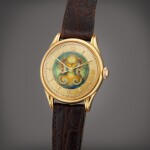
A rare yellow gold wristwatch with cloisonné enamel dial, Circa 1950
江詩丹頓 罕有黃金腕錶配掐絲琺瑯錶盤,製作年份約 1950
Dial: cloisonné enamel 'mirrored seahorse motif '
Caliber: cal. 477/1 automatic, 17 jewels
Movement number: 493'948
Case: 18k yellow gold, screw-down case back
Case number: 319'263
Closure: 18k yellow gold Vacheron Constantin buckle
Size: 35 mm diameter
Signed: case, dial and movement
Box: yes
Papers: no
Accessories: Vacheron Constantin presentation box
Cloisonné enamel wristwatches exemplify the high level of workmanship that Vacheron Constantin is renowned for presenting to the horological world. Vacheron Constantin's mastery of watchmaking and the art of enameling is combined in this single timepiece, making it prized trophy for the most discerning collector.
Vacheron Constantin's tradition of craftsmanship dates to the company's founding in 1755. During the 18th and 19th century, the company produced many examples of fine watchmaking that highlighted the art of enameling. In 1955, while celebrating 200 years of its history, Vacheron Constantin continued to surprise the world with horological works of art.
The presently offered piece with a stunning mirrored seahorse motif is fresh to the market. The enamel dial is signed Vacheron & Constantin above 12 o'clock and discreetly reminds the wearer of the maker without upsetting the aesthetic balance of the cloisonné dial. The case is 18k yellow gold with a screw down case back and the movement, a rare 17 jeweled caliber 477/1 ‘bumper’ movement.
The art of cloisonné is rarely seen on a Vacheron Constantin and surviving examples show the attention to detail offered to each of these timepieces. In order to produce one of these masterpieces, thin gold wire is first carefully placed on a primary layer of enamel. The enamellist then carefully mixes glass and oxides to create the perfect color and places the enamel on the dial. During this process, the enamel is fired up to 7 times to achieve the perfect balance of color and stability. The art of the enamellist is the ultimate expression of patience and discipline.