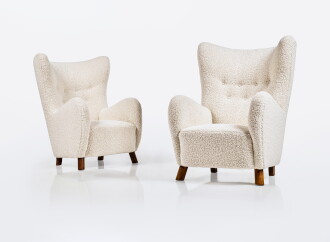
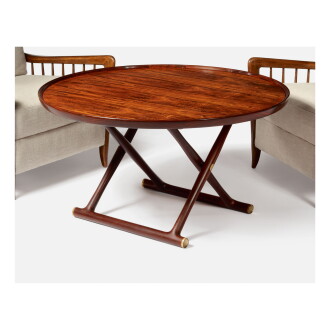
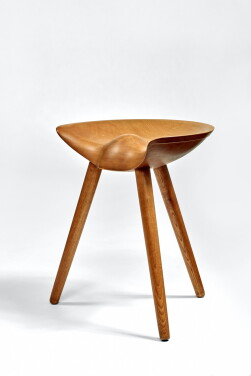
M ogens Lassen, a foundational voice in Danish modernism, helped introduce functionalist principles to Scandinavia through architecture and furniture defined by geometric clarity, disciplined construction, and exceptional craftsmanship. Influenced by Le Corbusier and the Bauhaus, his warm, rigorously proportioned designs in wood, steel, and leather continue to shape global appreciation for Danish functionalism, Scandinavian modern design, and the evolution of modern domestic architecture.
Mogens Lassen Biography
Mogens Lassen was a pioneering figure in Danish modernism, whose work helped introduce functionalist principles to Scandinavia in the early twentieth century. Trained as an architect and influenced by his travels across Europe, Lassen absorbed emerging modernist ideas while maintaining a sensitivity to scale, comfort, and craftsmanship that remained distinctly Danish. His practice encompassed architecture, interiors, and furniture, positioning him among the leading voices shaping modern domestic life in Denmark.
Lassen’s furniture is defined by geometric clarity, disciplined construction, and an understated elegance that reflects the ideals of functional design. Lassen was deeply influenced by the work of Le Corbusier and the Bauhaus, and translated these international ideas into furniture of notable warmth and practicality. Designs such as his folding tables and rigorously proportioned seating demonstrate an ability to unite historical precedent with modern abstraction. Working in materials such as wood, steel, and leather, Lassen emphasized structure and versatility. Today, his work is celebrated for its intellectual rigor, refined craftsmanship, and lasting contribution to the development of Danish functionalism and Scandinavian modern design.
Read Less