To Drink or Not To Drink? The Great Whiskey Collecting Question
In honor of the inaugural edition of Nightcap, a new global Wine & Spirits experience, we explore the many reasons to invest in, keep or sip important whiskeys.

T his fall, Sotheby's New York is hosting Nightcap, an inaugural event celebrating the worlds of wine & spirits and bringing together collectors from all over the world. Collections of extraordinary depth are coming to market, including super rare bottles and unusual formats. But even those who love and enjoy whiskey, might sometimes find themselves asking: What is the point of collecting whiskey in the first place?
Is a collection meant to be opened? Preserved? Displayed? Passed down? Sold? The motivations vary, and so do the emotions the bottles evoke. For some collectors, the appeal lies in rarity; for others, in history, aesthetics, or the satisfaction of completion. And for many, the real tension sits in the space between preservation and enjoyment — the private calculus of deciding whether a bottle should remain sealed or finally be opened and enjoyed.
“A bottle doesn’t mean anything until you open it.”
“A bottle doesn’t mean anything until you open it,” says collector Mason Walker . “It’s just glass and liquid until it becomes part of a story.” He should know: Walker has spent the last decade building one of the country’s most extensive collections of American whiskey.
American whiskey has not always occupied this position in the collecting world. As Noah Rothbaum, author of The Whiskey Bible, notes, the category’s ascent is relatively recent.
“American whiskey has had a meteoric rise in terms of collectibility and value,” he said. “For a long time, American whiskey was something people drank, not something they saved,” Rothbaum said. “That’s changed. These bottles now carry history, scarcity, and identity.”
That rise has brought new attention to the motivations behind collecting. Rothbaum sees two broad archetypes: those who set out to build collections with intention, and those who accumulate bottles almost inadvertently. “There are people who set out to collect things, who have that as part of their personality,” he said. “And then there are the ones who bought bottles for any number of reasons and never opened them. Twenty years later, they realize they’re sitting on something with real value.”

Aaron Goldfarb, author of Dusty Booze, observes a similar divide. “Ask any serious collector if they collected something as a kid—baseball cards, comic books—and the answer is always yes,” he said. For this group, whiskey becomes another expression of a familiar instinct: the pursuit of rarity, the satisfaction of completion, the pleasure of preservation.
But once a bottle is acquired, the psychology shifts. Goldfarb describes the emotional power of an unopened bottle—the way its imagined perfection can eclipse reality.
“The best tasting whiskey in the world is the expensive bottle you’ve never opened.”
“The best tasting whiskey in the world is the expensive bottle you’ve never opened,” he said.
Rothbaum frames it as a question of courage. “It takes a lot of courage to open a bottle that’s expensive,” he said. “Collectors are always asking themselves: is this the moment? Is this the occasion? And as prices escalate, it takes even more courage.”
The question of value hovers over every serious collection, even for people who never set out to treat whiskey as an asset. “At a certain point maybe it becomes too valuable, and all of a sudden, a bottle you bought for $500 or $1,000 is worth $10,000," Goldfarb said. "So then you say to yourself, ‘Wow, do I really want to drink this?’”
Goldfarb himself has had bottles he fully intended to open until their prices climb. “All of a sudden, okay, now it’s worth $1,000," he said. "Well, all right, maybe I’m gonna just sit on this for a while and see what happens.”

Both agree that the pandemic intensified these dynamics. With more time at home and more attention on social media, collectors began reassessing what they owned—and why. Some doubled down and kept going. Others looked at shelves of unopened bottles and wondered what they were saving them for.
What remains consistent is the emotional charge behind the decision. Whether a bottle is opened or preserved, the act is rarely casual. It reflects a negotiation between desire, memory, value, and the stories collectors tell themselves about what these bottles represent.
For Trey Zoeller, founder of Jefferson’s Bourbon, the question of when to open a bottle carries a particular emotional weight. Zoeller has saved bottles over the years, but the true collector in his family was his father, Chet, whose extensive pre-prohibition whiskey library became part of Trey’s life only after his passing. That inheritance reshaped Trey’s relationship to preservation: the bottles he saved for his own reasons now sit alongside bottles his father saved for his.
He describes the hesitation that can accompany opening any meaningful bottle — the way anticipation can complicate the moment itself. “You build it up in your mind,” he said. “You imagine what it’s going to taste like, what the moment will be. And then you’re standing there with the cork in your hand thinking, ‘Was this the right time? Should I have waited?’”
Walker approaches the question from a slightly different angle. A fourth‑generation Arizonan with a deep interest in history and material culture, his collection has been driven by rarity, provenance, and the stories embedded in each bottle. Over time, that collection evolved into Bourbon Lore, a community built around sharing those bottles in meaningful settings.
Walker understands the pull of preservation, but he also believes in the value of opening bottles — especially when the moment carries the right weight. When he opens bottles for Bourbon Lore events, or with friends and family, he wants to help create a memory that he can hold on to, as well as the people he’s with.
He described a recent night when he opened a 1923 Paul Jones with friends and watched the table shift into a different register: “We probably sat there for a good 40 minutes just talking about certain things, memories, moments in each of our lives that [drinking the whiskey] brought back to them.”
That sense of shared presence is what he returns to again and again.
“You get to give them that gift,” he said — the gift of a pour that becomes a story, something people carry with them long after the bottle is gone. And he’s seen that generosity returned. A golf pro he’d befriended in Scottsdale once handed him a dusty Old Hickory from his grandfather’s home bar and asked him to open it someday “to celebrate what he meant to me.”
For Walker, moments like that are the point. The bottle is the catalyst but what he ultimately values is the memory.
Their perspectives illustrate the emotional spectrum that runs through serious collecting. Some bottles are opened to mark milestones; others are saved for reasons that are harder to articulate — a sense of possibility, a connection to the past, or simply the comfort of knowing they’re there. And sometimes, as both men admit, the decision is postponed indefinitely, the bottle becoming a placeholder for a moment that has not yet arrived.
What stands out to Fowle about this collection is the straightforwardness of the consigner’s approach. “He liked the look of them,” Fowle said — a comment that speaks to the instinctive way the bottles were chosen. There was no stated mission to document the category or assemble a definitive archive; the collection grew because certain bottles appealed to him, visually or otherwise.
Back in the Breuer, the bottles sit with enough space between them that each one reads as an individual object: a marker of a moment, a choice, a reason someone set it aside.
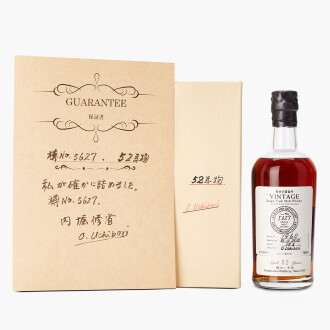
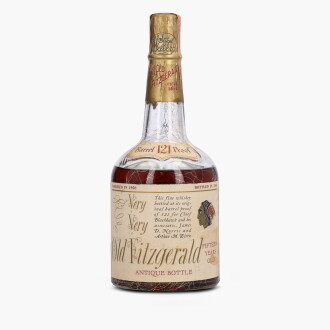
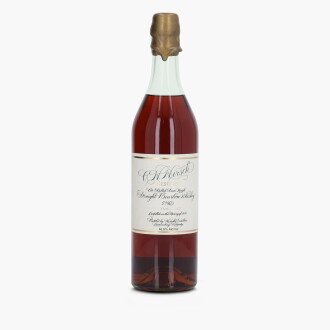
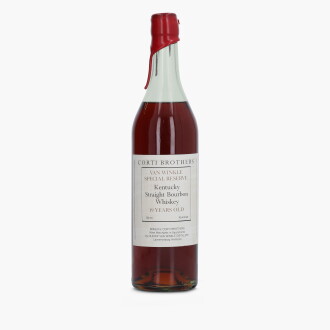
That clarity is part of what interests Zev Glesta, a whisky specialist at Sotheby’s. He sees the collection as a way to understand what mattered in American whiskey at different points in time, including the early single‑barrel experiments, the cult bottlings that redirected attention, the private selections that signaled how distilleries were thinking about their own releases.
“You can see what people cared about,” he said.
Rothbaum framed it in terms of what these bottles offer now. They’re not just assets, he said. They’re “liquid history,” each one a small time capsule. In 2026, only a handful of people will ever have the chance to taste whiskey from those earlier eras.
The idea that bottles hold time, and not just liquid, is something Zoeller has lived with. He talked about a Jefferson’s Presidential Select, a 25-year-old whiskey from a second-fill barrel he’d saved to open with his father, Chet. They never opened it. “I regret not opening that bottle with him,” Zoeller said. The experience changed him; he opens more bottles now, more readily. He’s planning on opening up one with his twins on their 21st birthdays, coming up in a few weeks.
That admission gives the collection a different resonance. The bottles aren’t just rare or visually striking; they represent decisions made and deferred, the way meaning gathers around things that are saved.
The consigner may have chosen these bottles because he liked the look of them, but once they enter the world, they become part of a broader conversation about taste, about time, about what people choose to preserve and why.
And for Glesta, that’s the essential truth. “At the end of the day,” he said, “a bottle only becomes what you decide to do with it.