Understanding Willett: A Collector's Guide to America's Great Cult Distillery
Is it Willett, or KBD, or Willett Family Estate? This historic and enterprising Bourbon distillery has a unique way of doing business—and that's why collector's love them.


I f Pappy Van Winkle is the Rolex of American whiskey, then Willett is surely the H. Moser & Cie.: Perhaps not as well known, but equally (if not more) sought out by true connoisseurs. Willett’s long history under continuous, exclusive family ownership—beginning after Prohibition and carrying through the Bourbon Bust of the 1980s to the boom of the last two decades—makes it unique among Kentucky distilleries. Critics consider many of its releases, from its legendary private-label and export-only bottles of the 1980s and 90s to its renowned Willett Family Estate single barrel program, as some of the best American whiskey ever made.
Sotheby’s has a long record of presenting hundreds of the greatest Willett releases at auction, but never with the breadth and depth of the current auction, Whisky and Whiskey: Featuring the Wax Top Collection. It includes multiple examples of whiskeys that Willett bottled under its private-label name, Kentucky Bourbon Distillers, including iconic early releases from Black Maple Hill and Michter’s and landmark Willett Family Estate selections, such as Doug’s Green Ink and Chocolate Monster. The auction establishes Willett as a true benchmark for luxury American whiskey, a standing it will likely hold for decades to come.


Willett has always produced great whiskey, and it continues to do so today. But the truly phenomenal bottles, with four- and five-figure valuations, came out of a period when Willett did not distill any whiskey at all—instead, it mined the warehouses of other distilleries for hidden gems, which it then nurtured and bottled under its own labels, much the same way a cult winery might rely on world-class vineyards for its grapes.
Understanding how this happened requires understanding a bit of the distillery’s unique history. A. Lambert Willett opened his eponymous distillery in 1936, drawing on a family heritage in whiskey making that reaches back to the earliest days of Kentucky. The distillery thrived after World War II, but as consumer tastes shifted in the 1970s, demand for American whiskey cratered, leaving an overflowing surplus of bourbon aging in Kentucky warehouses. Willett switched to making ethanol for fuel, then shut production down completely.
But while many other, similar distilleries never recovered, Willett took a different turn. In 1984, Lambert Willett’s son Thompson sold the distillery to his daughter Martha and her husband, Even (pronounced Evan) Kulsveen, a Norwegian immigrant. They renamed the company Kentucky Bourbon Distillers and set out with a plan to revive the family heritage.
Instead of restarting the stills, the Kulsveens took advantage of the depressed whiskey market to buy up thousands of barrels of excess inventory held at other distilleries, like Bernheim, Early Times and Brown-Forman. And not just any barrels: Even Kulsveen had a knack for picking “unicorn” barrels, casks that promised to age into outstanding examples of bourbon and rye. These are the barrels that made the distillery’s name, and which filled the bottles represented in the Whisky and Whiskey Collection.
The Kulsveens restarted distilling in 2012, and today produce most if not all of their whiskey in-house. In 2019, Even and Martha Kulsveen handed over control of the company to their children Drew and Britt. The new Willett whiskey is well-regarded, and Drew Kulsveen is one of the best master distillers in Kentucky. But the changes also meant closing the door on an era that produced some of the greatest American whiskey ever seen. For collectors, those bottles will continue to gain in prestige and value for decades to come.

The history of Willett is complicated by the fact that it has operated under two different names. Starting in 1984, the Kulsveens ran it as Kentucky Bourbon Distillers. They chose such an anodyne title because, at least at first, their goal was to age and sell their whiskey for other companies. In many cases a brand would buy whiskey from the inventory of unique barrels at KBD, which would then bottle it for them. In such an arrangement, the Kulsveens didn’t want to stand out. It was only after the success of their single-barrel program, called Willett Family Estate, and the restarting of their distilling operations, that they decided to switch back to the Willett name, making the change official in 2012.
The Kulsveens and KBD operated in such secrecy that even today, there is no publicly available list of all the brands they worked with. Many of those relationships are still hidden behind nondisclosure agreements – a fact that adds to the allure of the KBD-era releases that can in fact be confirmed.
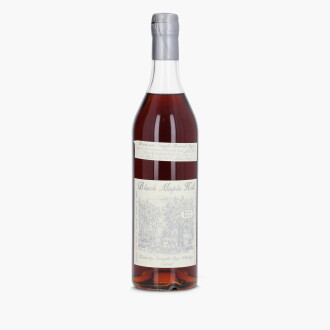
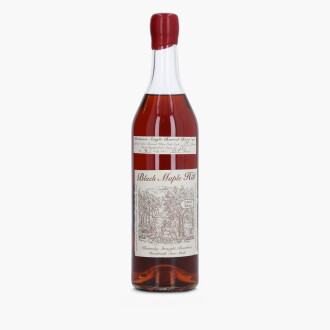
Among them is Black Maple Hill, a brand of bourbon and rye that was developed by CVI, a California import-export company. At a time in the 1990s and 2000s when extra-premium, extra-aged American whiskey was virtually non-existent on store shelves, CVI was able to comb through KBD’s warehouses for exceptional examples of each. Today KBD-era Black Maple Hill, in a distinct wine-bottle format, is some of the country’s most sought-after vintage whiskey. Several bottles are available in the current auction, including the stunning 14-year-old bourbon and the equally impressive 23-year-old rye.
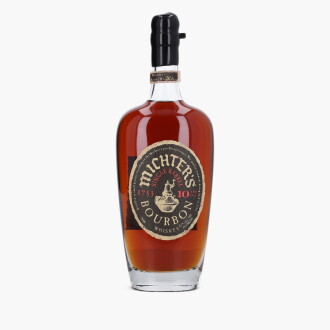
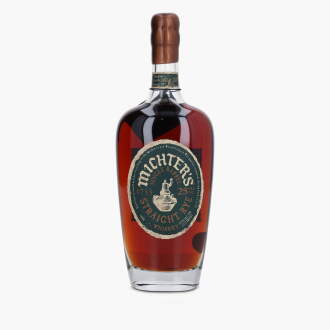
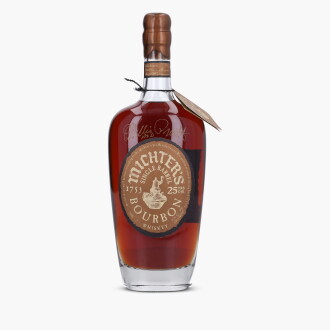
KBD was also one of the early bottlers for Michter’s, at the time a startup brand without its own production or bottling line. In addition to handling the brand’s standard releases, KBD produced Michter’s early age-stated, wax-topped releases, packaged in a distinctive, wide-shouldered bottle called the “Diva.” These releases firmly established Michter’s reputation for exquisite quality and rich, engaging flavor profiles. Several of Michter’s early 10-year-old bourbon and 10-year-old rye bottles releases, produced at KBD in the late 2000s and early 2010s, are available in the current auction, as are a bottle of its extremely rare 25-year-old bourbon and two bottles of its equally rare 25-year-old rye.

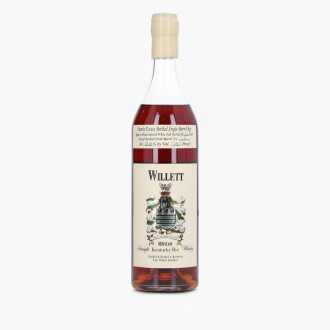
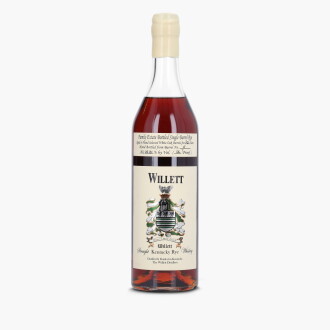
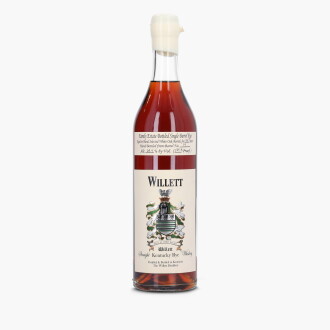
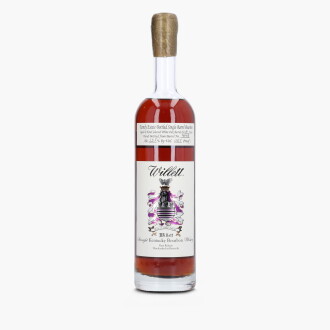
As the reputation of KBD’s phenomenal inventory grew, restaurants, distributors and individual fans began asking whether they could buy barrels themselves. KBD responded in 2004 with a single-barrel program called Willett Family Estate, typically with a family crest on the front label and barrel details on the back, originally written in hand.
The new label elevated the company from obscure respect to true cult fandom. Whereas brands like CVI and Michter’s would buy many barrels at a time and often blend them, the Willett Family Estate program opened the possibility of selecting a single unique barrel. Many of those picks have become legends in themselves, and they make up the bulk of the Willett collection in the current auction.
Among KBD’s inventory were several dozen barrels of rye whiskey distilled at the Bernheim distillery during a one-day production run in April 1984. Initially intended to be the backbone of a super-premium whiskey line, they were set aside after the distillery’s owner, the Schenley Corporation, canceled the project. And there they sat, until Even Kulsveen scooped them up. He believed they were special—deliciously rich and complex, with the potential to age into their 20s without taking on too much wood. And he was right.
In 2006, Drew Kulsveen met a semi-retired glass-cutter named Doug Philips at a whiskey festival. Philips was so taken with Kulsveen’s story about his family’s whiskey holdings that he asked to buy two barrels. He ended up picking two of the Bernheim barrels, then 22 years old. He was one of the first people to zero in on their unique appeal, which makes bottles from his barrels especially valuable. Because of the color of pen used to fill in the bottle details on the back label, they came to be known as Doug’s Green Ink and Doug’s Black Ink, and today rank among the most coveted American whiskeys. Bottles from both barrels are present in the current auction.
Several other barrels from that storied Bernheim run are also represented in the sale: The Iron Fist and The Velvet Glove, both selected by Bill Thomas, owner of Bourbon, a bar in Washington, D.C.; Glen Fahrn, selected by a Swiss wine and spirits importer; and a selection by Bonili, a Japanese importer specializing in French wine but with a taste for extra-aged American whiskey.

While Willett remains tight-lipped about the sources of its barrels, fan speculation has determined the origin of several. The provenance for some barrels, like the 1984 Bernheim rye, is all but certain; the origins of other barrels remains likely but unconfirmed, like a 21-year-old wheated bourbon bought in 2012 by K&L Wine Merchants of California and said to be from the Stitzel-Weller distillery, home to Old Fitzgerald and Pappy Van Winkle. If true, it is likely the last time Stitzel-Weller whiskey was bottled, making it a one-of-a-kind offering.
Several bottles in the auction reflect the prestige of the person doing the selecting. Rogin’s Tavern is a world-renowned whiskey bar in Osaka, Japan, whose extensive collection of rare bottles draws connoisseurs from around the world. Its owner, Seiichiro Tatsumi, is a celebrity in the whiskey world and a close friend of the Kulsveens, and he has traveled to Kentucky several times to select barrels. Two of his choices are represented in the sale, including a 28-year-old bourbon, one of the oldest American whiskeys ever released.
Perhaps the most coveted Willett Family Estate whiskey in the current sale is a 25-year-old bourbon known as Chocolate Monster for its abnormally dark color and rich, chewy profile—though, at just 90.4 proof, it is among the lower ABV whiskeys released by the distillery. Because of the evaporation that occurred during the barrel’s extensive aging, it produced just 96 bottles, making it one of the rarest Willett Family Estate releases ever. In 2025, a bottle sold at auction for $13,600—and with so few left in existence, that valuation will only grow.
As the Willett distillery expands, its reputation continues to grow. In 2019 it opened The Bar at Willett, with an award-winning food program and an exceptional selection of bottles available by the glass. The Willett gift shop, on the first floor below the restaurant, has become a pilgrimage site in its own right, as limited distillery-only releases, topped in a distinctive purple foil capsule, often appear unexpectedly on its shelves.
Meanwhile Drew Kulsveen has spent several years overseeing construction of a new, $93 million Willett Distillery in Springfield, Kentucky. This summer he managed its first production run, a sure sign of the company’s continued success and a strong indicator of its bright future—a future rests on the legacy of the goldmine of barrels amassed by Even Kulsveen. Bottles from that era can never be reproduced, and as Willett continues to build its name as a super-luxury distillery, the whiskeys it produced during the KBD years will continue to gain in value.