
Don de la Galerie Flak
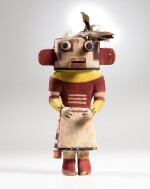
Poupée Kachina, Hopi, Arizona, USA | Hopi Kachina doll, Arizona, USA
Lot Closed
January 31, 02:46 PM GMT
Estimate
6,000 - 9,000 EUR
Lot Details
Description
Hopi Kachina doll, Arizona, USA
haut. 26,5 cm ; 10 4/9 in
_____________________________________________
Poupée Kachina, Hopi, Arizona, USA
haut. 26,5 cm ; 10 4/9 in
Collection Barry Walsh, Massachusetts, USA
Galerie Flak, Paris
Hopi Katsina Carving Styles, Native American Art, oct. - nov. 2022 : p. 53
Kachina (or katsinam) dolls represent the spirits or gods in the pantheon of the Pueblo Indians of the Southwestern United States. Given to children, kachinas were an educational tool to introduce them to the spiritual world and to perpetuate the knowledge of the founding myths within the society. Ða Holi kachina (under its full Hopi name Susukholi) takes its name from the word "holi" that this kachina constantly sings and shouts during the dance. The Holi are messengers for the rain gods. It is said that Holi was first danced in 1904 in the village of Oraibi. He can be seen at the Kiva Dances as well as at weekly dances in the Plaza.
_____________________________________________
Les poupées kachina (ou katsinam) représentent les esprits ou dieux du panthéon des Indiens Pueblo du Sud-Ouest des États-Unis. Offertes aux enfants, les kachinas constituaient un outil pédagogique leur permettant de se familiariser avec le monde spirituel et de perpétuer la connaissance des mythes fondateurs au sein de la société. Ða kachina Holi (sous son appellation Hopi complète Susukholi) tire son nom du mot "holi" que cette kachina chante et crie constamment pendant la danse. Les Holi sont des messagers pour les dieux de la pluie. On dit de Holi que ce personnage a dansé pour la première fois en 1904 dans le village d’Oraibi. On le voit lors des Danses de Kiva ainsi que lors de danses hebdomadaires sur la Plaza.