Jean-Baptiste Santerre
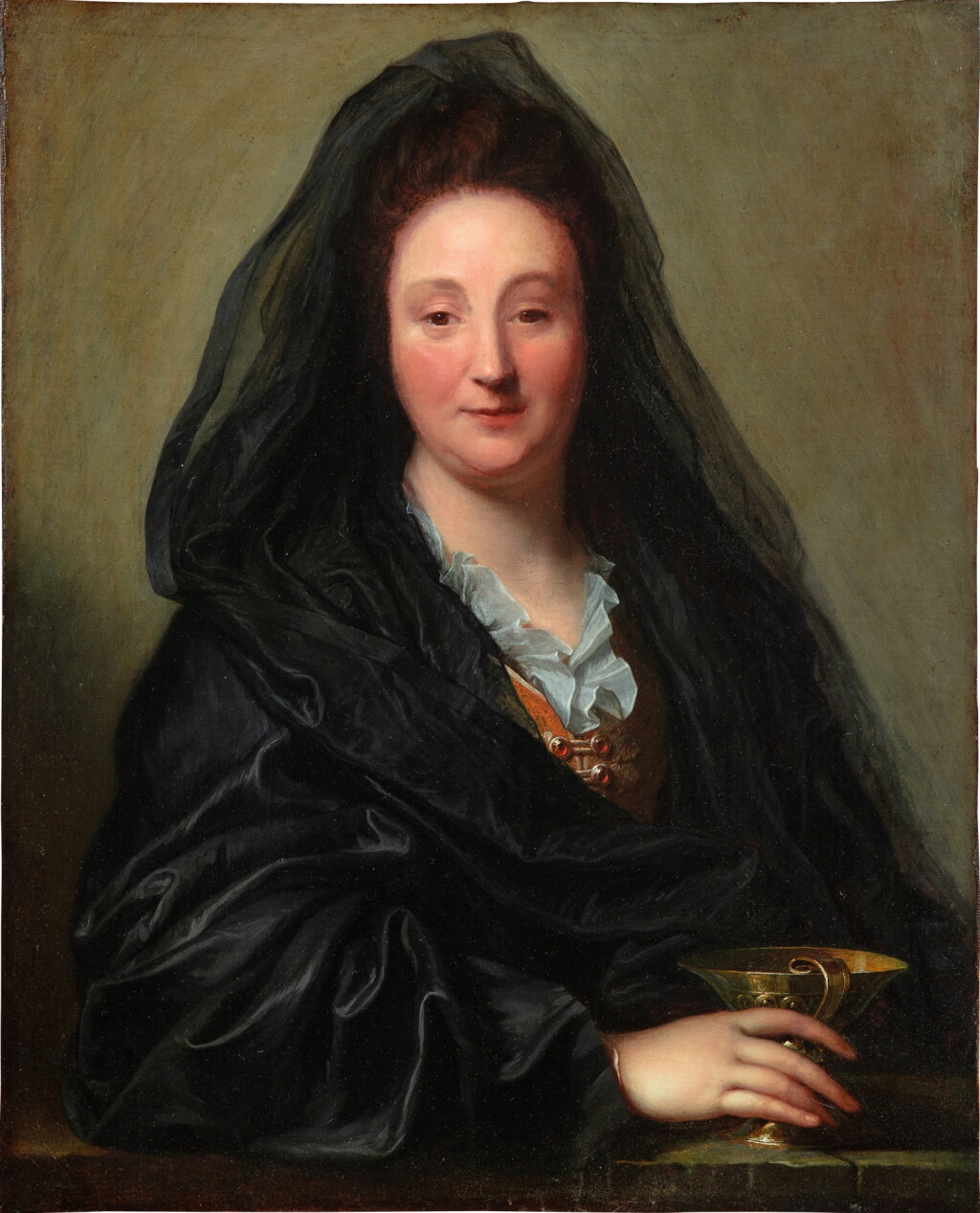
Presumed portait of Catherine Condummer playing Rodogune | Portait présumé de Catherine Condummer dans le rôle de Rodogune
Lot Closed
November 14, 03:34 PM GMT
Estimate
12,000 - 18,000 EUR
Lot Details
Description
Jean-Baptiste Santerre
Magny-en-Vexin 1651 - 1717 Paris
Presumed portait of Catherine Condummer playing Rodogune
Oil on canvas
81,5 x 65,8 cm ; 32⅛ by 25⅞ in.
____________________________________________
Jean-Baptiste Santerre
Magny-en-Vexin 1651 - 1717 Paris
Portait présumé de Catherine Condummer dans le rôle de Rodogune
Huile sur toile
81,5 x 65,8 cm ; 32⅛ by 25⅞ in.
Collection of the Count Hyacinthe François Joseph Despinoy (1764-1848);
Private collection, south of France.
____________________________________________
Collection du comte Hyacinthe François Joseph Despinoy (1764-1848) ;
Collection particulière, sud de la France.
Catalogue des livres et tableaux composant la bibliothèque de feu le lieutenant général d'Espinoy, Paris 1849, no. 816.
____________________________________________
Catalogue des livres et tableaux composant la bibliothèque de feu le lieutenant général d'Espinoy, Paris, 1849, n° 816.
The seventeenth century painter Jean-Baptiste Santerre benefited from apprenticeships with renowned artists such as François Lemaire and Bon Boullogne. He found great success with his elegant portraits, especially portraits of women. He often painted subjects derived from northern models as well as actresses in costume.
This painting portrays Catherine Condummer, an actress with the Théâtre-Français, draped in a superbly rendered black veil over a corset trimmed with gold and a shirt with a ruffled collar. The model is shown half-length behind a low wall, holding a goblet in her right hand – probably the one that features in the final dénouement of the play Rodogune, written by Corneille and first performed in 1647. The goblet seals the fate of Cléopâtre, who is consumed by anger and jealousy: she is trying to poison her son and Rodogune, but she is forced by Rodogune to drink the poison herself.
‘Oh you, that wait but for the ceremony
to cast beneath my feet a stricken rival,
to give with one mortal blow this pair of lovers
their wedding, their throne and their death,
oh poison! Will you restore to me my crown?
Act V – scene 1
Translated by William G. Clubb
Highly successful, this painting was in the collection of the Comte d’Epinoy and is mentioned in his biographical notes of 1849. The Comte d’Epinoy was a general in the French Revolution and for the Empire and was awarded distinctions on several occasions during his career. In particular, he was given the titles Grand Officer of the Legion of Honour and Commander of Saint-Louis.
____________________________________________
Jean-Baptiste Santerre est un peintre français du XVIIe siècle qui a bénéficié d’un apprentissage auprès d’artistes renommés tels que François Lemaire ou Bon Boullogne. Avec ses portraits raffinés, il connaît un grand succès en tant que portraitiste de femme. Il peint à plusieurs occasions des sujets issus des modèles nordiques mais également des actrices dans leur costume.
Cette toile représente Catherine Condummer, actrice du Théâtre-Français, drapée dans un voile noir superbement rendu qui surplombe le costume constitué d’un corset orné de passement d’or et d’une chemise à col volanté. Le modèle est figuré à mi-corps derrière un muret et tient dans sa main droite une coupe. Il s’agit probablement de celle qui marque le dénouement final de la pièce Rodogune, écrite par Corneille parue en 1647. Cette coupe scelle le destin de Cléopâtre, rongée par la colère et la jalousie, qui tente d’empoisonner son fils et Rodogune, mais qui se trouve contrainte par cette dernière d’en boire le poison.
« Ô toi, qui n’attends plus que la cérémonie
Pour jeter à mes pieds ma rivale punie,
Et par qui deux amants vont d’un seul coup du Sort
Recevoir l’hyménée, et le trône, et la mort,
Poison me saura-tu rendre mon diadème ? »
Cléopâtre
Acte V – scène 1
Forte de son succès, cette toile était présente dans la collection du comte d’Epinoy et mentionnée dans sa notice biographique de 1849. Le comte d’Epinoy est un général français de la Révolution et de l’Empire qui a été distingué à plusieurs reprises au cours de sa carrière. Il obtient notamment le titre de Grand officier de la Légion d’honneur et celui de Commandeur de Saint-Louis.