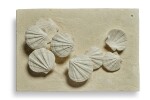

Saint-Jacques Shell Fossil Wall Display
Early Miocene, Burdigalian Stage (approx. 20-16 million years ago), Lacoste Quarry, Vaucluse, France
Auction Closed
July 14, 07:13 PM GMT
Estimate
4,000 - 6,000 USD
Lot Details
Description
Fossilized Saint-Jacques Shell Mural
Gigantopecten restitutensis
Early Miocene, Burdigalian Stage (approx. 20-16 million years ago)
Lacoste Quarry, Vaucluse, France
29 x 19½ x 5¼ inches (73.7 x 49.5 x 13.3 cm). 97 pounds (44 kg).
Eight Gigantopecten shells prepared in high relief. The specimens in this decorative display are well-preserved.
Gigantopecten restitutensis — also known as Saint-Jacques shells — was a species of giant scallop that thrived all over the world during the Early Miocene, from approximately 20 million to 16 million years ago. Like today's scallops, Gigantopecten was a saltwater mollusk that lived mainly on the sea floor, filtering and eating plankton. In addition, fossil scallops — like their living descendants — moved using a form of jet propulsion, clapping their shells together rapidly to expel water out through their rear hinge area.
Gigantopecten had relatively large calcite shells, growing to heights of over five inches (13 cm) with widths topping six inches (15 cm). Because of the considerable size and fragility of Gigantopecten fossils, their removal from the surrounding rock matrix represents the highest caliber of excavation and preparatory work.