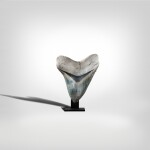
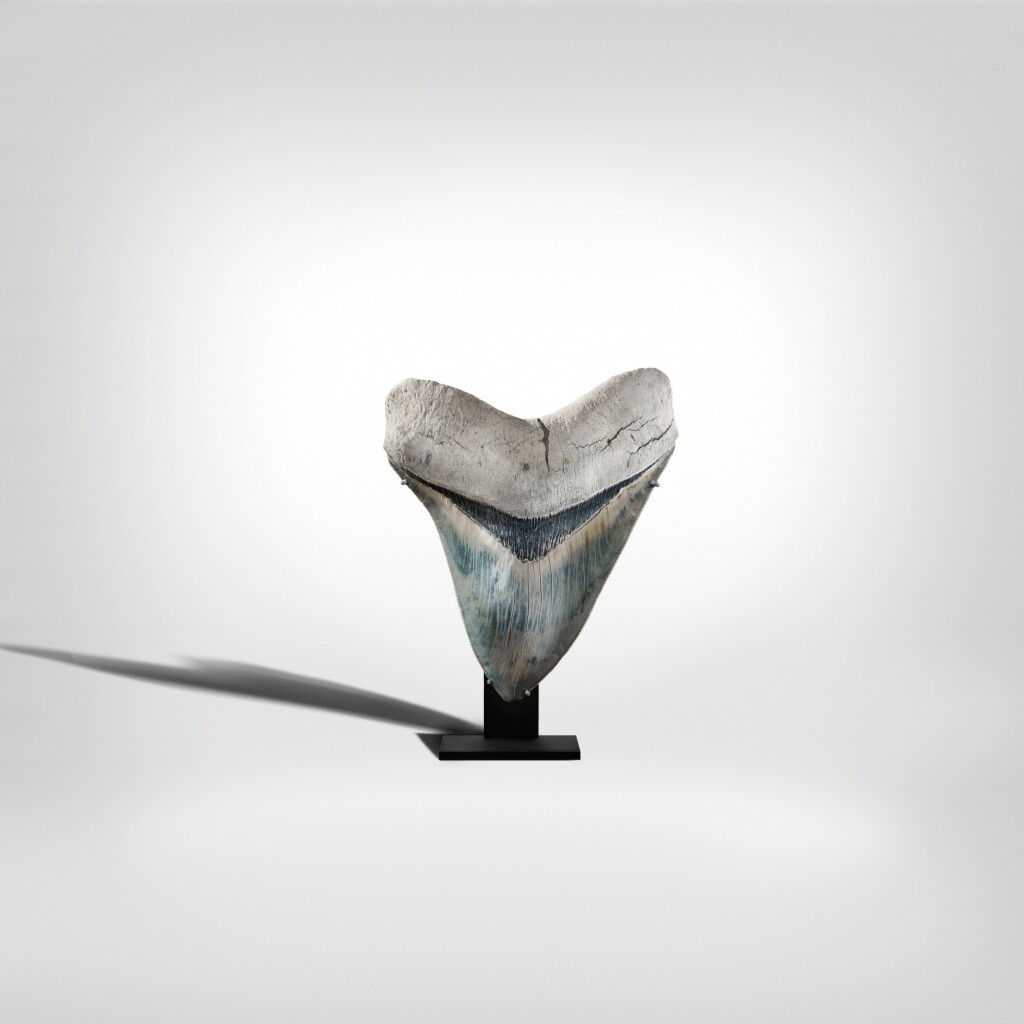
Megalodon Shark Tooth
Miocene (approx. 23-5.3 million years ago), Yorktown Formation, PCS Phosphate Pit (Lee Creek Mine), Beaufort County, Aurora, North Carolina, USA
No reserve
Auction Closed
July 14, 07:13 PM GMT
Estimate
4,000 - 6,000 USD
Lot Details
Description
Megalodon Shark Tooth — North Carolina
Otodus megalodon
Miocene (approx. 23-5.3 million years ago)
Yorktown Formation, PCS Phosphate Pit (Lee Creek Mine), Beaufort County, Aurora, North Carolina, USA
140 mm (5.51 inches) from tip to corner of right root. 130 mm (5.12 inches) from tip to corner of left root. 114 mm (4.49 inches) at widest point. 153 mm (6.00 inches) on stand.
This well-preserved tooth displays a virtually intact enamel crown complete with serrations on both cutting edges including tip. The open U-shaped shaped root suggests that the placement of this tooth was originally in the upper jaws. The distinctive coloration is typical of Lee Creek Mine fossils and adds greatly to the show quality of the specimen.
Included in this lot are the original find photos for this tooth, as depicted in the attached images.
Otodus megalodon (formerly known as Carcharodon megalodon) was a giant prehistoric shark that roamed the open seas, armed with huge, serrated, razor-sharp teeth. The largest predatory shark ever to have lived, Otodus megalodon grew up to three times the size of its closest living relative, the modern great white shark. Because estimates are based solely on teeth and fragmentary vertebral remains, upper size limits of this apex carnivore range from 40 to 60 feet (12 to 18 m) in length, with estimated weights ranging between 40,000 and 120,000 pounds (18 to 54 metric tons).
Regardless of exact bodily dimensions, Otodus megalodon ranks among the largest predators ever to exist on Earth. With a name meaning "big tooth" and a bite force more than double that of Tyrannosaurus rex, it is no wonder that Otodus megalodon is considered the greatest predatory fish of all time.

