Fossil Sea Lilies — Jurassic Display
Early Jurassic, Toarcian Stage (approx. 180 million years ago), Holzmaden, Germany
Auction Closed
July 14, 07:13 PM GMT
Estimate
30,000 - 50,000 USD
Lot Details
Description
Fossil Sea Lilies — Jurassic Display
Seirocrinus subangularis
Early Jurassic, Toarcian Stage (approx. 180 million years ago)
Holzmaden, Germany
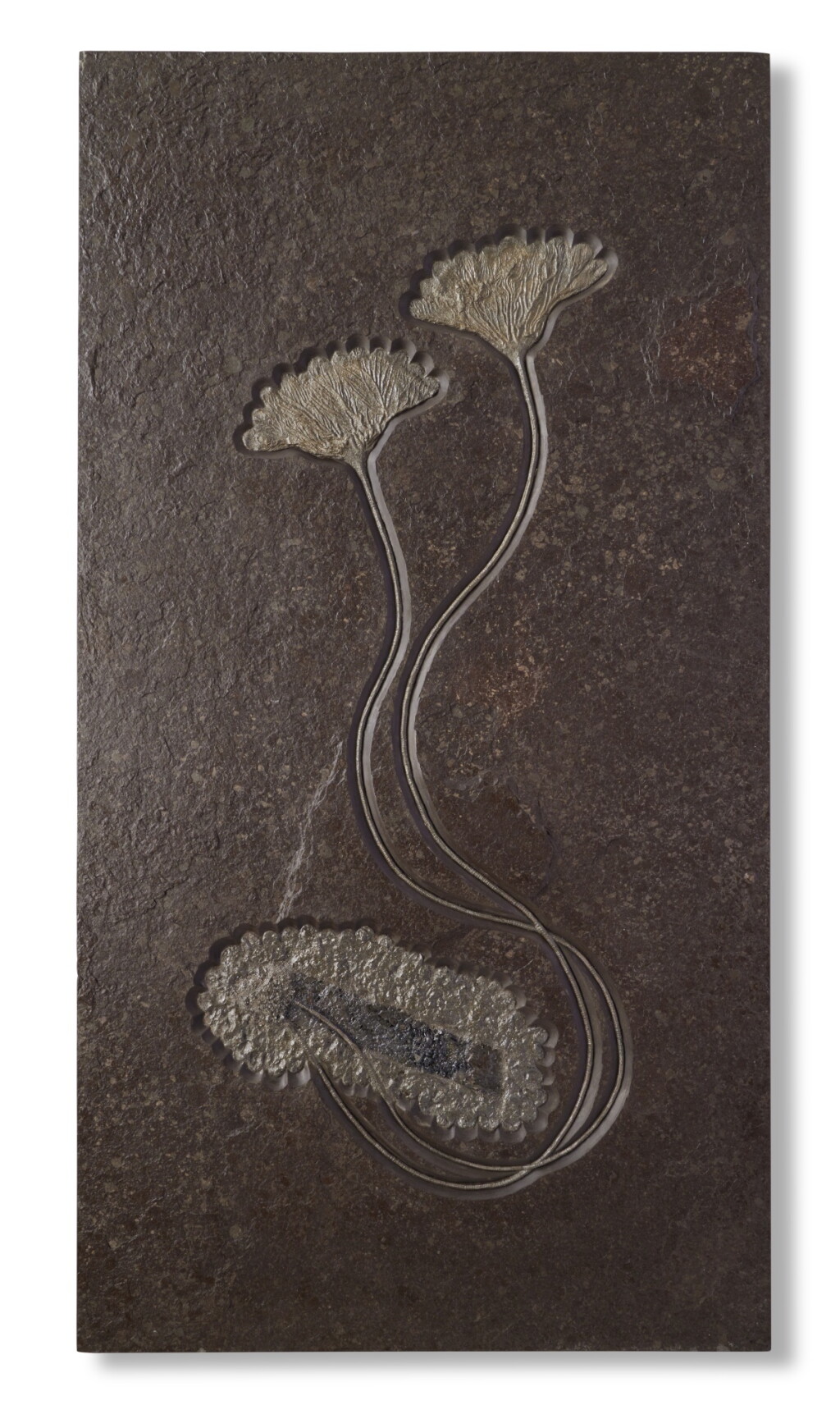
Plate measures 59⅜ x 31½ x 1¼ inches (151 x 80 x 3.2 cm). Rightmost crinoid measures 66 inches (167.6 cm) in length, crown measures 9⅜ inches (24.8 cm) in width. Leftmost crinoid measures 60 inches (152.4 cm) in length, crown measures 9½ inches (24.1 cm) in width. 233 pounds (105.7 kg).
These specimens are preserved attached to a fragment of driftwood. They have been meticulously prepared, rendering exquisite detail adding greatly to their decorative appeal. All the important segmentation and body outlines of these interesting extinct creatures are displayed as they may have appeared in life.
This fossil mural features two large crinoids, a type of marine invertebrate colloquially known as a "sea lily." These sea lilies lived 180 million years ago in the prehistoric Tethys Ocean that covered much of present-day Europe and Asia. Spending almost their entire lives attached to the piece of driftwood seen here, they flourished in a rich underwater world alongside other marine animals including fish, ammonites, and belemnites. As sessile filter feeders, crinoids relied on the movement of the driftwood or floating debris to which they were attached to venture into areas with adequate food supply. Crinoids were nevertheless able to bend their stalks and flex and extend their arms — the central appendages in their crowns — so that their mouths could face the water current to capture potential food.
Crinoids bred once a year when their eggs or sperm were released into the water. Once the eggs were released from the parent and fertilized, the resulting embryo would attach itself to a solid substrate such as driftwood where it would develop for several days into a barrel-shaped, free swimming larva. After several more days, the larva would reattach to the driftwood and develop a rudimentary stem, mouth, and five small arm-like tentacles known as podia. After several more weeks, the crinoid would reach the stalked, sessile stage, where it formed true arms, feather-like pinnules, and a complete set of podia that covered the pinnules and helped move food toward the mouth. After about a year of life, the crinoid would become fertile and produce either eggs or sperm, thus continuing the propagation of the species.
Eventually, these sea lilies succumbed to death and became buried on the sea floor, where the low-oxygen environment allowed for their pristine preservation and fossilization. Over millions of years, the sediment and animal remains surrounding these two animals petrified and became the dark grey Posidonia shale seen here, now famously extracted from the quarries of Holzmaden, Germany.
You May Also Like


