
Property of a Lady 女史收藏
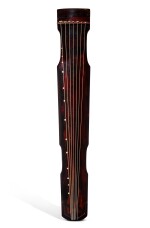
A brown-lacquered Confucius-style guqin, xiqin, Late Ming - early Qing dynasty | 明末清初 栗殼漆仲尼式膝琴
Lot Closed
May 19, 03:24 AM GMT
Estimate
200,000 - 800,000 HKD
We may charge or debit your saved payment method subject to the terms set out in our Conditions of Business for Buyers.
Read more.Lot Details
Description
A brown-lacquered Confucius-style guqin, xiqin
Late Ming - early Qing dynasty
明末清初 栗殼漆仲尼式膝琴
inscribed in clerical script in the interior
龍池內側墨款:吳縣 徐□□□
overall length 全長:97 cm
string length 隱間:88 cm
shoulder width 肩寬:15.5 cm
waist width 腰寬:13.5 cm
Collection of Yanqin Zhai, Hong Kong.
Collection of Yung Sze-chak (1931-2010), acquired from the above on 18th June 1991, thence by descent.
來源:
硯琴齋收藏,香港
容思澤(1931-2010年)收藏,1991年6月18日得於上者,後由家族傳承
Mr. Yung Sze-chak (1931-2010), from Heilongjiang Province and of the Manchu Bordered White Banner, carried forward his family’s deep-rooted guqin tradition. His great-grandfather, Qing Rui (1816-1875), developed a profound mastery of the guqin in Guangdong under the mentorship of Mr. Li Chengyu from Zhejiang. Qing Rui collected notable guqin scores such as the Gugang Yipu and Wuxue Shanfang Qinpu, and in 1873, he published the Qinse Hepu, a significant compilation of guqin music.
This musical legacy was transmitted down to Yung Sze-chak, making him a fourth-generation inheritor. Tutored by his father, Sum-yin, Yung inherited and upheld the family’s guqin heritage. Upon relocating to Hong Kong, he became a pivotal figure in the local guqin community, collaborating with esteemed masters like Tsar Teh-Yun and Lo Ka Ping. Yung devoted his life to teaching and promoting the guqin, ensuring the tradition flourished across six generations. Today, the Yung family’s guqin school is heralded as a major custodian of the art, marking nearly two centuries of cultural legacy in Hong Kong.
容思澤先生(1931-2010年),原籍中國東北黑龍江省,滿族鑲白旗人。容氏琴學源遠流長,始於高祖慶瑞(1816-1875年)。慶瑞宦遊粵海,從學於浙江錢塘李澄宇先生,盡得真傳,與粵地琴友交往,獲《古岡遺譜》、《悟雪山房琴譜》等嶺南名譜。1873年慶瑞著刊《琴瑟合譜》,越二年病逝。其琴學傳予側室李芝仙,後傳第二代容葆廷(1862-1920)及容心言(1884-1966)。民國鼎革之後家族遷戶廣東番禺,改為「容」姓。
容思澤先生為容氏琴學第四代傳人,得父容心言親授,盡承家學,移居香港後操縵不輟,除與香港琴人謝心回、盧家炳、蔡德允、饒宗頤諸先生往還切磋外,更致力於家學傳承,桃李滿門。容氏琴學至今已傳承六代,歷時近二百年,為香港古琴藝術之重要流派。
You May Also Like


