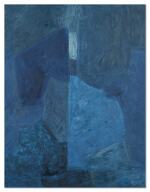

Serge Poliakoff
Composition abstraite
Lot Closed
July 7, 12:25 PM GMT
Estimate
120,000 - 180,000 EUR
We may charge or debit your saved payment method subject to the terms set out in our Conditions of Business for Buyers.
Read more.Lot Details
Description
Serge Poliakoff
1900 - 1969
Composition abstraite
signed and dated 64 (lower right)
oi lon canvas
116 x 89,5 cm; 44 ¼ x 35 in.
Executed in 1964.
This work is registered in the Poliakoff-Archives under the number 963027 and is accompanied by a certificate of authenticity established by Alexis Poliakoff.
Private collection, Germany
La Gazette de l'Hôtel Drouot, 16 mars 1990, p.64, illustrated in colours
Alexis Poliakoff, Serge Poliakoff. Catalogue Raisonné, 1963-1965, vol. IV, Munich 2012, no. 64-31, p. 147, illustrated in colours
Munich, Galerie A, Serge Poliakoff Bilder + Graphik, March - April 1982, illustrated in colours
Composition abstraite, 1964 belongs to the final and most refined phase of Serge Poliakoff’s career, when his lifelong exploration of colour increasingly centred on subtle tonal relationships and chromatic harmony. Constructed from a series of interlocking forms in deep blues, indigoes and slate greys, the composition unfolds with a remarkable sense of balance. The shapes appear to hover rather than settle, their softened edges dissolving into one another and creating a slow visual rhythm that guides the eye across the canvas. Poliakoff often compared painting to music, remarking that “a form should be heard, not seen” (Michel Ragon, Le regard et la mémoire, Paris, 1956, p. 56), and the present work possesses precisely this quiet, resonant quality.
Born in Moscow in 1900, Poliakoff left Russia following the Revolution and settled in Paris during the 1920s, where encounters with Kandinsky and the Delaunays encouraged his turn towards abstraction. Over the following decades he developed a highly personal visual language built from juxtaposed colour fields, establishing himself as one of the leading figures of the post-war École de Paris. By the 1960s, his paintings had become increasingly distilled, relying less on contrast and more on subtle shifts in tone and surface to achieve their expressive power.
The present work exemplifies the technical sophistication of these mature years. Built up through successive layers of oil paint, its surface reveals an extraordinary depth of colour, with darker passages containing submerged blues and cooler greys that emerge gradually from beneath. Light appears to emanate from within the composition itself, animating the restrained palette with a quiet inner luminosity. As Poliakoff observed, “When a painting is silent, it means that it is successful”; nowhere is this aspiration more evident than in the present canvas, whose meditative harmony and chromatic depth stand among the defining achievements of his late oeuvre.