
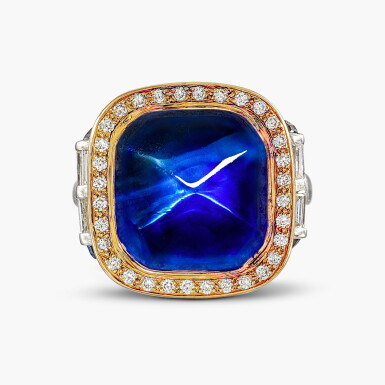
Sapphire and Diamond Ring | 20.84克拉天然 「喀什米爾」未經加熱藍寶石 配 鑽石 戒指
Auction Closed
September 17, 11:55 AM GMT
Estimate
5,500,000 - 9,500,000 HKD
Lot Details
Description
Set with a sugarloaf sapphire weighing approximately 20.84 carats, cabochon sapphires, baguette and brilliant-cut diamonds, French assay mark for platinum and 14 karat gold, maker’s mark.
Approximate Gross Weight: 13 grams
Approximate Size: 7
SSEF report no. 114023, 30 July 2020: 20.84 carats, Kashmir, no indications of heating; appendix letter, exceptional, and possesses extraordinary characteristics
Gubelin report no. 26071261, 13 August 2026: stated 20.84 carats, Kashmir, no indications of heating, information sheet
AGL report no. 1158012, 30 June 2026: stated 20.84 carats, Kashmir, no gemological of evidence of heat and additional clarity enhancement
GIA report no. 1379950793, 17 March 2021: Kashmir, no indications of heating; GIA letter
In 1881, a substantial landslide in the remote Kudi Valley revealed the presence of extraordinary sapphires in the Padar Himalayan region of Kashmir. The valley, sitting 4,500 meters above sea level, remains inaccessible under thick snow for all but a few months of the year. While the unexpected landslide is popularly held as the first discovery of sapphires in the region, there is local lore that the inhabitants of the valley knew of the stones already, initially trading them for daily goods such as salt. It was not until 1882 that the stones’ potential value, due to their scarcity and astounding beauty, began to be recognized in the markets of Simla, the official summer capital of India. The valley was mined as intensively as the harsh conditions would allow, whilst the Maharaja sent troops to protect the land and prohibit private trading.
Despite the mine being accessible for just three months each year, within a mere five years, the ‘Old Mine’ was depleted. It’s successor, the ‘New Mine’, situated roughly one hundred meters to the south, continued to be worked intermittently into the early 20th century. However, perilous conditions and diminishing yields lead to the ‘New Mine’ being abandoned by 1908. No significant deposits have since been found and subsequent mining has been sporadic, hampered by the region’s remoteness and political instability.
Kashmir sapphires are widely regarded as the finest sapphires in the world, celebrated for their remarkable color, typically a rich, intense blue, and their soft and velvety appearance. Often likened to the vibrant blue of the cornflower, this hue is further enhanced under artificial light. There are only a limited number of examples of stones over 5 carats, making this 20.84 carat stone exceptional.
1881 年,位於喀什米爾帕達爾(Padar)喜馬拉雅山區偏遠的庫迪谷(Kudi Valley)發生了一場大規模山體滑坡,意外揭開了品質絕倫的藍寶石藏身之地。該山谷海拔高達 4,500 公尺,一年中除了短短幾個月外,其餘時間皆被厚重積雪封鎖而無法通行。儘管這場突如其來的山崩被廣泛視為該地區藍寶石的首次發現,但當地傳說早已流傳谷中居民早已知曉這些寶石的存在,起初甚至用它們來交換鹽巴等日常生活必需品。
直到 1882 年,這些寶石因稀世罕見與驚世絕美所蘊含的潛在價值,才開始在印度當時的夏都西姆拉(Simla)市場中獲得認可。隨後,在嚴苛自然條件所允許的極限下,該山谷遭到了密集開採;與此同時,土邦王公(Maharaja)更派兵進駐保護這片土地,並嚴禁私人交易。
儘管該礦區每年僅有短短三個月能夠進入採掘,在短短五年之內,「老礦」(Old Mine)便已宣告枯竭。位於其南方約一百公尺處的後繼者——「新礦」(New Mine),雖然持續開採至 20 世紀初,但由於險象環生的地理環境與日益驟減的產量,最終也在 1908 年被迫廢棄。自此之後,該地區便再未發現任何重大礦藏,後續的開採作業亦因偏遠險阻的地勢與地緣政治的不穩定而斷斷續續、極為零星。
喀什米爾藍寶石被公認為世界上最頂級的藍寶石,以其卓越迷人的色彩——通常呈現濃郁飽滿的藍色——以及柔和的「絲絨」質感而聞名遐邇。這種色澤常被美譽為生動明豔的「矢車菊藍」,且在人造光源的映照下更添璀璨魅力。由於市場上超過 5 克拉的珍品數量寥寥可數,這更使得此顆重達 20.84 克拉的藍寶石顯得格外珍罕卓絕。
You May Also Like


