
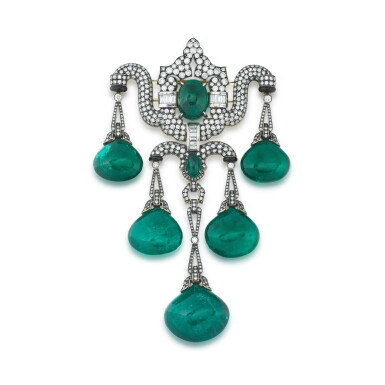
Emerald, onyx and diamond devant-de-corsage
Session begins in
October 8, 08:30 AM GMT
Estimate
80,000 - 120,000 EUR
Bid
70,000 EUR
Lot Details
Description
Designed as an articulated swag supporting cabochon emerald drops accentuated by onyx, the mount set with oval emerald cabochon and pavé-set with brilliant and baguette-cut diamonds.
- Measuring approximatively 125 x 65mm
- French import assay mark for 18 carat gold and silver
- Gross weight 68.49 grams
- Accompanied by a SSEF report no. 147651, dated 29th July 2025, stating that these emeralds are of Zambian origin with indications of minor to moderate amount of oil.
Corsage jewels are most likely the descendants of the ancient fibula. Used to fasten and secure garments, the fibula was often adorned with precious stones and served as a marker of social status.
As women's fashion evolved, both the function and form of these ornaments changed. Until the early nineteenth century, fashion dictated the wearing of a laced corset over a blouse known as a corsage, a term that referred both to the bodice of a garment and to the upper torso itself. Jewelry worn at the front of the chest consequently became known as corsage ornaments or corsage jewels.
Initially sewn directly onto clothing and later attached by means of fastening mechanisms, this type of jewelry evolved in step with changing fashions. From the rigid stomachers of the eighteenth century to the diamond bows of the Second Empire, and then to the flexible, naturalistic creations of the Belle Époque, corsage jewels accompanied the gradual emancipation of the female silhouette and wardrobe. While adapting their forms to the tastes of each era, they continued to adorn their owners’ necklines with elegance and refinement.