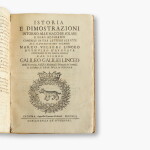
![[Bible, Polyglot] | A full set of the Complutensian Polyglot, the first polyglot bible](https://sothebys-md.brightspotcdn.com/dims4/default/5ebde0c/2147483647/strip/true/crop/2000x2000+0+0/resize/150x150!/quality/90/?url=http%3A%2F%2Fsothebys-brightspot.s3.amazonaws.com%2Fmedia-desk%2Fwebnative%2Fimages%2Fdf%2F4b%2F95d871d94bf0af4de7339860e50a%2Fn12191-dlyr7-t1-11.jpg)
![View full screen - View 1 of Lot 305. [Bible, Polyglot] | A full set of the Complutensian Polyglot, the first polyglot bible.](https://sothebys-md.brightspotcdn.com/dims4/default/e632dcc/2147483647/strip/true/crop/2000x2000+0+0/resize/1024x1024!/quality/90/?url=http%3A%2F%2Fsothebys-brightspot.s3.amazonaws.com%2Fmedia-desk%2Fwebnative%2Fimages%2Fdf%2F4b%2F95d871d94bf0af4de7339860e50a%2Fn12191-dlyr7-t1-11.jpg)
Forty Highlights from the Stock of Richard C. Ramer Old & Rare Books
[Bible, Polyglot] | A full set of the Complutensian Polyglot, the first polyglot bible
Lot Closed
June 25, 06:05 PM GMT
Estimate
80,000 - 120,000 USD
We may charge or debit your saved payment method subject to the terms set out in our Conditions of Business for Buyers.
Read more.Lot Details
Description
[Bible, Polyglot]
Vetus testamentum multiplici lingua nunc primo impressum. Et imprimis Pentateuchus Hebraico Grego atque Chaldaico idiomate. Adiuncta unicuique sua latina interpretatione; Novum testamentum grece latine in academia complutensi noviter impressum; Vocabularium hebraicum atque chaldaicum veteris testamenti cum aliistra tractatibus prout infra in prefatione continentus. [Alcalá de Henares: Arnaldo Guillén de Brocar, 1514-1517]
6 vols. in 7 books, folio (365 x 263 mm). Collation: (vol. I: -A1 blank; vol. III: -a1,2 errata at end; vol. V: without a10, a-f6 g4 at end [Introductio qua brevissima ad grecas litteras and Interpretationes], here supplied from another copy and forming the contents of vol. VII; vol VI: -π2 and 3C4 blanks; vol. VII: a10 and 2a1 bound out of sequence, -g4 blank). Titles in red and black, woodcut arms of Cardinal Ximenes in woodcut border, woodcut initials in volume five, printer’s device; scattered foxing, some quires lightly browned, contemporary annotations to a few leaves, minor worming costing a few letters, marginal repairs. Seventeenth-century calf, spine with raised bands in seven compartments, tooled lettering pieces to second and third compartment, seventh volume differing slightly in design; boards of seventh volume reattached, some wear at extremities and joints.
A full set of the Complutensian Polyglot, the first polyglot bible.
Although printed between 1514 and 1517, its papal privilege is dated 1520, and it only appeared for sale in 1522—four years after the Aldine Septuagint and six years after Erasmus's Greek New Testament. While Erasmus's Greek New Testament was the first ever published, the Complutensian version was the first to be printed (Pelikan). The concept of a polyglot bible was modeled after Origen's Hexapla, which had six columns of text: one in Hebrew and the rest in various translations into Greek. The Old Testament layout in the Complutensian takes the Vulgate text as the central part of each page, surrounded by the Hebrew and Greek Septuagint. The Pentateuch is also given the Aramaic Targum Onkelos or translation (here entitled Chaldean) at the foot of the page. Both the Greek and the Aramaic versions are accompanied by literal Latin translations. For the Hebrew text, superscript letters were employed to refer to the relevant word or phrase in the Vulgate, partly so that the book could be used by those whose Hebrew was less than good.
The arrangement of the New Testament is much simpler, with the Greek and Latin texts in parallel columns. Rather than the small and unattractive Greek font used in the Old Testament, it has a splendid large type with no ligatures. This was much admired by Robert Proctor, who in his monograph on the printing of Greek sang its praises, and whose own Otter type was modeled on it. This type was used in other Greek books printed by Brocar.
One of the most important aspects of the book is the provision of linguistic apparatus, something which was also the case in the Plantin Polyglot, the Paris Polyglot, and, to a lesser extent, the London Polyglot, as well as in smaller undertakings. This apparatus, printed in 1515, comprises a Hebrew and Aramaic dictionary, the "Vocabularium" followed by a Latin Index, the "Interpretationes nominum" (a common feature of Bibles), two leaves on variant spellings of names, etc., and finally the brief "Introductiones artis grammatice hebraice." Similarly at the end of the New Testament is an "Interpretatio nominum" and a rudimentary Greek lexicon printed in three columns.
The project was initiated in about 1502 by Cardinal Francisco Jiménez de Cisneros of Toledo, who founded in 1498–1500 a university at Alcalà dedicated to the three biblical languages of Hebrew, Greek, and Latin. The town, known in Latin as "Complutum," gave this Bible its name. Jiménez financed this epic undertaking from his own personal fortune and assembled a host of eminent biblical scholars under the editorial aegis of Diego López de Zúñiga. This included the Greek scholar Demetrios Ducas, Elio Antonio de Nebrija, who was tasked with correcting the Latin text, Fernando Nuñez de Guzman, Juan and Pedro de Vergara, and three converted Jews, Alfonso de Zamora, Alfonso de Alcalá, and Pablo Coronel.
Six hundred paper copies and six on vellum were produced, of which over 150 are still attested in various libraries. The work was well received by the scholarly community and used for many later printings of the Bible, including the Plantin Polyglot of 1569–1572.
REFERENCES
Adams, B968; Darlow & Moule 1412, 4593; Norton, Printing in Spain 1501–1520, 27; Delaveau & Hillard 1–2 'Formatting the Word of God' 2.4; Palau 28930; Pelikan, The Reformation of the Bible/The Bible of the Reformation. With 'Catalog of the Exhibition' (1996), 20; PMM, 52; Proctor, The Printing of Greek in the Fifteenth Century (1900), p. 144, "the finest Greek fount ever cut"
PROVENANCE
Petri Ludovici Ruvilais (signatures on vols. I, II, III, IV, and VI) — Andrea Solex (inscription to title of vol. V) — British Museum (stamp at end of vol. VII) — Augustus Frederick, Duke of Sussex (bookplate to each volume) — Estelle Doheny (bookplate to each volume) — Christie’s, 14 December 2001, lot 155

![Kepler, Johannes | Harmonices Mundi Libri V, Linz, 1619, first edition, [bound with:] Prodomus dissertationum cosmographicum …, Frankfurt, 1621–1622](https://sothebys-md.brightspotcdn.com/dims4/default/d54d010/2147483647/strip/true/crop/2000x2000+0+0/resize/150x150!/quality/90/?url=http%3A%2F%2Fsothebys-brightspot.s3.amazonaws.com%2Fmedia-desk%2Fwebnative%2Fimages%2F63%2F0b%2Fa27794664ee78085e15afe3c5535%2Fn12451-58tmv-t1-05.jpg)