
Property from a Private Collection, Portugal
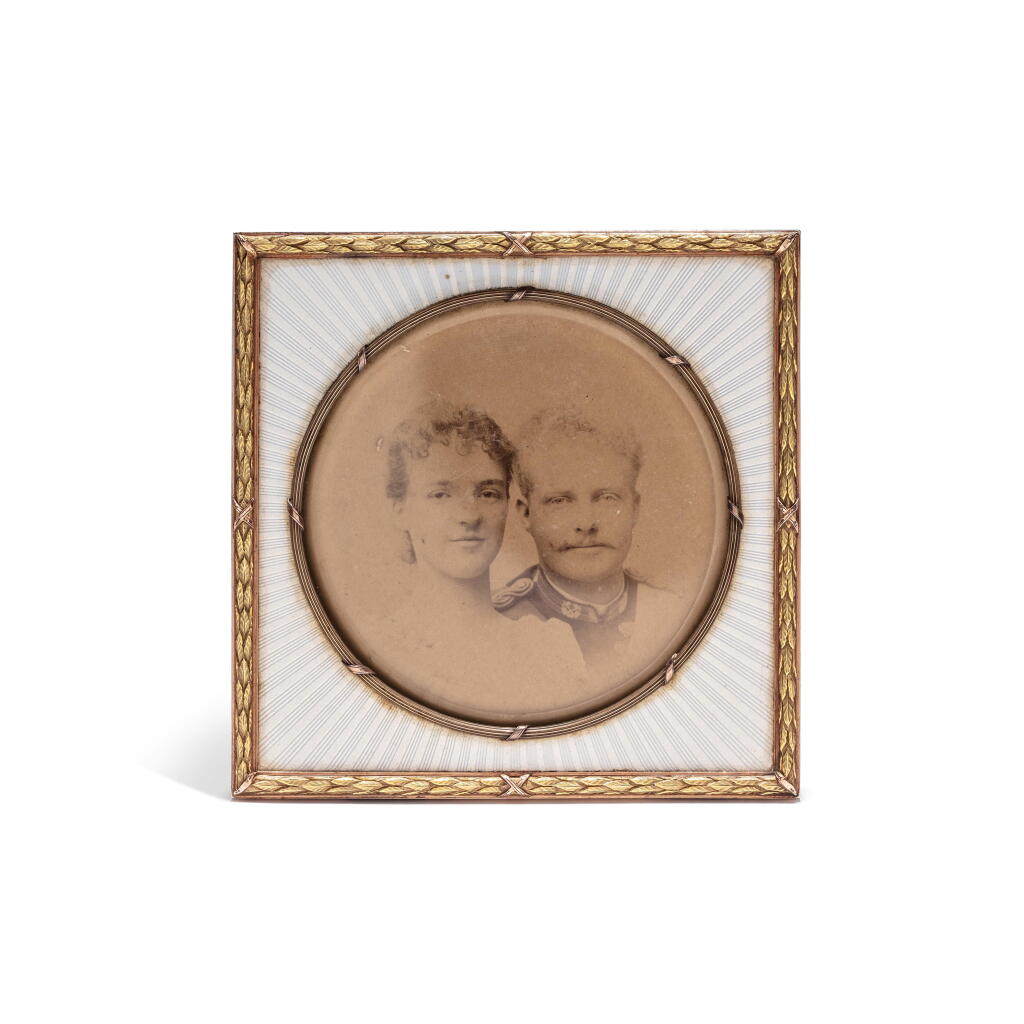
A Fabergé two-colour gold and guilloché enamel frame, Moscow, 1899-1908
Lot Closed
May 15, 11:12 AM GMT
Estimate
15,000 - 20,000 CHF
We may charge or debit your saved payment method subject to the terms set out in our Conditions of Business for Buyers.
Read more.Lot Details
Description
square, the surface enamelled in opalescent white over sunburst engine-turning, the picture depicting King Carlos I of Portugal (r.1889–1908) and Queen Amélie of Orléans, the circular aperture framed with bound reeds, the outer border of gold laurel wreaths tied with rose-gold ribbons, mammoth reverse, silver-gilt scroll strut, struck to top edge and strut K.Fabergé in Cyrillic beneath Imperial warrant, 56 standard, scratched inventory number 25967
height 9 cm; 3 ½ in.
By descent to the current owner
Based on the quality of the gold chasing and decoration, as well as photograph of King Carlos I and Queen Amélie, it is possible that this frame was once in the possession of Portuguese royalty.
King Carlos I (1863-1908) and his wife, Queen Amélie of Orléans (1865-1951), were Portugal’s penultimate monarchs before the country became a republic. In 1908, while returning from the palace of Vila Viçosa to Lisbon, both the King and his eldest son were assassinated in their carriage by members of the Republican party, with the throne passing to their youngest son, Manuel II (1889-1932), the last monarch of Portugal. During this deathly ride, Manuel II was shot in the arm, but survived, being protected by his mother Queen Amélie who used a floral bouquet to shield her son from the firing gunshots.
In 1910, Two years after Manuel II became King of Portugal, he was forced to abdicate the throne and Portugal finally became a Republic. Shortly after, Queen Amélie left Portugal with the rest of the royal family and went into exile. She lived most of her remaining life in France.