Property from a Private Collection
Willem Claesz. Heda
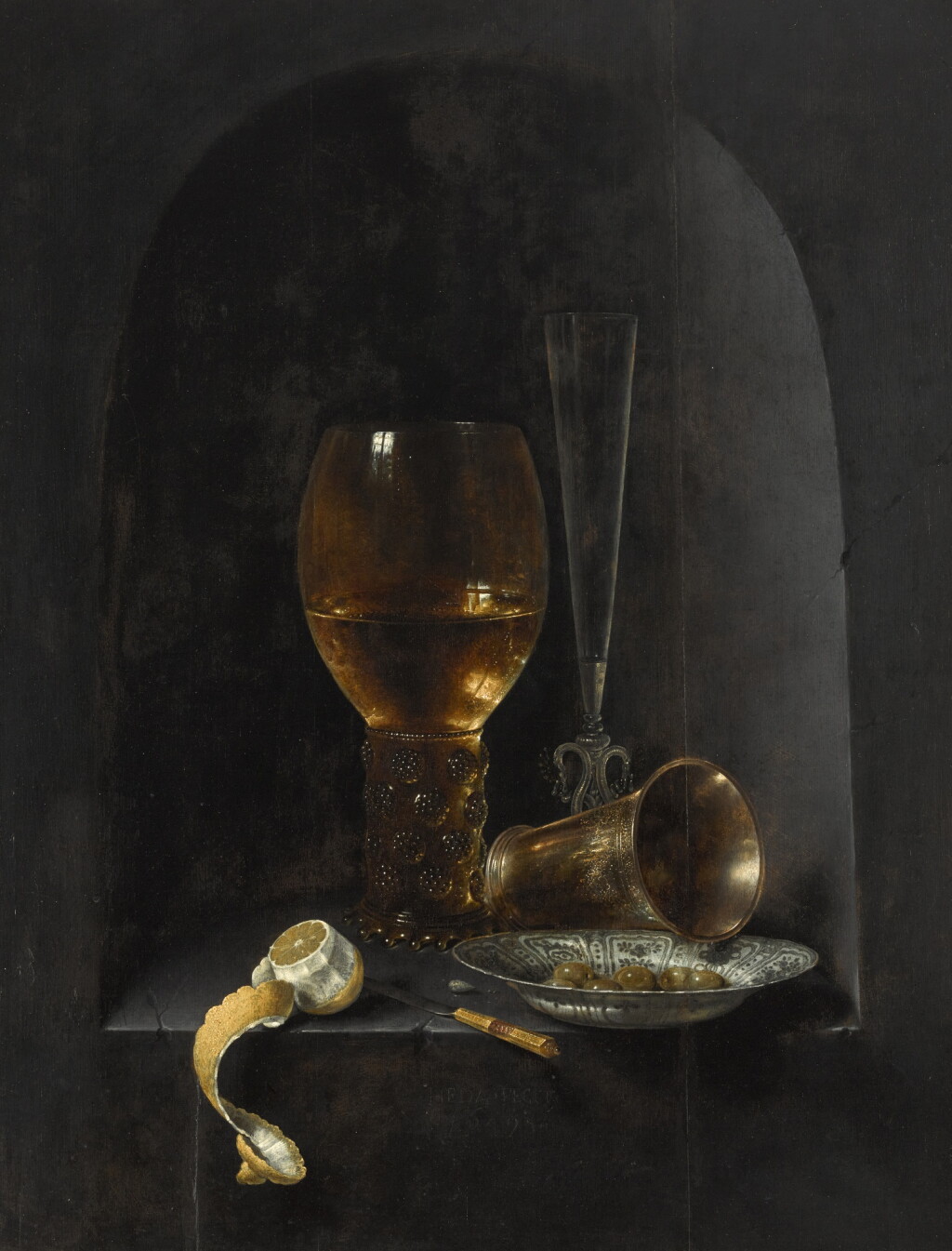
A still life with a roemer, a façon de Venise fluted wine glass, a silver beaker and a blue and white porcelain dish filled with green olives on a stone ledge with a partly peeled lemon and a knife
Auction Closed
December 4, 01:51 PM GMT
Estimate
60,000 - 80,000 GBP
Lot Details
Description
Property from a Private Collection
Willem Claesz. Heda
Haarlem circa 1596–1680
A still life with a roemer, a façon de Venise fluted wine glass, a silver beaker and a blue and white porcelain dish filled with green olives on a stone ledge with a partly peeled lemon and a knife
signed and dated lower centre: HEDA· FECIT· / 1649·
oil on oak panel
unframed: 91.9 x 69.8 cm.; 36¼ x 27½ in.
framed:104.4 x 83.2 cm.; 41¼ x 32¾ in.
Believed to have been in family ownership since at least the 19th century and probably the picture described in a manuscript family inventory annotated before 1931, as one of two small still life paintings hanging in the ‘Kabinett’ (‘2 kleinere Olgemalde (Silleben)’);
Thence by descent until sold (‘The Property of a Noble Family’), London, Sotheby’s, 9 July 2009, lot 134, for £157,250;
Anonymous sale, Amsterdam, Sotheby’s, 30 November 2010, lot 39;
Where acquired by the present owner.
Along with his townsman Pieter Claesz., Willem Claesz. Heda was the foremost painter of the so-called monochrome breakfast-piece, or banketje – carefully designed still life arrangements depicted in a very limited palette, which focus the viewer's attention on the tonal relationships between objects and the effect of a directed light source on the variety of their surfaces. The present work exemplifies the subject, which enjoyed immense popularity during the 17th century, and has endured as one of the most distinctive genres of the Dutch Golden Age. Signed and dated 1649, this elegant painting is a characteristic mature work by the artist and includes some of his most favoured motifs, such as the large glass roemer and overturned silver beaker.
When this work first appeared for sale in 2009, the attribution was endorsed by Fred G. Meijer following firsthand inspection. It was further supported by Martina Brunner Bust on the basis of a transparency.
You May Also Like