Property from a Prestigious Collection
Max Ernst
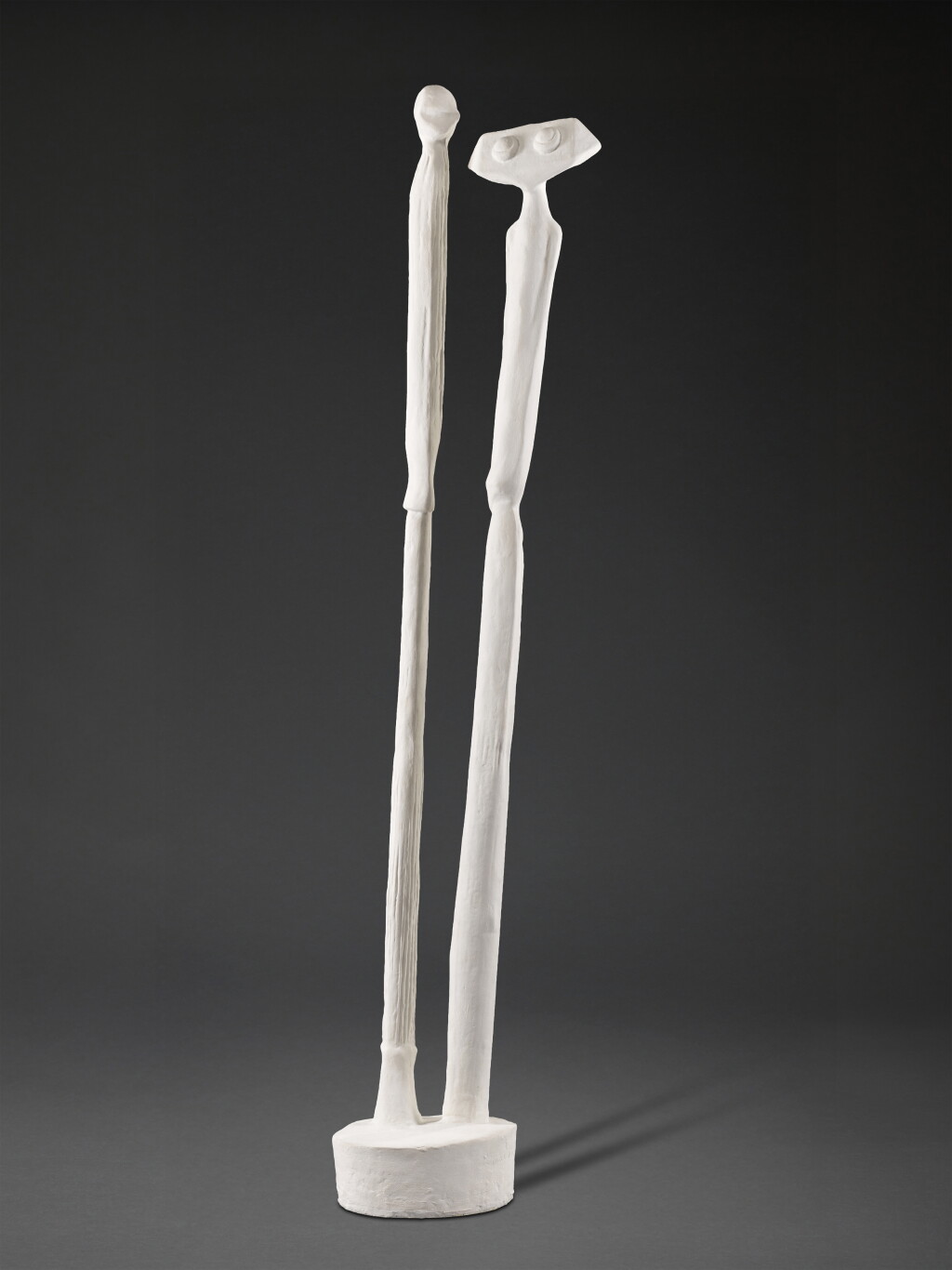
Les Asperges de la lune
Auction Closed
November 21, 01:55 AM GMT
Estimate
2,000,000 - 3,000,000 USD
Lot Details
Description
Property from a Prestigious Collection
Max Ernst
(1891 - 1976)
Les Asperges de la lune
Inscribed Max Ernst , numbered V/VI and stamped with the foundry mark Susse Fondeur Paris
painted bronze
height: 63 ¾ in. 162 cm.
Conceived in 1935 and cast between late 1972 and May 1974 in a numbered edition of seven plus one artist's proof. This example cast on 18 May 1973 by Susse Fondeur.
Galerie Beyeler, Basel (acquired in May 1973)
Private Collection, New York (acquired from the above on 15 January 1986)
Private Collection, United States
Christie's, London, 9 February 2011, lot 112 (consigned by the above)
Acquired at the above sale by the present owner
Basel, Wenkenpark, Skulptur im 20. Jahrhundert, 1984, p. 94, illustration another cast
Exh. Cat., Paris, Galerie Charles Ratton, Exposition surréaliste d’objets, 1936
Exh. Cat., New York, The Museum of Modern Art, Fantastic Art Dada Surrealism, 1936-37, no. 371, p. 224
“Max Ernst, Oeuvres de 1919 a 1936,” Cahiers d'art, Paris, 1937, p. 89, illustration of the plaster
Exh. Cat., Tokyo, Nippon Salon, Album surréaliste. Exposition Internationale du Surréalisme, 1937, no. 43, p. 110; p. 41, illustration of the plaster
Exh. Cat., New York, Coordinating Council of French Relief Societies, First papers of Surrealism, 1942
Alfred Barr, Painting and Sculpture in The Museum of Modern Art, New York, 1948, p. 292, illustration of the plaster; no. 245, p. 307
Robert Motherwell, ed., Max Ernst: Beyond Painting. And the other Writings by the Artist and his Friends, New York, 1948, p. XIII; p. 85, illustration of the plaster
Exh. Cat., New York, The Museum of Modern Art and The Art Institute of Chicago, Max Ernst, 1961, no. 156, p. 56
Exh. Cat., Paris, Le Point Cardinal, Max Ernst, Oeuvre sculpté 1913-1961, 1961, no. 17, illustration of the plaster
André Ferrier, “Max Ernst sculpteur”, L’Oeil: Revue d’art mensuelle, no. 84, December 1961, pp. 66 and 68-69; p. 67, illustration of the plaster
Exh. Cat., New York, The Jewish Museum, Max Ernst: Sculpture and Recent Painting, 1966, p. 47, illustration of the plaster; p. 51
Lucy R. Lippard, “Max Ernst and a sculpture of fantasy,” Art International, vol. XI, February 1967, p. 38; p. 39, illustration of the plaster
John Russell, Max Ernst, Life and Work, London, 1967, no. 125, p. 352; p. 328, illustration of the plaster
William S. Rubin, Dada and Surrealist Art, London, 1969, no. 246, p. 257, illustration of the plaster
Exh. Cat., Hamburg, Kunsthalle, Max Ernst, Das innere Gesicht, 1970, p. 34
René de Solier, “Max Ernst sculpteur”, Hommage á Max Ernst, XXe siècle, Paris, 1971, pp. 127-31; p. 129, illustration of another cast
H. H. Arnason, History of Modern Art. Painting, Sculpture, Architecture, Photography, New York, 1971, no. 442, p. 308, illustration of the plaster
Exh. Cat., Basel, Galerie Beyeler, Surréalisme et Peinture, 1974, no. 17, p. 18; p. 72, illustrated
Exh. Cat., Basel, Galerie Beyeler, Max Ernst, 1974, no. 61, p. 97; p. 73, illustrated
Exh. Cat., New York, The Solomon R. Guggenheim Museum, Max Ernst: A Retrospective, 1975, no. 173, p. 174, illustration of another cast
Exh. Cat., Paris, Grand-Palais, Max Ernst, 1975, no. 216, p. 162; p. 93, illustration of another cast
Exh. Cat., Tokyo, The Seibu Museum of Art and Kobe, Museum of Modern Art Hyogo, Exhibition of Works by Max Ernst, 1977, no. 85, p. 139
Munich, Haus der Kunst and Berlin, Nationalgalerie, Max Ernst, Retrospektive 1979, 1979, no. 230, p. 302
Werner Spies, Sigrid Metken and Günter Metken, ed., Max Ernst Oeuvre-Katalog, Werke 1929-1938, vol. IV, Cologne, 1979, no. 2161.1, illustration of another cast
Exh. Cat., Berlin, Staatlichen Kunsthalle, Bildhauertechniken, Dimensionen des Plastischen, 1981, p. 61, illustration of another cast
Andreas Franzke, Skulpturen und Objekte von Malern des 20. Jahrhunderts, Cologne, 1982, no. 92, p. 110 (titled Mondspargel)
Exh. Cat., Saint-Paul-de-Vence, Fondation Maeght, Max Ernst, 1983, no. 59, p. 140; p. 158, illustration of another cast
William Rubin, ed., Primitivismus in der Kunst des 20. Jahrhunderts, Munich, 1984, no. 835, p. 575, illustration of the plaster cast
Johannes auf der Lake, Skulpturen von Max Ernst, Frankfurt am Main, Bern and New York, 1986, pp. 85-87; no. 15, illustration of the plaster cast
Exh. Cat., New York, Cavaliero Fine Arts, Max Ernst, Sculpture 1934-1974, 1987, no. 8, p. 9, illustration of another cast
Exh. Cat., Edinburgh, Fruitmarket Gallery, Max Ernst, The Sculpture, 1990, no. 8, p. 21, illustration of another cast
Exh. Cat., London, The Tate Gallery; Stuttgart, Staatsgalerie; Düsseldorf, Kunstsammlung Nordrhein-Westfalen and Paris, Musée National d’Art Moderne, Max Ernst, A Retrospective, 1991-92, no. 183, p. 379; p. 212, illustration of another cast
Exh. Cat., Newport Beach, Newport Harbor Art Museum; University of California at Berkeley, University Art Museum and Indianapolis Museum of Art, Max Ernst, The Sculpture, 1992-93, no. 8, p. 21, illustration of another cast
Exh. Cat., Tokyo, The Yomiuri Shimbun Contemporary Sculpture Center, Max Ernst, Sculpture Exhibition, 1994, no. 6, p. 42; p. 20, illustration of another cast
Exh. Cat., Paris, Musée d’Art moderne de la Ville de Paris, Passions Privées, Collections particulières d’art moderne et contemporain en France, 1995-96, no. A 45,9, p. 398; p. 399, illustration of another cast
Exh. Cat., Malmö, Konsthall, Max Ernst, Skulptur, 1995-96, pp. 218-19, illustration of another cast
Exh. Cat., West Bretton, Wakefield, Yorkshire Sculpture Park, Max Ernst: Sculpture 1929-1974, Frottages, Photographs, 1996, p. 6, illustration of another cast
Exh. Cat., Milan, Museo d’Arte Contemporanea, Max Ernst, Sculpture—Sculptures, 1996, p. 134, illustration of another cast; p. 189
Lars Schwander, ed., Sjældne værker—Rare Works—Oeuvres Rares, Copenhagen, 1996, pp. 22-23, illustration of the plaster
Exh. Cat, Thessaloniki, Municipal Art Gallery, Max Ernst—Sculptures, 1997, illustration of another cast
Exh. Cat., São Paulo, Museo Brasileiro da Escultura Marilisa Rathsam, Max Ernst, Esculturas, obras sobre papel, obras gráficas, 1997, no. 9, p. 37; p. 53, illustration of another cast
Exh. Cat., Klagenfurt, Max Ernst, Skulpturen, 1997, p. 178; p. 91, illustration of another cast
Exh. Cat., Rotterdam, Museum Boijmans Van Beuningen, Max Ernst in Beeld / Max Ernst’s Sculptures, 1997-98
Exh. Cat., Heino/Wijhe, Hannema-de Stuers Fundatie, Max Ernst Beelden, 1998
Exh. Cat., Paris, Centre national d’art et de culture Georges Pompidou and Düsseldorf, Kunstsammlung Nordrhein-Westfalen, Max Ernst, Sculptures, Maisons, Paysages, 1998, no. 59, p. 313; p. 110, illustration of another cast; p. 111, illustration of the plaster
Exh. Cat., Berlin, Nationalgalerie and Munich, Haus der Kunst, Max Ernst, Die Retrospektive, 1999, no. 135, pp. 194 - 195, illustration of another cast
Exh. Cat., Lisbon, Fundação Arpad Szenes-Vieira da Silva, Max Ernst, esculturas sculptures, 1999-2000, p. 85; p. 29, illustration of another cast
Exh. Cat., Tokyo Station Gallery, Max Ernst, The Surrealist Universe in Sculpture, Painting and Photography, 2000, no. S-10, p. 162; p. 36, illustration of another cast
Exh. Cat., Okazaki City Museum; Wakayama, The Museum of Modern Art, Max Ernst, 2001, no. 3-10, p. 247; p. 108, illustration of another cast
Susanne Kaufmann, Im Spannungsfeld von Fläche und Raum, Studien zur Wechselwirkung von Malerei und Skulptur im Werk von Max Ernst, Weimar, 2003, p. 120; no. 135, p. 232; p. 313, illustration of the plaster
Exh. Cat., Paris, Galerie Daniel Malingue, Max Ernst, 2003, p. 150; p. 151, illustration of another cast
Exh. Cat., Berlin, Vertretung des Landes Nordrhein-Westfalen beim Bund, Max Ernst, Skulpturen, 2003, p. 5, illustration of another cast
Exh. Cat., Apolda, Kunsthaus Apolda Avantgarde, and Hamburg, Ernst Barlach Haus—Stiftung Hermann F. Reemtsma, Max Ernst, Traumlandschaften, 2004, no. 61, p. 117; p. 106, illustration of another cast
Jürgen Pech, Max Ernst: Plastische Werke, Cologne, 2005, pp. 36-37, illustration of another cast
Exh. Cat., Basel, Museum Tinguely, Max Ernst. Im Garten der Nymphe Ancolie, 2007-08, no. 2161, p. 158, illustration of the plaster cast; p. 220
Exh. Cat., Stockholm, Moderna Museet and Humlebæk, Louisiana Museum of Modern Art, Max Ernst - Dream and Revolution, 2008-09, no. 2161, p. 97, illustration of the plaster; p. 251
Exh. Cat., Frankfurt am Main, Städel Museum, Schwarze Romantik. Von Goya bis Max Ernst, 2012-13, no. 194, p. 262, illustration of another cast
Exh. Cat., Vienna, Albertina, and Basel, Fondation Beyeler, Max Ernst—Retrospektive, 2013, no. 177, p. 348; p. 298, illustration of another cast
One of the earliest and most arresting examples of Surrealist sculpture, Les Asperges de la lune presents a series of dialogues between the real and absurd, the human and vegetal, the modern and ancient—melding what seem to be opposing principles into one dream-like vision in true Surrealist spirit.
The two titular asparagi, emerging abruptly from their base as if growing from soil, sprout into being at a size deeply unusual for the spring vegetable, but at the approximate height of a typical human. The slender stalks stand parallel, never touching but seemingly swaying closer then further, helplessly both drawn to and repelled by each other. In this striking yet intimate form, Ernst carefully anthropomorphizes these two beings, bringing humor and grace to a bronze that defies the constraints of reality.
Primarily known for his painted oeuvre’s pioneering explorations of the frottage and grattage techniques (see fig. 1), as well as his collages, Ernst began to venture into the realm of sculpture in the mid-1930s. While visiting Switzerland in 1935, Ernst found himself fascinated with the work of the sculptors Jean Arp and Alberto Giacometti (see fig. 2). He spent that summer with Giacometti at his house in Maloja where they were “seized with a fever to sculpt,” as he wrote in a letter to Carola Giedion-Welcker (reproduced in Exh. Cat., Milan, Museo d’Arte Contemporanea, Max Ernst, Sculpture—Sculptures, 1996, p. 67). While there, he began work on a series of over 20 spherical stone works derived from boulders that had been gradually eroded by the nearby Forno Glacier, utilizing a full team of horses to heave the stones to Giacometti’s home. Ernst would carve the weather-worn surfaces with a chisel and paint over them to reveal patterns and contours in the stone in something approximating a translation of his grattage technique into the three-dimensional. Drawing influence from the ancient monolithic figures of Easter Island, Ernst experimented with hewing anthropomorphic form from a geometric foundation, heralding the Oceanic-inspired sculpture he would continue to craft in the coming years.
The present work was conceived one year before the landmark 1936 Exposition surréaliste d’objets in Paris, where Ernst and many others within his Surrealist milieu exhibited over 200 found and readymade objects—including the plaster version of this work—alongside Oceanic and Native American works. The process of searching and discovering objects by happenstance was one of particular importance to the Surrealists, who believed that the merveilleux, or the fabulous, could only occur at the serendipitous moment of discovery. Ernst was a particularly devoted follower of the significance of found objects, often taking inspiration from and even directly casting parts of his sculptures from bottles, shells, or even egg cartons. In the eyes of the right-hand figure of Les Asperges de la lune, Ernst incorporates a found object, a smoothed stone given to him by his friend Roland Penrose, of such importance that he later gave it a name, Sphinx Eye.
"Polished by the sand, spherical in shape like a cherry stone, it was encircled by horns like the crescent of the new moon,” Penrose later recalled. “On my return to Paris Max Ernst seized upon it as a surrealist object of significance and putting it in a plush jeweler's box he kept it beside him or exhibited it as a rare treasure trove among his paintings" (ibid.).
With its playful integration of found objects and intentionally crafted forms into an in-the-round collage, Ernst pokes fun at the functionality of everyday items while also evoking the mythological themes that his other works referencing Sphinx Eye allude to. Harboring a deep interest in ancient Greek and Egyptian mythology that was reflected in his oeuvre as early as the 1920s, he incorporated images and casts of his beloved Egyptian talisman into works such as his third collage novel, Une Semaine de bonté ou les sept éléments capitaux. The fourth section of this book adapts the tragedy of Oedipus Rex, with Oedipus esoterically depicted as a bird’s head with a man’s body. In one scene, he gazes contemplatively into the eye of the Sphinx, whose riddle he will eventually solve according to the legend (see fig. 3).
Ernst was an avid collector of Asian and Pacific artifacts and was profoundly aware of his art historical predecessors. The present work bears a remarkable resemblance to the sculpture Double Figure (Le Lys) (see fig. 4), made in the Lake Sentani region of New Guinea and collected in 1929 by Ernst’s dealer and Surrealist poet Jacques Viot. Given his close proximity to Viot, Ernst in all likelihood would have encountered this sculpture and employed it as his formal inspiration for Les Asperges de la lune. Both works portray two adjacent figures emerging into existence from a shared base, adjacent but not quite touching. The present work, however, emphasizes the forms of the left-hand figure's mouth and the right-hand figure's eyes while erasing the rest, as if to isolate the viewer’s attention on the human actions of seeing and speaking.
With the surface of Double Figure having worn relatively smooth over time, eroding the rough wooden carving marks that once inlaid the figures, such an object might have held the same visual interest for him as the 1934 sculpted boulders from Forno Glacier that he and Giacometti had worked on “scratching our secrets into them, like runes” (ibid., p. 69). Symbiosis between natural processes and human creation, with physical form being inevitably altered by the symptoms of time, plays a recurring role throughout Ernst’s sculptural career and is epitomized here in Les Asperges de la lune.
The two faces of the lunar asparagi were later repeated by Ernst when he and Leonora Carrington, newly wed after a whirlwind romance, moved to the village Saint-Martin-d’Ardèche in 1938 and bought and fully renovated an old farmhouse into a Surrealist Gesamtkunstwerk, or “total work of art”—complete with fantastical bas-reliefs and man-monster amalgamation sculptures (see fig. 6). On the doors opening into his and Carrington’s staircase, Ernst affixed two circular masks of the same forms that he constructed from metal parts of old machinery as a pendant to Les Asperges de la lune.
The present work is numbered V/IV in an edition of seven plus one artist's proof. Of these casts, only the present cast as well as one numbered I/VI and held by The Museum of Modern Art were painted white in order to emulate the original plaster. Having acquired the original plaster version of Les Asperges de la lune in 1937, the museum later acquired a bronze cast. Additional, unpainted, bronze casts are also held in the Menil Collection, Dallas and the Städel Museum, Frankfurt, with a painted resin version held in the collection of The Museum of Contemporary Art, Los Angeles. Further to the esteemed collections that hold various versions, Les Asperges de la lune’s form boasts a remarkable exhibition history, with the plaster making appearances in watershed Surrealist exhibitions such as The Museum of Modern Art’s Fantastic Art, Dada, Surrealism and Galerie Charles Ratton’s Exposition surréaliste d’objets.
You May Also Like