Property from the Kevin R. Brine Collection
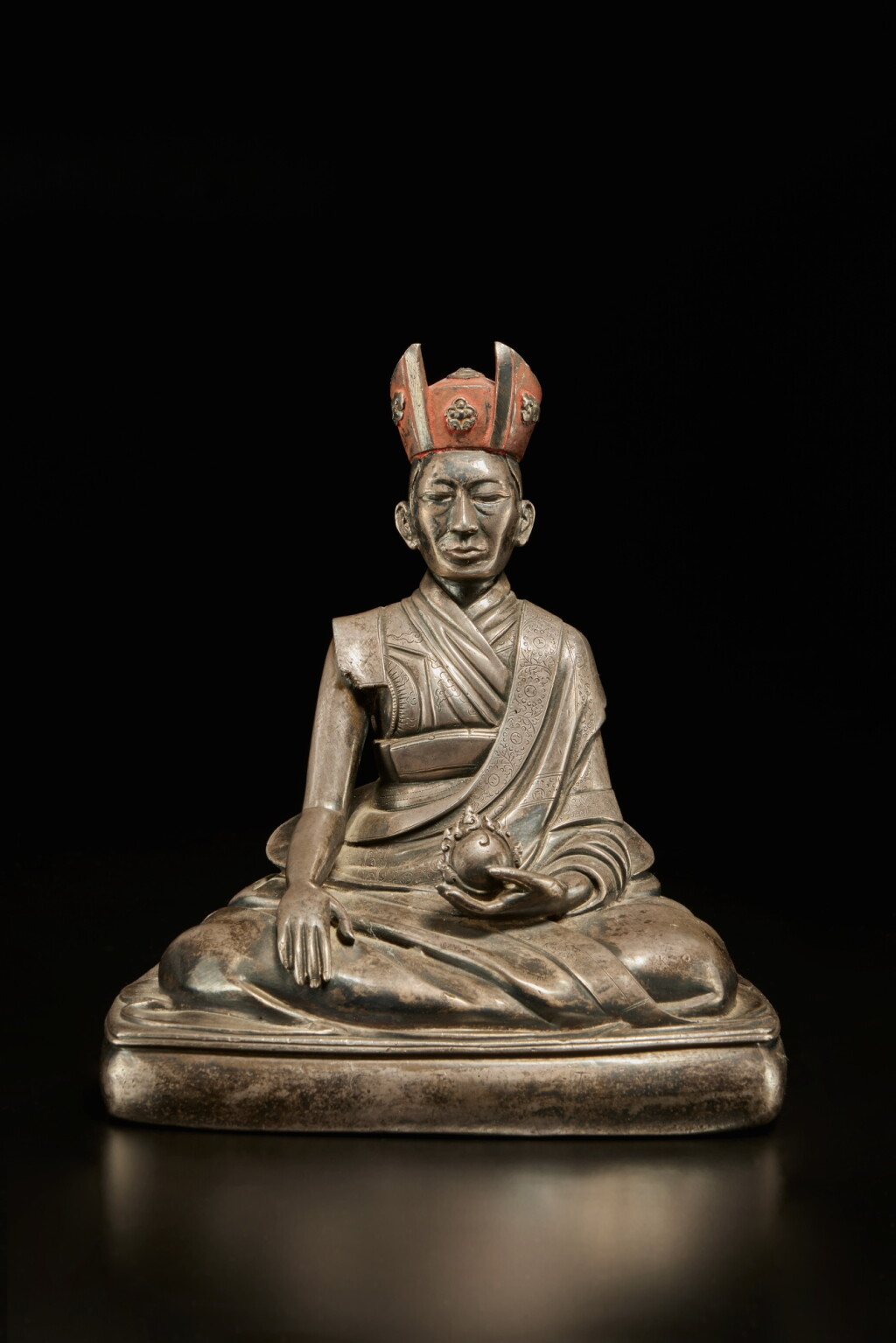
A rare silver figure of the Fifth Shamarpa, Konchok Yanglak, Tibet, 17th century
Auction Closed
March 20, 05:22 PM GMT
Estimate
100,000 - 300,000 USD
Lot Details
Description
Property from the Kevin R. Brine Collection
Himalayan Art Resources, item no. 13715.
Height 7⅞ in., 20 cm
William H. Wolff, Inc., 1977.
Property from an East Coast Collection.
Sotheby's New York, 22nd September 2020, lot 311.
Carlton Rochell, New York.
The inscription at the base of this fine sculpture identifies this figure as the Fifth Shamarpa, Konchok Yanglak: ‘Homage to the red hat holder Konchok Yanglak! Mangalam’ (ཞྭ་དམར་ཅོད་པན་འཛིན་པ་དཀོན་མཆོག་ཡན་ལག་ལ་ན་མོ་མངྒ་ལཾ།).
The Fifth Shamarpa (1525 - 1583) was born in the Kongpo district and formally enthroned by the Eighth Karmapa, Mikyo Dorje (1507–1554) as the reincarnate of the red hat lineage. Having completed his studies by the age of twelve, "his fame for learning, discipline, and kindness soon spread widely." (David Jackson, Patron and Painter: Situ Panchen and the Revival of the Encampment Style, New York, 2009, p. 90). It was the Fifth Shamarpa who later led the enthronement of the Ninth Karmapa, Wangchuk Dorje (1556-1603) and furthermore, served as his primary teacher.
In addition to his scholastic and spiritual accomplishments, the Fifth Shamarpa involved himself in building programs of temples and the commissioning of sacred art, supporting the artist Namkha Tashi, the founder of the Gardri painting school.
Konchok Yanglak's portrait is recognizable in paintings and sculpture alike from his slender physique, his elongated oval shaped face and enlarged ears. Here, cast in silver, a rare choice for Tibetan portraits, the Shamarpa is shown in meditation seated poised on a wide cushion with his left hand cradling a flaming jewel. In another example illustrated on Himalayan Art Resource, item no. 65561, the Fifth Shamarpa similarly holds a triratna in his left hand.
A 16th/17th Century portrait formerly in the Nyingjei Lam Collection, sold at Bonhams Hong Kong, 30th November 2022, lot 1017, also portrays the Shamarpa in a silver cast. As noted by Weldon and Casey, the primary examples of silver cast portraits are of the Kagyu order, seeming to suggest their preference for this particular style of casting. D. Weldon and J. C. Singer, The Sculptural Heritage of Tibet, London, 1999, pl. 49, p. 190). Another silver cast depicting the Ninth Karmapa, Wangchuk Dorje (1554-1603) (ibid., pl. 48) and showing similarity in style is dated by inscription to 1598.
You May Also Like