Property from the Collection of Assen and Christine Nicolov
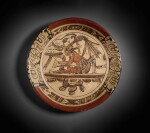
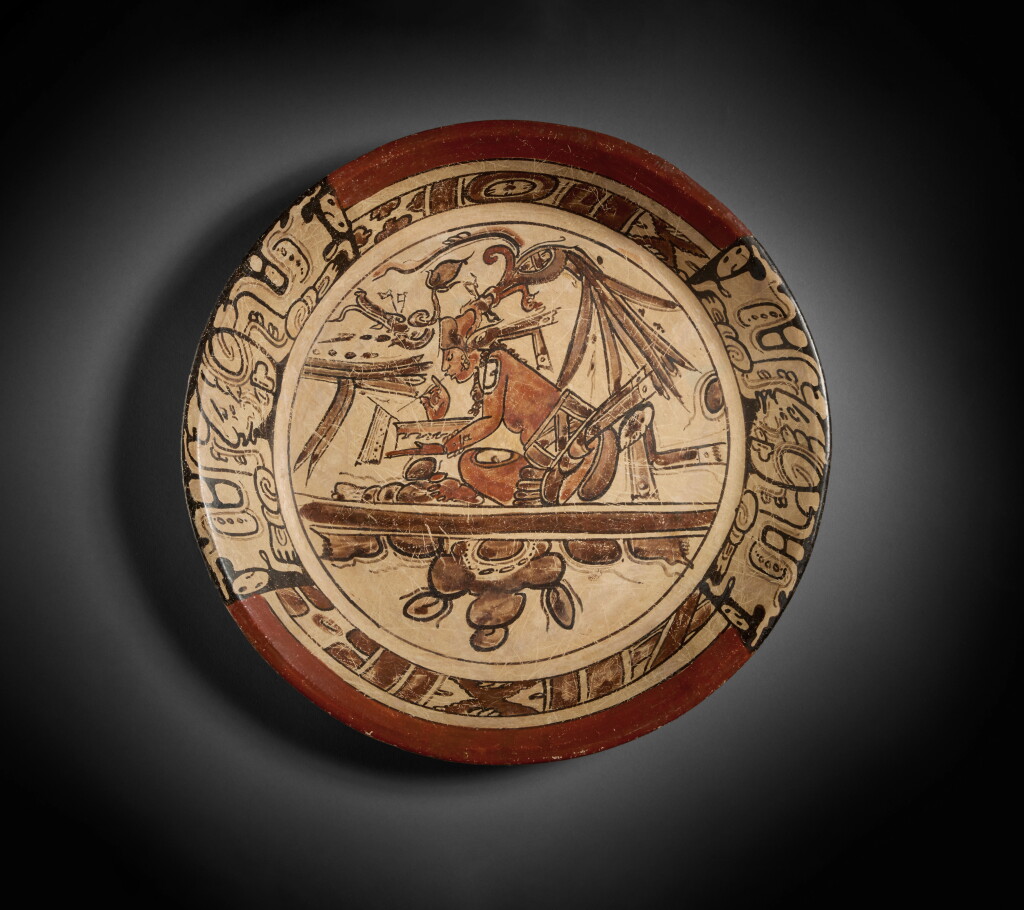
Maya Painted Plate of a Scribe
Late Classic, circa AD 550 - 950
Lot Closed
October 28, 04:21 PM GMT
Estimate
50,000 - 70,000 USD
We may charge or debit your saved payment method subject to the terms set out in our Conditions of Business for Buyers.
Read more.Lot Details
Description
Property from the Collection of Assen and Christine Nicolov
Maya Painted Plate of a Scribe
Late Classic, circa AD 550 - 950
Diameter: 14 ⅝ in (37.2 cm)
Fine Arts of Ancient Lands, New York
Peter G. Wray, Scottsdale, acquired from the above on February 5, 1980
Private American Collection, Texas, acquired from the above
Sotheby's, New York, May 28, 1997, lot 190, consigned by the above
Assen and Christine Nicolov, Seattle, acquired at the above auction
Thence by descent to the present owner
Dallas Museum of Art, Chocolate Pots and Tomb Guardians from Ancient Mexico, June 2, 1990 - November 30, 1990
Duke University, Durham, North Carolina, Painting the Maya Universe: Royal Ceramics of the Classic Period, January 15, 1994 - April 23, 1995
Seattle Art Museum, Art of the Ancient Americas, December 11, 2003 - July 19, 2004
Francis Robicsek and Donald Hales, The Maya Book of the Dead: The Ceramic Codex, Charlottesville, 1981, p. 59 and p. 63, vessel 72
Gerald Berjonneau and Jean-Louis Sonnery, Rediscovered Masterpieces of Mesoamerica, Brussels, 1985, fig. 376
Dorie Reents-Budet, Painting the Maya Universe: Royal Ceramics of the Classic Period, Durham and London, 1994, p. 36, fig. 2.1, pp. 314-315, cat. I, and inside front cover (illus.)
Michael D. Coe and Justin Kerr, The Art of the Maya Scribe, London, 1997, cover illus. and pp. 88-89, fig. 37
Maya Vase Database, mayavase.com, fig. K5824
Maya writing and calligraphy are one of the outstanding and sophisticated legacies from the ancient New World cultures. As Michael Coe and Justin Kerr elaborate in The Art of the Maya Scribe, they note it was said “[h]andwriting is spiritual geometry by means of a corporeal instrument. This intimate link between mind, hand and writing instruments is one recognized wherever writing was practiced as a fine art".1
The Maya scribe was a highly trained artist, given the esteemed title ah, ts’ib, "he of the writing, learned one". Scribes were distinguished by different headdresses marking their status. It is understood from hieroglyphic studies, the title refers to writer and also to painter. Scribes painted extraordinary scenes on polychrome vases beneath the glyphic text encircling the rim, they wrote texts on long sheets of bark-paper hun’ob, folded neatly into screenfold codices, which were often wrapped with a sacred jaguar pelt forming bundles that could be transported. Their calligraphy skill was also evident in the stone inscriptions, whereby the glyphic texts were first painted before being carved. Writing, painting and carving existed on nearly every medium of the Maya world, ceramic, bone, jade, bark, wood and stone.
The most significant deities of the Maya pantheon were the Hero Twins, Hunahpu and Xbalanque, themselves master scribes. This ceramic plate is a portrait of Hunahpu, sitting in content concentration in the process of writing with his long stylus in the open screenfold codex. His ample body is marked by deity mirror emblems, his waist is wrapped by a thick belt with skyband kin signs and stiff knotted sashes. His turban supports a massive feather panache above, and in the field are the mythic long-snouted monster head and waterlily. The suggestion of his twin brother seated out of the frame and before him is marked by the stiff feather plumes directly in front.
1 Michael D. Coe and Justin Kerr, The Art of the Maya Scribe, London, 1997, p. 129
You May Also Like