Property from the Collection of Assen and Christine Nicolov
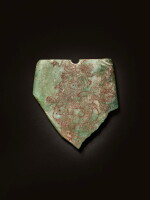
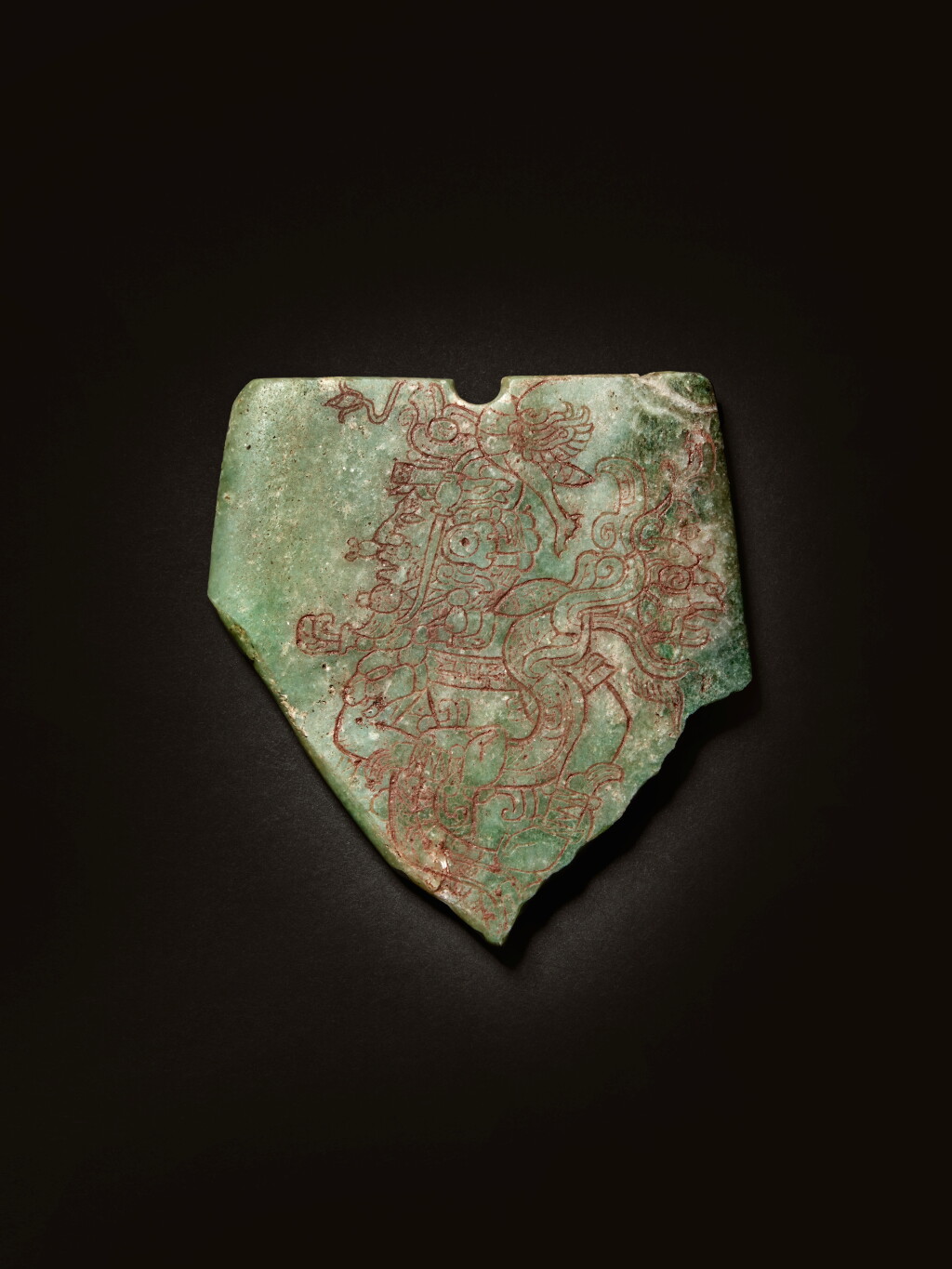
Maya Incised Jade Celt
Protoclassic / Early Classic, circa 100 BC - AD 400
Lot Closed
October 28, 04:22 PM GMT
Estimate
12,000 - 18,000 USD
We may charge or debit your saved payment method subject to the terms set out in our Conditions of Business for Buyers.
Read more.Lot Details
Description
Property from the Collection of Assen and Christine Nicolov
Maya Incised Jade Celt
Protoclassic / Early Classic, circa 100 BC - AD 400
Height: 3 in (7.6 cm)
American Private Collection, acquired by family descent through two generations
Sotheby's, New York, November 22, 1999, lot 67, consigned by the above
Assen and Christine Young Nicolov, Seattle, acquired at the above auction
Thence by descent to the present owner
Smith College Museum of Art, Northampton, October 3, 2005 - January 27, 2006
Nicolas Grube and Simon Martin, "The Coming of Kings", 2001, p. 87, fig. 73, in conjunction with 'The Proceedings of the Maya Hieroglyphic Workshop,' (seminar), University of Texas at Austin, March 10 - 11, 2001
"K8217", Maya Vase, mayavase.com
The masterfully incised jade celt fragment may have been part of a belt assemblage, as seen on royal costumes where a trio of thin section incised jades were suspended as dangles. Both sides of this celt brand the object as a precious object belonging to a lord, and perhaps was traded to a subject in a neighboring polity.
The standing figure with his head facing left, is completely covered by accoutrements of power and prestige. He holds a ceremonial serpent bar whose body curls upward and emits the deity head of the sun or jaguar god from his gaping jaws. The lord wears feathered wristbands, tasseled epaulets and his face is nearly obscured by the jewelry of his nose ornament, earrings and massive headdress that supports a rodent head and an avian.
The reverse is incised with two columns of text, referred to as a 'self-referential' dedicatory text; here the glyphs emphasize and name the object itself as a precious celt, belonging to an individual who is named. The incising in the figural and epigraphic elements, show a command of technique that achieves a fluidity of line as if the images were painted and not etched into a hard jade surface.
The study of Early Classic objects and glyphic texts has shown the importance of writing for recording genealogies and the dynastic sequences that established power not just from divine kingship, but anchored rulership in dynastic kingship. As Martin and Grube discuss, “[m]any of the earliest examples of Maya writing are on portable objects that are probably given by kings to secondary lords. These objects seem to have been a form of sharing power and prestige, incorporating other people such as secondary lords into a greater realm.”1
Cf. For other celts of similar style, see the Kimbell Art Museum, object no. AP 2004.05; see also Gerald Berjonneau, Jean-Louis Sonnery, Rediscovered Masterpieces of Mesoamerica, Boulogne, 1985 figs. 330-331.
1 Nikolai Grube, Simon Martin, The Proceedings of The Maya Hieroglyphic Workshop, University of Austin, Texas, March 10-11, 2001, p. 91
You May Also Like