Mario Asnago and Claudio Vender
Unique sliding doors cabinet with integrated bar
Lot Closed
November 15, 02:56 PM GMT
Estimate
8,000 - 12,000 EUR
Lot Details
Description
Asnago e Vender
Unique sliding doors cabinet with integrated bar
Designed in 1950’s
mahogany and maple veneer wood, painted iron, brass, aluminum, glass
Milan, Italy, 1950’s
187 x 332 x 45 cm; 73⅝ x 130¾ x 17¾ in.
Claudio Vender’s heirs collection, Milan
‘Linea’ the Claudio Vender’s Home Collection, Ihnua Gallery & Studio, Verona, Oct 11th - Oct 25th 2024
Domus n° 216, 1946, pp. 32, 33 (for a similar example)
This lot is sold together with a certificate of authenticity from the Asnago Vender Architects Archive.
This furniture is made of different materials such as wood, aluminium, brass, glass and painted iron and resembles wall-furniture used to divide spaces with different destinations for residential and commercial projects. The item designed by architects Mario Asnago and Claudio Vender is a similar example to that made in 1946 for the Vezzani’s project shop in via Dante, Milan.
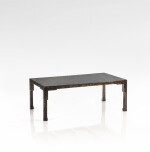
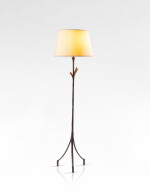
All the items presented are part of the furnishings of Claudio Vender’s private residence, and they are all unique pieces designed by architects Mario Asnago (1896-1981) and Claudio Vender (1904-1986), who founded the Asnago - Vender Architects Studio on Via Cappuccio in Milan, in the 1920s. Created from the early 1930s to the 1950s, each piece is a tribute and an example of the highest product design of Italian rationalism, crafted by the finest artisanal production in the Brianza region. It is rare to present such a complete, well-preserved collection of various types of furniture from a single residence on the international market. The Asnago - Vender Architects Studio often designed furnishings for individual residences or shops. These were not mass-produced industrially but were crafted by trusted artisans with whom they collaborated, allowing them to experiment with new forms, materials, and techniques. As a result, sometimes a design was reproduced with variations in size and materials. Occasionally, the project underwent minor or substantial changes, leading to a different design.
You May Also Like