
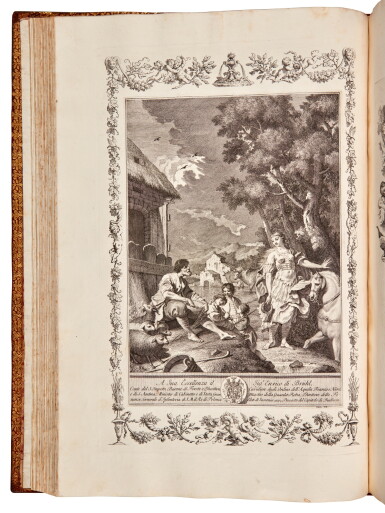
Torquato Tasso | La Gerusalemme liberata, Venice, 1745, wonderful rococo illustrations in a fine binding
Auction Closed
November 28, 01:19 PM GMT
Estimate
10,000 - 15,000 GBP
Lot Details
Description
Torquato Tasso
La Gerusalemme liberata. Venice: Giambattista Albrizzi, 1745
FIRST EDITION with these illustrations, LARGE PAPER COPY, folio (465 x 325mm.), half-title, title printed in red and black with engraved vignette, engraved allegorical frontispiece, engraved portrait of the dedicatee, Empress Maria Theresa, by Felix Polanzani after Giambattista Piazzetta; 20 plates with ornamental borders, 20 pictorial head-pieces and 20 culs-de-lampe (5 full-page), full-page double portrait of Piazzetta and Albrizzi at end, all engraved by M. Schedl after Piazzetta, numerous engraved historiated initials, SPLENDID CONTEMPORARY MARBLED CALF, VERY PROBABLY A PRESENTATION BINDING BY THE PUBLISHER, covers ornately gilt with wide gilt frame and cornerpieces, large oval center-piece, spine gilt in compartments, two red morocco labels, densely gilt turn-ins, Albrizzi’s special daubed endpapers, gilt edges, binding slightly rubbed and expertly restored
ONE OF THE FINEST ILLUSTRATED BOOKS OF THE EIGHTEENTH CENTURY, a wonderful, oversized Venetian printing of a great Italian classic, which the normally reserved Graesse describes as a “magnificent edition in regards to the printing and the paper: the 20 plates and the headpieces by Piazzetta are beyond all praise”.
The engravings are highly detailed, romantic Rococo illustrations of a major artist, Giambattista Piazzetta (1682-1754). Palluchini (as reported by Benezit) comments on the “subtle unity and vibrant luminosity” of Piazzetta’s chiaroscuro, and he remarks that “Piazzetta’s striking use of light, together with the bold compositions and handling seen in some of his works, make him an important precursor of Tiepolo.” As for the author, Britannica says it as well as anyone: in his Jerusalem Delivered, Tasso (1544-1595) “aimed at ennobling the Italian epic style by preserving strict unity of plot and heightening poetic diction. He chose Virgil for his model, took the first crusade for [his] subject, [and] infused the fervour of religion into his conception of the hero Godfrey.” But his inclination toward romance clashed with his original epical intentions, and the work became a classic early example of the poetry of sentiment. “This sentiment, refined, noble, natural, steeped in melancholy, exquisitely graceful, pathetically touching, breathes throughout the episodes of the ‘Gerusalemme,’ finds metrical expression in the languishing cadence of its mellifluous verse, and sustains the ideal life of those seductive heroines whose names were familiar as household words to all Europe in the 17th and 18th centuries”. Unfortunately, the work, while still in manuscript, was condemned by contemporary critics on both religious and literary grounds, and the sensitive and conscientious author suffered a nervous breakdown, was later visited by a violent insanity, and was confined for seven years. When he was released, he discovered that his masterpiece had been published and that he was now famous. He was to have received the laurel crown with which Petrarch alone had been honoured, but he died just before the presentation.
A few other copies are known to exist in this same splendid binding, a fact that strongly suggests they came from the publisher and were intended for dedicatees.
REFERENCES: Cohen-de Ricci 978; Brunet V, 666; Graesse VI (pt. 2), 33
PROVENANCE: “Marcuard”, (early 19th century?) armorial bookplate