Property from the Collection of the late Brian P. Burns
Walter Frederick Osborne, R.H.A
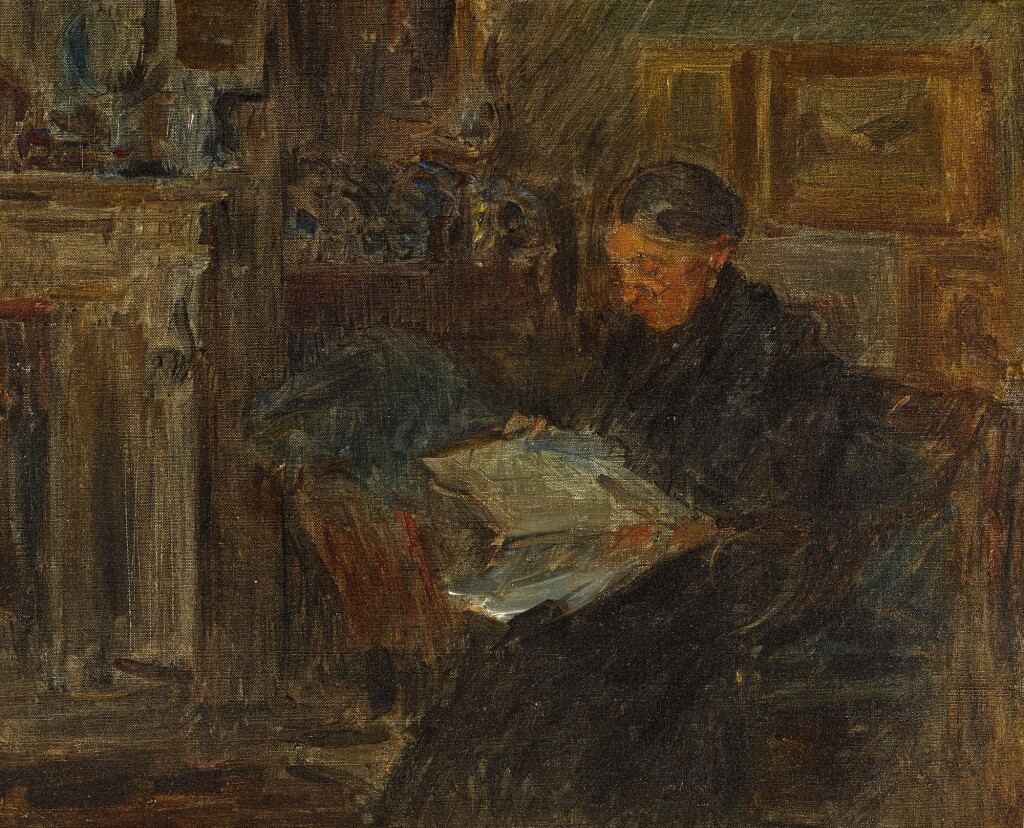
The Artist's Mother
Lot Closed
November 22, 03:28 PM GMT
Estimate
4,000 - 6,000 GBP
Lot Details
Description
Property from the Collection of the late Brian P. Burns
Walter Frederick Osborne, R.H.A
1859-1903
The Artist's Mother
oil on canvasboard
unframed: 33 by 40.5cm.; 13 by 16in.
framed: 50 by 58cm.; 19¾ by 22¾in
Executed circa 1900.
Sotheby's, London, 21 May 1999, lot 297, where acquired by the late Brian P. Burns
The Osbornes were a close, united family, and the artist’s mother is featured in several pictures, paintings, drawings and a pastel by him. Annie Jane Woods was born in November 1825 to the Woods family, who had a small estate in Co. Limerick.1 She married William Osborne, a professional animal painter and they had three children: Charles, Walter and Violet. Walter Osborne returned from England in the early 1890s to live with his family, and assisted looking after his niece Violet.
Annie was a patient model and she can be seen in several pictures, such as in the pastel Annie Osborne aged sixty seven, 1892 (sold Sotheby's, London, 21 May 1998, lot 319) and in At the Breakfast Table, 1894 (formerly in the Brian P. Burns Collection, sold Sotheby's, 21 November 2018, lot 55). The Artist’s Mother shows Annie a few years later, around 1900, seated in a shadowy room, with a fireplace on the left, and framed pictures just visible on the wall. She is shown nearly in profile wearing a long black dress and reading a newspaper.
The genre of elderly women seated in interiors, perhaps knitting, sitting near a fireplace, looking out a doorway or reflecting upon their lives, became popular amongst Realist painters of the late 19th century. There was a strong tradition amongst artists of portraying their mothers. Osborne’s painting is strikingly similar in composition to Whistler’s celebrated portrait of his mother Arrangement in Grey and Black, 1871 (Musée d’Orsay, Paris) which shows the elderly woman on the right, a curtain (rather than the fireplace) on the left, and pictures on the walls, and both artists used earthy, muted tones. However, Osborne’s picture lacks the formality of Whistler’s, is painted directly in a loose, sketchy style, and conveys a sense of his affection for his mother.
Julian Campbell
1 Jeanne Sheehy, Walter Osborne, Ballycotton, 1974, p. 9
You May Also Like