Property from a Private Collector in Los Angeles
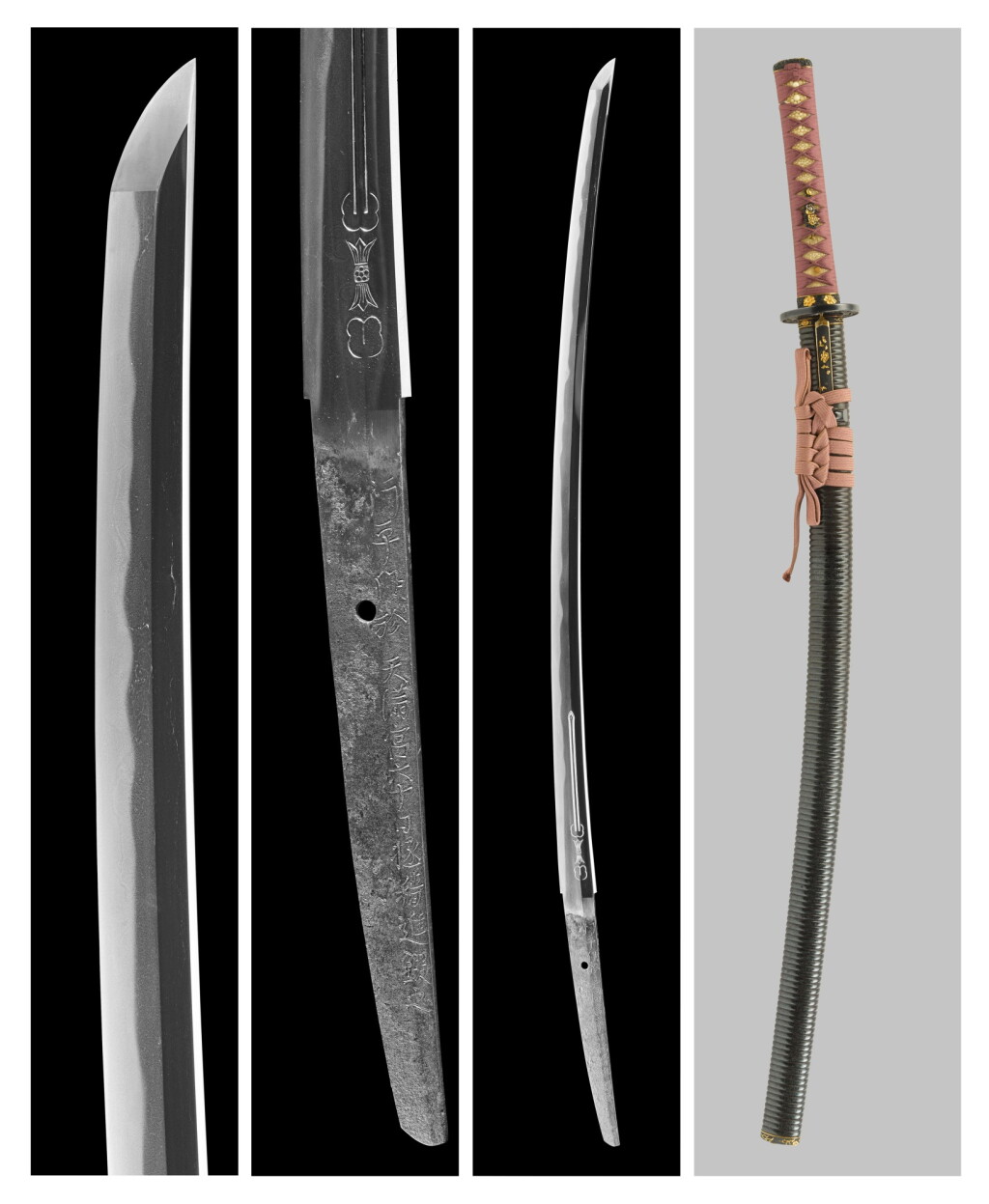
A katana | Signed Tenmangu ni oite rokujunichi kyoku seishin kitae Yukihira kore o tsukru (made by Yukihira and forged to the most extreme purity for sixty days in Tenmangu) | Edo period, dated Genroku go mizunoe-saru nigatsu saijobi (an auspicious day in February 1692)
Lot Closed
November 2, 02:55 PM GMT
Estimate
25,000 - 30,000 GBP
Lot Details
Description
Property from a Private Collector in Los Angeles
A katana
Signed Tenmangu ni oite rokujunichi kyokuseishin kitae Yukihira kore o tsukru (made by Yukihira and forged to the most extreme purity for sixty days in Tenmangu)
Edo period, dated Genroku go mizunoe-saru nigatsu saijobi (an auspicious day in February 1692)
Sugata [configuration]: Shinogi-zukuri, iori-mune, deep sori, ko-kissaki
Kitae [forging pattern]: Ko-itame hada with ji-nie, almost nashiji-hada
Hamon [tempering pattern]: O-midare in nie with nioi-kuchi, some ashi, becoming more active towards the kissaki, sunagashi and kinsuji to the ha
Boshi [tip]: O-maru-boshi with nioi-kuchi
Horiomono [carvings]: Dokko-ken [single-blade vajra] to the omote, the ura with kanji and futatsu ko-hi
Nakago [tang]: one mekugi-ana, ha-agari-kurijiri, yoko yasurime, signed Tenmangu ni oite rokujunichi kyoku seishin kitae Yukihira kore o tsukru (made by Yukihira and forged to the most extreme purity for sixty days in Tenmngu), and dated Genroku go mizunoe-saru nigatsu saijobi (an auspicious day in February 1692)
Habaki [collar]: Copper-gilt
Koshirae [mount]: The ribbed black lacquer kizami saya sprinkled overall with aoigai, the fittings similarly decorated with peonies and foliage, the kozuka with field chrysanthemum (nogiku) and irises on a fine nanako ground, plain wood underside, the kogai with wind-buffeted peonies, the round iron tsuba pierced with two villagers and a minogame beside bamboo, under the bough of a large pine tree
In shirasaya [plain wood scabbard]
Nagasa [length from kissaki to machi]: 70 cm., 27½ in.
Sori [curvature]: 2.1 cm., ¾ in.
Saki-haba [width at the yokote]: 2 cm., ¾ in.
Moto-haba [width at the machi]: 3 cm., 1¼ in.
Accompanied by two certificates of registration: the first as Tokubetsu Kicho Token [Especially Precious Sword], no. 5506087, issued by the Nihon Bijutsu Token Hozon Kyokai [Society for the Preservation of the Japanese Art Sword], dated Showa 55 (1980); the second as Tokubetsu Hozon Token [Sword Especially Worthy of Preserving], no. 1015126, issued by the Nihon Bijutsu Token Hozon Kyokai [Society for the Preservation of the Japanese Art Sword], dated Reiwa 3 (2021).
You May Also Like