
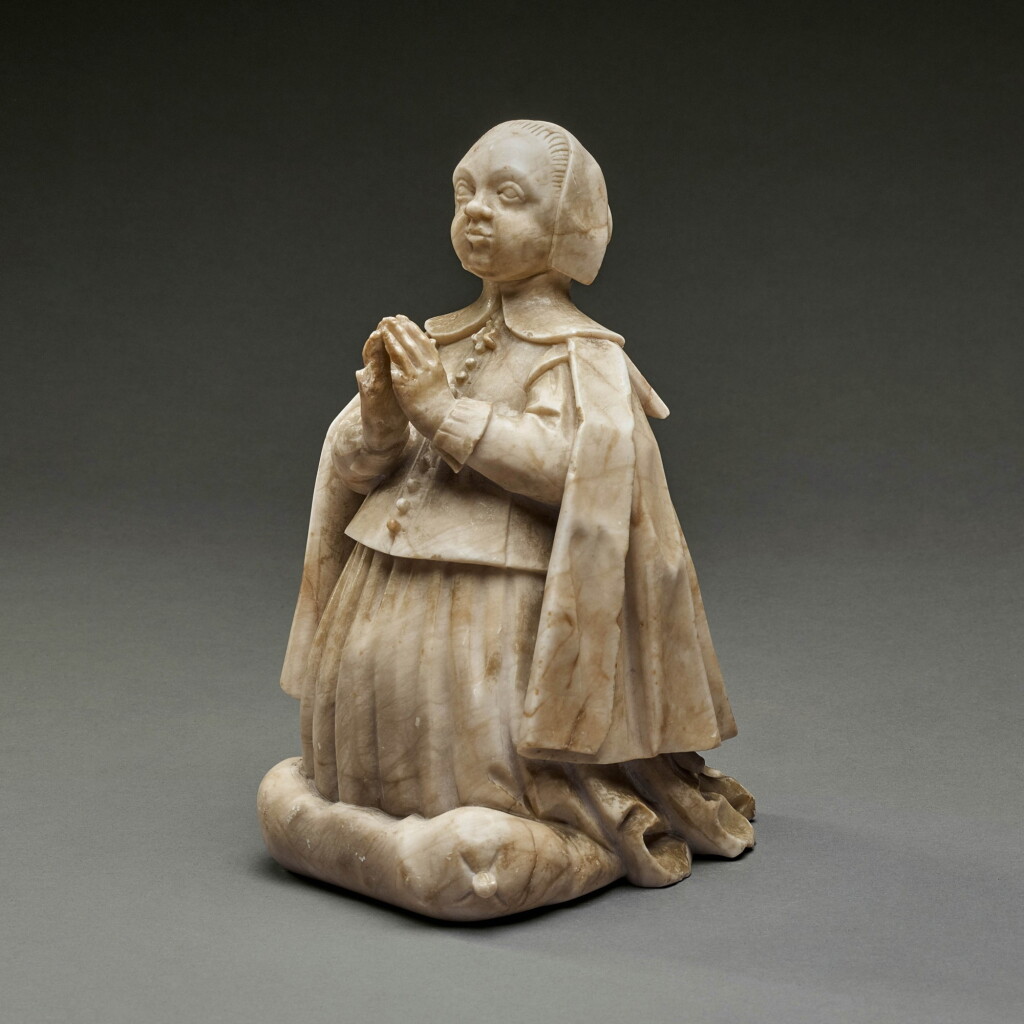
Netherlandish, circa 1630-1640 | Priant Figure of a Girl
Lot Closed
December 5, 03:51 PM GMT
Estimate
8,000 - 12,000 GBP
Lot Details
Description
Netherlandish, circa 1630-1640
Priant Figure of a Girl
alabaster
24cm., 9½in.
The present figure compares more closely with Dutch and Flemish tomb figures in the simplified dress and the distinctive portrait facial features. Compare, for example, with the reclining portrait of Anna Posse from the monument to Erik Soop and Anna Posse in Skara Cathedral by Hendrick de Keyser's son Pieter de Keyser (illustrated in Scholten, op. cit., p. 104, fig. 95). The use of alabaster is also typical of Netherlandish mannerist and Baroque sculpture, where there was a long tradition. Although the same can admittedly also be said for England, after the Reformation it lacked a major artistic centre.
The figure finds a particularly interesting comparison in a pair of kneeling donors or mourners of a similar scale (41.3cm), also in alabaster, and depicted with analogous simplified costume of the 1630s or 1640s. These figures were sold at Christies on 2 July 1991, lot 74. The present alabaster, however, is distinguished by the charming facial expression of the sitter with retroussé nose and puffed out cheeks, as well as the satisfyingly voluminous costume.
RELATED LITERATURE
F. Scholten, Sumptuous Memories: Studies in seventeenth-century Dutch tomb sculpture, Zwolle, 2003; A. Lipinska, Moving Sculptures: Southern Netherlandish Alabasters from the 16th to 17th Centuries in Central and Northern Europe, Leiden, 2007