Property from the Eric C. Caren Collection
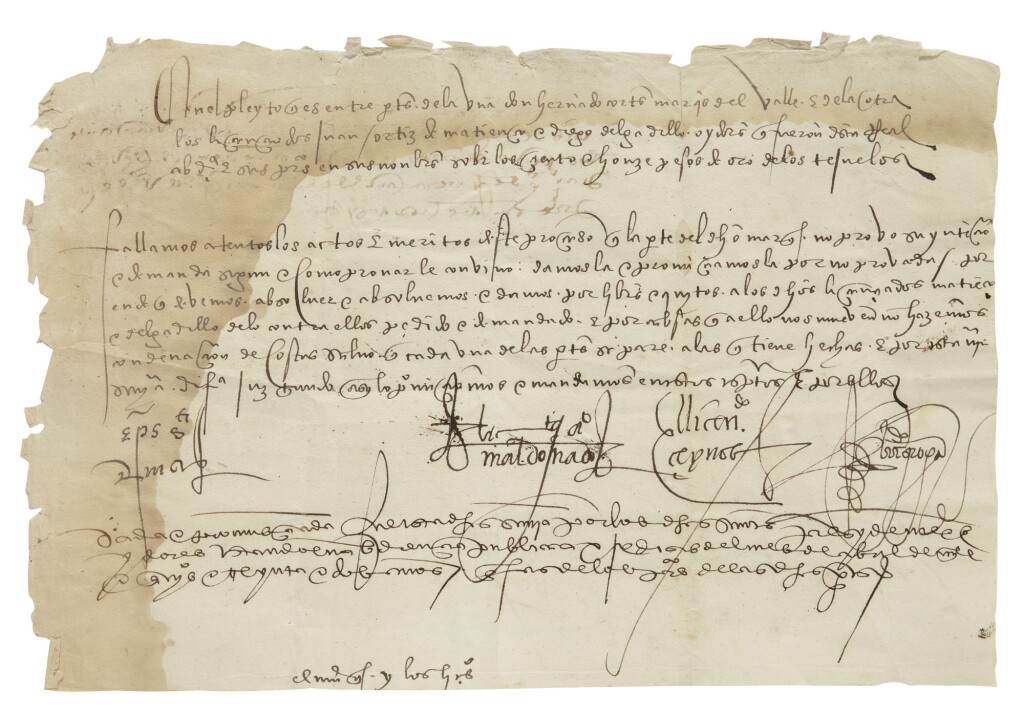
(CORTÉS, HERNÁN) | Document signed by Vasco de Quiroga, and the other members of the Segunda Audiencia, regarding the settlement of a lawsuit filed by Cortés, Mexico, 9 April 1532
Lot Closed
July 21, 04:34 PM GMT
Estimate
4,000 - 6,000 USD
Lot Details
Description
Property from the Eric C. Caren Collection
(CORTÉS, HERNÁN)
Document signed by Vasco de Quiroga, and the other members of the Segunda Audiencia, regarding the settlement of a lawsuit filed by Cortés, Mexico, 9 April 1532
1 page (8 1/4 x 12 3/8 in.; 210 x 312 mm, irregular). Document in Spanish, signed by Vasco de Quiroga, Sebastián Ramírez de Fuenleal, and Alonso de Maldonado; dampstaining and fraying at top margins. The consignor has independently obtained a letter of authenticity from PSA that will accompany the lot.
The settlement of one of Cortés’s numerous lawsuits, filed in an attempt to recover property
On 12 January 1530—and following on the heels of the disastrous Primera Audiencia of Nuño de Guzmán—the Segunda Audiencia of New Spain, the highest tribunal in that newly conquered land, was named in a royal decree. Led by Vasco de Quiroga, the Segunda Audiencia had many lawsuits on its docket, a number of which were against members of the corrupt Primera Audiencia. Hernán Cortés initiated several of these in an attempt to recover encomiendas and properties that the Primera Audiencia had taken from him during his trip to Spain from 1528 to 1530. The fragmentation of Cortés's large legal suit into many small ones was a calculated move, as it defrayed the risk of a single, unfavorable judgement.
The present document, signed by members of the Segunda Audiencia, settles a dispute that pertains to 111 gold pesos. The suit was filed against members of the Primera Audiencia, and it is stated that the evidence offered by Cortés is insufficient, acquitting the accused.